




Yes for the symptoms, no for the veins themselves. A leg air compression massager can genuinely relieve the aching, heaviness, throbbing and end-of-day ankle swelling that varicose veins cause, by assisting the venous return your leg valves are no longer managing well. What it cannot do is repair a failed valve or make the veins go away — only sclerotherapy, endovenous ablation or surgery do that. Get the veins assessed before you start, because the same symptoms can signal a clot, where compression is dangerous.
Key Facts
- Compression relieves the symptoms of varicose veins — aching, heaviness, throbbing and ankle swelling — by assisting venous return.
- It does not repair a failed vein valve or remove varicose veins; no external device does.
- Graduated medical compression stockings are the standard conservative management, and work on the same principle applied continuously.
- Definitive treatment of the vein itself is sclerotherapy, endovenous laser or radiofrequency ablation, or surgery, guided by a duplex ultrasound.
- Air compression massagers are contraindicated in deep vein thrombosis, severe peripheral arterial disease, active infection or cellulitis, and uncontrolled heart failure.
- Sudden swelling in one leg with warmth, redness or pain is a possible DVT and needs same-day medical attention, not a massager.
- Getting the legs assessed first is what makes symptom relief safe to pursue, because vein symptoms and clot symptoms overlap.
This is the most-asked question about leg massagers in India, and it deserves a straight answer rather than either of the two you usually get — the listing that promises a cure, or the disclaimer that refuses to say anything at all. We make one of these devices. Here is the honest version.
The short answer
For the symptoms: yes, it helps. The aching, the heaviness by evening, the throbbing after a long day standing, the puffy ankles — those are the day-to-day burden of varicose veins, and rhythmic compression genuinely relieves them. That is not a fringe claim. It is the same principle behind graduated compression stockings, which are standard conservative management for exactly these symptoms.
For the veins themselves: no, and be wary of anyone who says otherwise. A varicose vein is a vein whose one-way valves have stopped sealing. External pressure moves blood along while it is applied; it does not make a stretched valve close again. Nothing you can buy without a prescription does.
Both halves matter. A device that makes your legs feel substantially better every evening is worth having. It is just not the thing that makes the veins go away.
How the relief actually works
Leg veins move blood upward against gravity, and they rely on help to do it: every calf contraction squeezes the deep veins and pushes blood along, while one-way valves stop it falling back. That is the calf muscle pump, and it is why walking makes legs feel better and standing still makes them ache.
When valves leak, blood pools in the vein below and pressure builds in the leg. That pressure is what you feel as heaviness and aching, and it is what pushes fluid into the tissue around your ankle. A sequential air compression massager inflates chambers from the ankle upward in a timed wave, mechanically doing what your calf does when you walk — moving that pooled blood and fluid in the direction it is supposed to go.
So the relief is real and the mechanism is straightforward. It is also temporary: it lasts through the session and a while after, which is why people who benefit use it regularly rather than once.
What it will not do, stated plainly
- It will not close a failing valve or reverse the underlying condition.
- It will not remove visible veins or stop new ones appearing.
- It will not replace stockings if you have been prescribed them. Stockings work continuously through the day; a massager runs for twenty or thirty minutes. They are complements, not alternatives.
- It will not substitute for an assessment. Relief that masks a progressing problem is not a good trade.
Before you start: get the legs looked at
This is the part that makes everything above safe to act on, so it is not boilerplate.
Vein symptoms and clot symptoms overlap. Aching, swelling and heaviness are how varicose veins present — and they are also how a deep vein thrombosis presents. Compressing a leg with a clot is dangerous. A doctor can tell the difference in one appointment, usually with a duplex ultrasound, and that scan also tells you which veins are failing and whether definitive treatment is worth considering.
Do not use an air compression device, and speak to a doctor first, if any of these apply:
- Deep vein thrombosis, or any suspicion of it. Sudden swelling in one leg, with warmth, redness or calf pain, is a medical emergency. This is the most serious item here and the one to act on immediately.
- Severe peripheral arterial disease. If blood is struggling to get into the leg, squeezing it makes that worse. The sign is cramping calf pain that starts while walking and stops when you rest.
- Active infection, cellulitis, an open ulcer or a wound where the sleeve would sit.
- Uncontrolled or decompensated heart failure.
- A recent fracture, acute injury or recent surgery on the leg.
- Pregnancy, without clearance — vein symptoms in pregnancy are common and managed differently.
- Numbness or reduced sensation, including diabetic neuropathy, because you cannot judge whether the pressure is too high.
For most people with ordinary varicose veins and none of the above, a doctor's answer is that gentle, regular use is fine and helpful. That is a good outcome — it is just an answer that should come from someone who has seen your legs.
Using it for symptom relief
- Twenty to thirty minutes, in the evening, when the day's pooling has built up. This is when the relief is most noticeable.
- Start at a lower pressure than feels right. A setting that is comfortable for two minutes can be unpleasant at twenty, and more pressure is not more relief.
- Elevate slightly and stay still. Sitting upright and moving about defeats the mechanism.
- Be consistent. The effect does not accumulate into a cure, but the comfort does depend on regular use.
- Keep walking. Your own calf pump is more effective than any device imitating it, and it costs nothing.
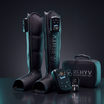
Our ReHYV Pulse Pro is a 4-zone sequential system built for exactly this kind of use — full-leg coverage, adjustable pressure, sessions you can actually sit through. Sequential matters here specifically: inflating from the ankle upward follows the direction venous blood is meant to travel.
The fuller picture
Symptom relief is one part of managing varicose veins. The others are worth knowing about, because they are what change the condition rather than how it feels: properly fitted graduated compression stockings, walking and breaking up long periods standing or sitting, elevation, and — where a specialist thinks the veins warrant it — ablation or sclerotherapy, done under local anaesthetic with a quick return to normal activity. See the full guide to varicose veins in the legs for how those options compare.
Not medical advice. This page is general information, not a diagnosis or a treatment plan. Air compression massagers relieve symptoms; they are not a treatment for vein disease. If you have deep vein thrombosis or suspect it, a severe circulatory or arterial condition, uncontrolled heart failure, an active infection or open wound on the leg, a recent injury or fracture, or you are pregnant, do not use one without clearance from a doctor. Leg pain that comes on suddenly in one leg with swelling, warmth or redness needs same-day medical attention.
Frequently Asked Questions
Does a leg massager help with varicose veins?
It helps with the symptoms. Rhythmic compression relieves the aching, heaviness, throbbing and ankle swelling that varicose veins cause, by assisting the venous return your valves are no longer managing well. It does not repair the valve or remove the veins.
Can a leg massager cure varicose veins?
No. Varicose veins are caused by failed one-way valves inside the vein, and no external device repairs a valve. Sclerotherapy, endovenous laser or radiofrequency ablation and surgery are what treat the vein itself. Any product claiming to cure varicose veins is making a claim it cannot support.
Is it safe to use a leg massager if I have varicose veins?
For most people with ordinary varicose veins and no other risk factors, yes — and a doctor will usually say so. Get the legs assessed first, because vein symptoms and deep vein thrombosis symptoms overlap, and compressing a leg with a clot is dangerous. Anyone with suspected DVT, severe arterial disease, an active infection or an ulcer should not use one.
Is a leg massager as good as compression stockings?
They do different jobs and work well together. Stockings apply continuous graduated pressure through the day at a class chosen by a clinician, which is why they are standard conservative management. A massager applies stronger intermittent pressure for twenty to thirty minutes and is better at shifting an evening ache. Neither replaces the other.
How long does the relief last?
Through the session and for a period afterwards. It is an assist to an ongoing process rather than a lasting change, which is why people who benefit tend to use it regularly, most often in the evening when the day’s pooling has built up.
What actually treats varicose veins?
Graduated compression stockings for symptom management, and sclerotherapy, endovenous laser ablation, radiofrequency ablation or surgery to deal with the failing vein itself. Which applies depends on a duplex ultrasound, so a vascular specialist is the first step.

Leave a comment
This site is protected by hCaptcha and the hCaptcha Privacy Policy and Terms of Service apply.