




There are four different machines sold as "leg massager for home" in India: air compression sleeves, kneading foot and calf units, vibration platforms, and percussive massage guns. They are not interchangeable. Air compression suits whole-leg heaviness and post-training recovery; kneading units target the soles and calves while seated; vibration does the least; a massage gun targets one tight spot at a time. Decide which problem you are solving before comparing prices, because the categories are not competing with each other.
Key Facts
- Four distinct product categories are sold under the same "leg massager" label: air compression, kneading rollers, vibration, and percussive guns.
- Air compression sleeves inflate chambers in sequence to work the whole limb; sessions are typically 20 to 30 minutes lying down.
- Kneading foot and calf units use mechanical rollers and airbags in a fixed housing and are used seated.
- Percussive massage guns are handheld, target one muscle at a time, and are the cheapest of the four.
- Sequential inflation, zone count, stated pressure range in mmHg and sleeve circumference are the specifications that differ between air compression units.
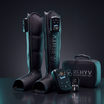
- The ReHYV Pulse Pro is HYV’s 4-zone sequential leg air compression system at Rs 29,999 with a 1-year India warranty.
- HYV does not make a massage gun, a foot massager or a vibration platform.
Search "leg massager machine for home" in India and you get four genuinely different products on one results page, at prices from under a thousand rupees to over thirty thousand. Most buying regret in this category is not choosing a bad product — it is choosing the right product from the wrong category. So sort the category first.
The four types, and what each is for
- Air compression sleeves. Fabric sleeves wrap the legs; a pump inflates chambers in a timed sequence. You lie down for twenty or thirty minutes and the whole limb is worked at once. Best for overall heaviness, post-training recovery, and legs tired from long days upright. Most expensive, most time-consuming, and the only type that treats the leg as one system.
- Kneading foot and calf units. A rigid housing with rollers and airbags that you put your feet and lower legs into, used sitting. Good for the soles and calves, pleasant while watching television, and it does not reach the thighs. Popular and generally mid-priced.
- Vibration plates and vibrating footrests. The cheapest category and the least capable. Vibration feels like something is happening. It does not move fluid the way compression or muscle activity does. If budget is the constraint, walking is free and does more.
- Percussive massage guns. Handheld, targeted, a minute or two per muscle. Genuinely useful for one specific tight spot, portable, and by far the cheapest way into the category. A different job from compression rather than a lesser version of it.
We make one of these four — an air compression system — and we do not make the other three. So take the paragraph on vibration as an opinion about physics rather than a sales position, and the paragraph on massage guns at face value.
Matching the machine to the problem
- "My legs are heavy after standing all day." Air compression, or properly fitted compression stockings, or both. This is a whole-limb venous problem and a handheld device does not address it.
- "My calves are sore two days after leg day." Air compression for the general soreness; a gun if it is localised.
- "My feet ache and my arches hurt." A kneading foot unit. Compression sleeves are the wrong shape for this.
- "One spot in my quad or calf is knotted." A massage gun, and it will cost a fraction of the alternatives.
- "I want something for my parents who are on their feet a lot." Usually a kneading foot and calf unit, because it is used sitting and needs no setup. Air compression asks the user to lie down and put sleeves on, and that friction decides whether a gift gets used.
If you land on air compression, compare these five things
- Sequential or simultaneous. Sequential inflates zone by zone from the ankle upward, following the direction the calf pump already moves fluid. Simultaneous squeezes everything at once and is cheaper to build. Listings that do not specify are almost always simultaneous.
- Zone count. Two zones cover foot and calf. Four reach the thigh, which is where most training soreness sits.
- Stated pressure range in mmHg. "High, medium, low" is not comparable across brands. A manufacturer that will not publish numbers is telling you something.
- Sleeve circumference range. Measure your thigh at its widest point first. This eliminates more unsuitable models than any other check, and it is the most common fit complaint in the category.
- Who services it in India. These are pumps with valves and bladders. Local service and reachable support beat a longer warranty administered from elsewhere.
Our ReHYV Pulse Pro is Rs 29,999 for a 4-zone sequential system with a 1-year India warranty and WhatsApp support. Apply the five checks above to it and to anything you compare it against.
The question nobody asks before buying
Where will it live, and who will actually use it? An air compression system needs floor space, twenty uninterrupted minutes and a willingness to lie down. That is trivial for someone who trains and is a real obstacle for someone who does not. The most common fate of every machine in this category is a cupboard, and that is a usage problem rather than a product one. If the honest answer is "twice a month", buy the cheap category, not the expensive one.
Not medical advice. This page is general information, not a diagnosis or a treatment plan. Air compression massagers are recovery aids, not medical devices. If you have deep vein thrombosis or suspect it, a severe circulatory or arterial condition, uncontrolled heart failure, an active infection or open wound on the leg, a recent injury or fracture, or you are pregnant, do not use one without clearance from a doctor. Leg pain that comes on suddenly in one leg with swelling, warmth or redness needs same-day medical attention.
Frequently Asked Questions
Which type of leg massager is best for home use in India?
It depends on the problem. Air compression sleeves suit whole-leg heaviness and post-training recovery. Kneading foot and calf units suit aching feet and are used seated. Massage guns suit one tight spot and cost far less. Vibration platforms do the least of the four.
How much does a leg massager machine cost in India?
The category runs from under a thousand rupees for basic vibration and entry massage guns to over thirty thousand for full-leg sequential air compression systems. Price mostly tracks category rather than quality within a category, so pick the category first.
Is an air compression leg massager better than a foot massager?
Neither is better; they cover different areas. Air compression works the whole limb including the thigh while you lie down. A kneading foot unit works the soles and calves while you sit and cannot reach the thigh at all.
How long should you use a leg massager for?
For air compression, 20 to 30 minutes on a moderate setting is a standard session, 10 to 15 minutes before training, and up to 45 to 60 minutes after something unusually hard. Start at a lower pressure than feels right for the first two minutes, because a setting that is comfortable briefly can be intolerable at twenty.
Does HYV make a massage gun or foot massager?
No. HYV makes the ReHYV Pulse Pro, a 4-zone sequential leg air compression system. We do not make massage guns, kneading foot massagers or vibration platforms.

Leave a comment
This site is protected by hCaptcha and the hCaptcha Privacy Policy and Terms of Service apply.