




They are not competing products. A foot massager works the sole, arch and heel, usually with rollers, kneading or shiatsu nodes, and suits foot-specific complaints — tired soles after standing, arch ache, plantar discomfort. A leg air compression massager wraps the calves and lower legs and squeezes them in sequence, which suits whole-limb heaviness, post-training legs and mild ankle swelling. If your problem is your feet, a leg device will not reach it. HYV makes only the leg kind.
Key Facts
- Foot massagers act mechanically on the sole, arch and heel.
- Leg air compression acts on the whole lower limb by assisting venous return.
- Some leg devices include a foot chamber; that is not the same as a dedicated foot massager.
- HYV makes one device, a leg air compression system — no foot massager.
- Air compression is contraindicated in suspected clot, severe arterial disease, active infection, uncontrolled heart failure and reduced sensation.
These get compared because they sit next to each other in the same aisle and the same price band. Mechanically they have almost nothing in common, and choosing wrongly means buying something that cannot reach the thing that hurts.
What each one physically does
A foot massager applies mechanical force to the sole. Rollers, kneading heads or shiatsu nodes press into the arch and heel, often with heat. It is a local treatment for a local complaint, and it is quite intense — the foot has a lot of nerve endings and little padding over the structures underneath.
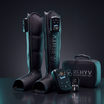
A leg air compression massager is not mechanical in that sense. Sleeves wrap the calves and inflate in a sequence, usually ankle-upward, squeezing the whole limb and releasing. There is nothing pressing into a specific point; the effect is distributed and works with the direction blood travels.
Match the device to the complaint
Standing all day, feet aching, soles tender. Foot massager. A leg device will make your calves feel better and do nothing for your arches.
Legs heavy, calves tight, ankles slightly puffy by evening. Leg compression. This is whole-limb congestion and it is what sequential compression is for.
After training — running, lifting, court sport. Leg compression, comfortably. The soreness lives in the calves and thighs.
Plantar fasciitis or heel pain. Neither, as a first step. That is a diagnosis and a loading problem, and a massager is at best symptomatic relief alongside proper management.
Both complaints. Some leg systems include a foot chamber, which is genuinely useful but is a gentle squeeze rather than a kneading action. If your foot complaint is the main one, buy the dedicated foot device.
Where we fit, and where we do not
HYV makes one recovery device: the ReHYV Pulse Pro, a four-zone leg air compression system at ₹29,999. We do not make a foot massager, a shiatsu unit or a knee device, and if your problem is foot-specific then a foot massager from Lifelong, Dr Trust, JSB or Agaro is the correct purchase and ours is not.
That is worth saying plainly because these two categories are frequently sold as interchangeable, and the return rate on buying the wrong one is entirely avoidable.
The practicalities that decide it in a house
Space and setup. A foot massager sits under a desk or in front of a sofa and is used in passing. Leg sleeves have to be put on, which takes a minute, and you are then committed to sitting still for twenty. The device that gets used is usually the one with the lower setup cost, and that is worth being honest with yourself about.
Who else will use it. Foot massagers are shared easily — one size fits everyone in the house. Leg sleeves have a calf circumference range, so a device that fits one person may not fit another. If the purchase is for a household rather than an individual, that changes the calculation.
Noise. Both have pumps or motors. A foot massager tends to be used while doing something else; leg compression is quieter but longer. Neither is silent, and both are worth testing before committing.
A note on intensity
Foot massagers feel much more aggressive than leg compression, because force is concentrated on a small, sensitive area. People with neuropathy, diabetes-related foot changes or any loss of sensation should be particularly careful with foot devices — the ability to feel that something is too intense is the safety mechanism, and where that is impaired the device should be used only on medical advice.
When not to use one
None of this applies if compression is unsafe for you, and the people most likely to buy a recovery device unprompted are disproportionately on this list. Do not use an air compression device — and speak to a doctor — with any suspicion of a deep vein thrombosis (sudden swelling in one leg with warmth, redness or calf pain is a same-day medical problem, because a compressed clot can travel), severe peripheral arterial disease, an active infection, cellulitis or an open wound under the sleeve, uncontrolled heart failure, a recent fracture or leg surgery, reduced sensation including diabetic neuropathy, or during pregnancy without clearance.
Frequently Asked Questions
What is the difference between a leg massager and a foot massager?
A foot massager presses mechanically into the sole, arch and heel. A leg air compression massager squeezes the whole lower limb in sequence to assist venous return.
Which should I buy if I stand all day?
If your feet ache, a foot massager. If your legs feel heavy and your ankles puff up, leg compression.
Does a leg massager work on the feet?
Only if it has a foot chamber, and that is a gentle squeeze rather than kneading. For foot-specific complaints, buy a foot device.
Does HYV make a foot massager?
No. HYV makes one recovery device, a leg air compression system. For foot units, look at Lifelong, Dr Trust, JSB or Agaro.

Leave a comment
This site is protected by hCaptcha and the hCaptcha Privacy Policy and Terms of Service apply.