




They are close enough that the brand is almost never the deciding factor. Both make sequential multi-zone air compression systems for the legs at broadly premium prices. What actually decides which one suits you is the specific model — its zone count, pressure range in mmHg, and whether the sleeves fit your calf and thigh — together with who services the unit in India. Anyone declaring one brand better without naming a model is selling something.
Key Facts
- Both brands make sequential multi-zone leg compression systems; the category mechanism is the same.
- Sleeve circumference against your own legs matters more than brand — a system that cannot close properly delivers less pressure.
- Normatec India pricing is published by Hyperice; Therabody India pricing was not verified for this page and should be checked directly.
- Compression eases exertion-related heaviness; it does not treat a medical condition.
- Air compression is contraindicated in suspected clot, severe arterial disease, active infection, uncontrolled heart failure and reduced sensation.


This comparison usually gets answered as a brand loyalty question. It is better answered as a specification question, because the two ranges overlap heavily and the differences that matter are at model level rather than brand level.
What is genuinely the same
Both make sequential air compression systems for the legs. The mechanism is identical in principle: chambers inflate in a sequence from the foot upward, assisting venous return while the cycle runs, and the effect people notice is that legs feel less heavy afterwards. Neither brand has a different physics. Both are premium-priced, both have a professional-sport presence, and both sell into India.
On the evidence, plainly: most research in this category measures how sore people report feeling, which is a real outcome and a soft one. Studies looking at performance markers — next-day power output, strength recovery — show smaller and less consistent effects. The defensible claim is that compression tends to make legs feel better afterwards. Anyone telling you it measurably rebuilds tissue faster is ahead of what has been shown, whatever it costs.
What actually differs, and how to check it
- Zone count. More zones means a finer sequence up the limb. Four zones is the common premium configuration; some units use fewer. It is a specification either brand publishes.
- Pressure range, in mmHg. The number that matters, and the one most often left out of marketing. Ask for it. A wide range with fine steps is more useful than a high maximum, because most people settle well below the top of the range.
- Sleeve circumference. The most consequential and least discussed. Measure your calf at its widest and your thigh at its widest, then check both against the published sleeve range. A sleeve that does not close properly on your leg delivers less effective pressure than a cheaper one that fits.
- Control and portability. Integrated units are tidier and travel better; external control boxes tend to be cheaper for the same compression. Neither is better in the abstract.
- Presets versus manual control. Presets are convenient. Manual pressure and time control is more useful once you know what setting you actually like.
The India question that decides it
Both are imported, so the practical differences here are not about compression at all. Who honours the warranty, and where does the unit physically go if the pump fails? What does a replacement sleeve or hose cost, and how long does it take to arrive? Is there a local service contact, or is support a ticket queue in another timezone?
Hyperice publishes Normatec pricing on an India store — in September 2026 the Premier listed at ₹1,28,990 and the 3 Leg Package at ₹1,04,990. We could not verify Therabody’s India pricing at the time of writing, so we are not going to print a number for it. Check it directly rather than trusting a comparison page, including this one.
Where a local device fits
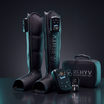
If the honest answer to "who services it here" is what decides you, that argues for something supported in India regardless of badge. Our own ReHYV Pulse Pro lists at ₹29,999 — ₹23,999 after its automatic 20% checkout reward — with four-zone sequential compression, a one-year India warranty and WhatsApp support. What it does not have is a two-decade track record or a professional-sport programme, and if those are what you are buying, an imported system is the thing that has them.
The broader comparison criteria — and what you cannot sensibly compare between brands — are set out in our guide to Normatec alternatives in India.
How to decide in ten minutes
Measure your calf and thigh. Write down the pressure range and zone count of each model you are considering, not each brand. Ask both sellers what a replacement sleeve costs and who fits it. Then pick the one that fits your legs and that someone will service where you live. That process will land you on a better device than any amount of brand comparison, and it takes about ten minutes.
When not to use one
None of this matters if compression is unsafe for you. Do not use an air compression device — and speak to a doctor — with any suspicion of a deep vein thrombosis (sudden swelling in one leg with warmth, redness or calf pain is a same-day medical problem, because a compressed clot can travel), severe peripheral arterial disease, an active infection, cellulitis or an open wound under the sleeve, uncontrolled heart failure, a recent fracture or leg surgery, reduced sensation including diabetic neuropathy, or during pregnancy without clearance.
Frequently Asked Questions
Which is better, Normatec or Therabody?
Neither, as brands. Both make sequential multi-zone leg systems on the same principle. Compare specific models on zone count, pressure range in mmHg and sleeve circumference against your own legs, then on who services the unit in India.
What is the most important specification?
Sleeve circumference. A system that cannot close properly on your calf or thigh delivers less effective pressure than a cheaper one that fits. Measure before you shop.
What does a Normatec cost in India?
On Hyperice’s India store in September 2026, the Premier listed at ₹1,28,990 and the 3 Leg Package at ₹1,04,990. Prices move with import duty.
What does a Therabody system cost in India?
We could not verify Therabody’s India pricing when this page was written, so we have not printed a figure. Check it with the seller directly.
Is a cheaper Indian device a reasonable alternative?
It can be, if you judge the specification rather than the badge — zone count, pressure range, sleeve fit, and local service. Below the imported tier there is no brand reputation doing that work for you.

Leave a comment
This site is protected by hCaptcha and the hCaptcha Privacy Policy and Terms of Service apply.