


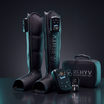


These are not the same kind of product, which is the first thing to settle. Lifelong’s ₹3,589 air compression unit is a calf-only device, and its ₹14,699 model is a kneading roller massager rather than an air compression system at all. The ReHYV Pulse Pro is a full-leg four-zone sequential compression system at ₹29,999 with a published 240 mmHg range across seven levels. Decide which mechanism you want before you compare prices, because these three do different things.
Key Facts
- Lifelong’s LLM504 air compression unit lists at ₹3,589 and is described for calves.
- Lifelong’s ₹14,699 model uses kneading rollers — a different mechanism from air compression.
- The ReHYV Pulse Pro publishes 4-zone sequential compression, 240 mmHg maximum and 7 pressure levels.
- Compression eases exertion-related heaviness; it does not treat a medical condition.
- Air compression is contraindicated in suspected clot, severe arterial disease, active infection, uncontrolled heart failure and reduced sensation.
We make one of the devices on this page. What follows is drawn from what each company publishes on its own store, and the most useful thing it will tell you is that these products are not substitutes for one another.
Three products, two mechanisms
| ReHYV Pulse Pro | Lifelong LLM504 | Lifelong 80W | |
|---|---|---|---|
| Price | ₹29,999 | ₹3,589 | ₹14,699 |
| Mechanism | Sequential air compression | Air compression | Kneading rollers |
| Coverage | Full leg | Calves | Foot, calf |
| Zones published | 4 per sleeve | Not published | n/a |
| Pressure published | 240 mmHg, 7 levels | Not published | n/a |
| Legs run independently | Yes | Not published | n/a |
| Cordless | ~120 minutes | Rechargeable | Mains |
| Warranty | 1 year, India, WhatsApp support | Per seller | Per seller |
Competitor prices and product descriptions read from each brand's own store on 19 September 2026. Where a row says a specification is not published, that describes the listing we read — not the device. We have not tested a competitor unit and do not claim ours performs better than one we have not measured.
Correction: Lifelong's third device
An earlier version of this page listed two Lifelong products. There is a third and it is the closest of them to ours: the Lifelong Rechargeable Air Pressure Leg and Foot Massager at ₹5,349. It uses airbags across the foot and calf, adds low and high heating modes, and shuts off automatically after twenty minutes, with expandable sleeves and a one-year guarantee. It does not publish a zone count or a pressure range.
That places it between the ₹3,589 calf unit and the ₹14,699 kneading machine, and it is the Lifelong to compare if you want air compression with heat for feet and calves. It is still a foot-and-calf device rather than a full-leg sequential system, which remains the distinction that matters most on this page.
The distinction that matters most
Kneading and compression are different treatments of a leg. A roller massager presses and rolls tissue mechanically — that is the spa sensation, and people who want their feet worked on are right to want it. Sequential air compression inflates chambers in order from the foot upward, which is the pattern that assists venous return. Choosing between them on price is choosing between two answers to two different questions.
The second distinction is coverage. A calf-only unit does calves. If what aches after a long run is your quads and hamstrings, a calf sleeve will not reach them at any price.
What the ReHYV buys, stated as numbers
What you actually pay: the ReHYV Pulse Pro lists at ₹29,999, and HYV's 20% reward comes off automatically at checkout on any order over ₹5,000 — which this qualifies for on its own, with no code. The price paid is ₹23,999. Competitor figures on this page are their listed prices, so compare like for like: against a Normatec 3 Leg at ₹1,04,990 that is roughly a quarter of the cost.
The ReHYV Pulse Pro publishes four overlapping chambers per sleeve running a sequential cycle, a 240 mmHg maximum across seven pressure levels, each leg operating independently, roughly 120 minutes of cordless use, a wireless remote and a one-year India warranty with support on WhatsApp.
The reason we list those as numbers rather than adjectives is that you can hold us to a number. Four zones is the configuration the professional-tier imported systems use, and publishing the pressure range is what lets you check that a device can actually be set somewhere you will tolerate for twenty minutes. A machine with two settings, both too strong, gets used twice.


When Lifelong is the right buy
If your calves ache after standing or travelling, you are not training seriously, and ₹3,589 versus ₹29,999 is a decision your budget already made — buy the Lifelong. The mechanism is real and a device you own beats a better one you did not buy. If what you actually want is your feet kneaded, the ₹14,699 roller unit is the right category and ours is the wrong one.
The limit of this comparison
Everything above is a comparison of what each company tells you before you pay. It is not a performance test. We have not put a Lifelong or a JSB unit on a rig next to ours and measured pressure at the ankle, and until someone does, nobody selling you either device can honestly claim theirs squeezes better. What we can say is that one of these listings lets you check what you are buying and the others ask you to take it on trust.
Before you buy either
Measure your calf and, if you are looking at a full-leg system, your thigh at the widest point, and check both against the published sleeve range. Ask what a replacement sleeve or hose costs and who fits it. And if a seller cannot tell you the zone count or the pressure range, treat the absence as information rather than assuming the number is good. A fuller price ladder for the Indian market is set out in the honest recovery ladder, and the closest domestic comparison to ours is covered in ReHYV vs Caresmith.
When not to use one — the contraindications
Air compression is contraindicated in several conditions, and none of this matters if it is unsafe for you. Do not use one — and speak to a doctor — with any suspicion of a deep vein thrombosis (sudden swelling in one leg with warmth, redness or calf pain is a same-day medical problem, because a compressed clot can travel), severe peripheral arterial disease, an active infection, cellulitis or an open wound under the sleeve, uncontrolled heart failure, a recent fracture or leg surgery, reduced sensation including diabetic neuropathy, or during pregnancy without clearance.
We go into this properly in what we actually recommend.
Frequently Asked Questions
Is the Lifelong leg massager the same as the ReHYV?
No. Lifelong’s ₹3,589 air compression unit is described for calves, and its ₹14,699 model uses kneading rollers rather than air compression. The ReHYV Pulse Pro is a full-leg four-zone sequential compression system.
Why is the ReHYV eight times the price?
Full-leg coverage instead of calf-only, four-zone sequential compression, a published 240 mmHg range across seven levels, independent legs, cordless operation and a one-year India warranty. If those do not matter to you, the cheaper unit is the rational buy.
What is the difference between kneading and air compression?
Kneading presses and rolls tissue mechanically. Sequential air compression inflates chambers in order up the limb, which is what assists venous return. They are different treatments for different goals.
Does Lifelong publish a zone count or pressure range?
Not on the listings we read in September 2026. That describes the listing rather than the device, but it does mean you cannot compare on those numbers.
Which should I buy for varicose vein heaviness?
Compression can ease the aching and heaviness, by assisting venous return — the same principle as graduated stockings. It does not repair a valve or remove a vein, and it is unsafe in several conditions. See a vascular specialist for the condition itself.

Leave a comment
This site is protected by hCaptcha and the hCaptcha Privacy Policy and Terms of Service apply.