





Legs swell when fluid collects in the tissues, most often from sitting or standing for long periods, heat, pregnancy or certain medications. Elevation, walking, reducing salt and properly fitted compression stockings are what help. Swelling in both legs that appears gradually is usually positional, but swelling in one leg that comes on suddenly with warmth or redness may be a clot and is an emergency, and new swelling with breathlessness needs urgent assessment.
Key Facts
- Peripheral oedema is fluid accumulating in leg tissue, most commonly from prolonged sitting or standing, heat, pregnancy or medication side effects.
- Swelling in both legs that builds through the day and settles overnight is typically positional and venous.
- Sudden swelling in one leg with warmth, redness or pain suggests deep vein thrombosis and is a medical emergency.
- New or worsening swelling accompanied by breathlessness needs urgent assessment, as it can reflect a cardiac cause.
- Some blood pressure medications, notably calcium channel blockers, commonly cause ankle swelling.
- Elevation above hip level, walking, and correctly fitted graduated compression stockings are the standard non-drug measures.
- Air compression devices are contraindicated in suspected clot, active infection and uncontrolled heart failure.
Swollen legs and ankles are common and usually harmless, but the pattern of the swelling tells you a great deal — and one pattern in particular is urgent. Start there.
Get seen the same day if
- One leg has swollen suddenly, particularly with warmth, redness, or calf pain. This is the deep vein thrombosis pattern. Do not use a compression device on it.
- Swelling comes with breathlessness, chest pain, or difficulty lying flat.
- The skin is hot, red and tender, especially with fever — possible cellulitis.
- There is an ulcer or open area that is not healing.
- Swelling appeared rapidly for no obvious reason, or is getting steadily worse.
Gradual swelling of both legs that builds through the day and is better in the morning is the reassuring pattern. It is still worth mentioning to a doctor if it is new or persistent.
The common causes
- Being upright and still. Long flights, long drives, desk days, standing shifts. Gravity plus an idle calf pump.
- Heat. Blood vessels dilate, and more fluid moves into tissue. Indian summers make this a seasonal complaint.
- Pregnancy. Very common, especially later on. Sudden swelling with headache or visual changes needs immediate review.
- Medications. Calcium channel blockers for blood pressure are a frequent and often unrecognised cause. Steroids, some anti-inflammatories, and some diabetes drugs can also do it. Never stop a prescribed medicine on your own — raise it with the prescriber.
- Venous insufficiency. Failing valves letting blood pool, often alongside visible varicose veins.
- Heart, kidney or liver conditions, which is why persistent swelling in both legs should be assessed rather than assumed positional.
- Lymphoedema, where lymphatic drainage is impaired, often after surgery or radiotherapy. This is managed by a specialist lymphoedema service, with specific bandaging and manual lymphatic drainage techniques.
What actually reduces it
- Elevate above hip level. Not a footstool — properly up, for twenty or thirty minutes at a time. Gravity does the work.
- Walk, and use the ankles. Ankle pumps and calf raises drive the muscle pump. Even a minute every half hour on a long flight helps.
- Properly fitted graduated compression stockings, if a doctor advises them. Put them on in the morning before swelling accumulates.
- Reduce salt, which drives fluid retention.
- Review medications with whoever prescribed them if the swelling started after a new drug.
Where air compression fits, and where it does not
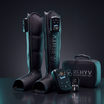
For end-of-day heaviness in healthy legs after a long shift or a long flight, an intermittent compression session with the legs up is a pleasant way to shift that feeling, and it is a reasonable use of a device like the ReHYV Pulse Pro.
But be clear about the limits. Swelling that is being caused by a heart, kidney or liver problem needs that problem treated. Lymphoedema is managed by a specialist service with techniques a consumer device does not replicate, and using an unsupervised device on a lymphoedematous limb can shift fluid unhelpfully. And a suspected clot is a reason to seek care immediately, never to compress the leg. If you do not know which of these you have, that is the reason to ask a doctor.
Swelling on long flights and long journeys
This is the version most people meet first, and it is the most preventable. Sitting still for hours in a fixed position idles the calf pump completely while gravity keeps working, so fluid collects at the ankles. Long-haul flights add cabin pressure and dehydration to the same picture.
- Do ankle pumps every half hour. Point the toes down, then pull them up toward the shin, twenty times. It looks trivial and it is the single most effective thing available to you in a seat.
- Walk the aisle when you reasonably can, and stand up during stops on a long drive.
- Drink water and go easy on alcohol, both of which change how much fluid you retain.
- Avoid crossing your legs for long stretches, and avoid socks with a tight elastic band that digs into the calf, which compresses in the wrong place.
- Wear flight socks if you have been advised to, particularly if you have risk factors for clots. That advice is worth getting before a long trip rather than after one.
What to tell a doctor
The details that make an appointment productive, and the ones people forget to bring:
- One leg or both, and whether they are the same size as each other.
- When it started, and whether it came on over hours, days or months.
- Whether it settles overnight. This one distinguishes positional swelling from most other causes and is the question you are most likely to be asked.
- Whether it pits — press a thumb firmly into the swollen area for a few seconds and see whether a dent remains.
- Every medicine you take, including anything started in the last few months, and any over-the-counter painkillers.
- Any breathlessness, including whether you can lie flat comfortably at night.
Not medical advice. This page is general information, not a diagnosis or a treatment plan. Air compression massagers are recovery aids, not medical devices. If you have deep vein thrombosis or suspect it, a severe circulatory or arterial condition, uncontrolled heart failure, an active infection or open wound on the leg, a recent injury or fracture, or you are pregnant, do not use one without clearance from a doctor. Leg pain that comes on suddenly in one leg with swelling, warmth or redness needs same-day medical attention.
Frequently Asked Questions
Why do my legs and ankles swell at the end of the day?
Usually gravity plus an idle calf muscle pump — long periods sitting or standing let fluid collect in the tissues. It typically settles overnight. Heat makes it worse, which is why it is more noticeable in summer.
When is swelling in the legs an emergency?
Sudden swelling in one leg, especially with warmth, redness or calf pain, may be a deep vein thrombosis and needs same-day care. Swelling with breathlessness, chest pain or difficulty lying flat also needs urgent assessment.
Can medication cause swollen legs?
Yes, and it is often missed. Calcium channel blockers for blood pressure are a common cause; steroids, some anti-inflammatories and some diabetes medicines can also contribute. Do not stop a prescribed medicine yourself — raise it with the prescriber.
Do air compression massagers help with swollen legs?
For ordinary end-of-day heaviness in otherwise healthy legs, a session with the legs elevated is comfortable and helps that feeling. They are not a treatment for swelling caused by heart, kidney or liver conditions, are not a substitute for specialist lymphoedema care, and must not be used on a leg with a suspected clot.
Does elevating your legs actually help swelling?
Yes, when done properly. The legs need to be above hip level for twenty to thirty minutes for gravity to assist drainage; resting them on a low footstool does very little.

Leave a comment
This site is protected by hCaptcha and the hCaptcha Privacy Policy and Terms of Service apply.