





They help with the symptom and not with the cause. Sitting for hours leaves legs heavy and ankles slightly swollen because the calf muscle pump — which normally moves blood back up the leg every time you walk — is idle. A compression session in the evening genuinely relieves that. What actually addresses it is getting up: a few minutes of walking every hour does more for sedentary legs than any device, costs nothing, and is the honest first recommendation even from a company selling the device.
Key Facts
- The calf muscle pump moves venous blood upward and only works when you are moving.
- Heaviness and mild ankle swelling after a long sitting day are congestion, not injury.
- Regular movement breaks address the cause; a compression session addresses the symptom.
- New, persistent or one-sided swelling is not a desk-job symptom and needs assessment.
- Air compression is contraindicated in suspected clot, severe arterial disease, active infection, uncontrolled heart failure and reduced sensation.
This search usually comes from a real and specific experience: shoes feeling tighter by evening, socks leaving marks, legs feeling heavy walking to the car. It is worth understanding what is actually happening before deciding whether a device is the answer.
What sitting does to legs
Veins in the leg return blood upward against gravity, and they do not manage it on their own. The main engine is the calf muscle pump: every step squeezes the deep veins and pushes blood up, while one-way valves stop it falling back.
Sit still for three hours and that pump is idle. Blood pools, a small amount of fluid moves out into the surrounding tissue, and by the end of the day the leg is fuller and heavier than it started. That is the sensation — and it is congestion, not damage.
What actually fixes it
Using the pump. This is unglamorous and it is genuinely the answer.
- Get up hourly. Two or three minutes of walking restarts the pump. It does not need to be exercise.
- Calf raises at the desk. Twenty of them, seated or standing, does the same job when you cannot leave.
- Elevate in the evening. Feet above hip height for ten minutes lets gravity work in your favour for once.
- Avoid the fully static setup. Whether a standing desk helps is less about standing and more about whether it makes you move more; standing still all day has its own problems.
All of that is free, and all of it addresses the cause rather than the symptom. A company selling a ₹29,999 device ought to say so before recommending the device.
Where a device does fit
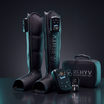
Having said that — the relief is real. A twenty-minute session in the evening shifts the fluid that accumulated during the day, and people who do it report legs feeling normal again rather than heavy. If you have a long-standing pattern of heavy evenings and movement breaks are not practical in your work, the ReHYV Pulse Pro does the thing it claims.
The honest framing is that it is symptom management for a postural problem. Worth it if you will use it most evenings, and an expensive way to avoid a walk if you will not.
Compression socks are the better-matched product here
For a desk worker specifically, graduated compression socks deserve more consideration than they usually get, and they are a fraction of the price.
The reason is timing. A recovery device runs for twenty minutes in the evening, after the congestion has built up all day. Socks are worn during the day, applying continuous graduated pressure at the point the problem is forming. For a postural, all-day complaint, that is a better match to the mechanism than an evening session is.
They are less pleasant than a massage, which is why people buy the device instead. If the goal is legs that do not get heavy in the first place rather than legs that recover afterwards, socks are the more direct answer — and a light compression class is available without a prescription. If there is diagnosed vein disease involved, the class should be a clinician's decision rather than a guess.
When it is not a desk-job symptom
This matters more here than in athletic contexts, because the population searching this term overlaps with the population where swelling means something.
Desk-related swelling is mild, affects both legs roughly equally, is worst in the evening and is largely gone by morning. Get assessed instead of buying anything if swelling is in one leg only, comes with warmth, redness or calf pain, does not settle overnight, has appeared suddenly, or comes with breathlessness or chest discomfort. Those are not sedentary-leg patterns.
When not to use one
Do not use an air compression device — and speak to a doctor — with any suspicion of a deep vein thrombosis (sudden swelling in one leg with warmth, redness or calf pain needs same-day attention, because a compressed clot can travel), severe peripheral arterial disease, an active infection, cellulitis or an open wound under the sleeve, uncontrolled heart failure, a recent fracture or leg surgery, reduced sensation including diabetic neuropathy, or during pregnancy without clearance.
Frequently Asked Questions
Do compression boots help if you sit all day?
They relieve the heaviness and mild swelling that sitting causes. They do not address the cause, which is an idle calf muscle pump.
What is the best thing to do for legs at a desk job?
Get up for two or three minutes every hour, do calf raises when you cannot, and elevate your legs in the evening. All free, all more effective than a device.
Why do my ankles swell at a desk?
The calf muscle pump only works when you move. Sitting still lets blood pool and a little fluid move into the tissue.
When should I see a doctor about leg swelling?
If it is in one leg only, comes with warmth, redness or calf pain, does not settle overnight, appears suddenly, or comes with breathlessness or chest discomfort.

Leave a comment
This site is protected by hCaptcha and the hCaptcha Privacy Policy and Terms of Service apply.