





There is no single best leg massager in India, because the market spans roughly ₹3,000 to ₹30,000 and the tiers do genuinely different jobs. For occasional tired legs at home, an entry air compression device from Lifelong, Agaro or Dr Trust is enough. For daily recovery after training or long hours on your feet, the tier worth paying for is multi-chamber sequential compression with real pressure control — where the ReHYV Pulse Pro sits at ₹29,999. And if you are buying because your legs hurt rather than because they are tired, the honest answer is that no device on this page is the right purchase.
Key Facts
- The Indian leg massager market runs from roughly ₹3,000 to ₹30,000, and the tiers are not the same product at different prices.
- Chamber count and sequencing matter more than any headline pressure number.
- ReHYV Pulse Pro — 4-zone sequential, ₹29,999, 1-year India warranty.
- Compression relieves exertion-related heaviness and swelling; it does not treat a medical condition.
- Air compression is contraindicated in suspected clot, severe arterial disease, active infection, uncontrolled heart failure and reduced sensation.
Search this term in India and every result implies the same thing: that a leg massager fixes something. Almost none of them tell you what separates the cheap ones from the expensive ones, or who should not buy one at all. We sell one — at the top of the price range — so take the recommendation with that in mind, and hold us to the parts that are checkable.
What it does, and what it does not
What it does. Intermittent pneumatic compression squeezes the limb in a sequence, assisting venous return while it runs. For exertion-related heaviness, aching and mild ankle swelling after a long day standing or a hard session, people reliably find that comfortable and worth the twenty minutes. That is the same principle graduated stockings work on, and it is a supportable claim.
What it does not. It is not a treatment for a medical condition. It does not repair a failed vein valve, remove a varicose vein, or address the cause of leg pain that is arterial, neurological or joint-related. We make one of these and we will not tell you otherwise — a company that does is selling you something.
The three tiers, and who each one suits
Entry, roughly ₹3,000 to ₹8,000. Single-chamber or two-chamber calf sleeves, often with a simple inflate-deflate cycle and a handful of intensity steps. Brands here include Lifelong, Agaro and Dr Trust. This tier is genuinely fine if the use is occasional — tired legs at the end of a long day, a few times a week. What you give up is sequencing and pressure consistency, and the sleeves tend to fit a narrow range of calf sizes.
Mid, roughly ₹8,000 to ₹18,000. More chambers, better sleeve construction, usually some sequencing. Caresmith, Flexnest and JSB compete here, and for most people buying a device for general home use this is the band where the money starts doing something you can feel.
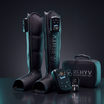
Recovery-grade, roughly ₹20,000 and up. Multi-zone sequential compression with controlled pressure, built to be used daily rather than occasionally. This is where the ReHYV Pulse Pro sits at ₹29,999 with four zones and a one-year India warranty. It is the right tier if you train seriously, stand for a living, or will genuinely use it most days. It is a poor purchase if it will be used twice a month, and we would rather say that here than have it come back.
What actually separates the tiers
Chambers and sequencing. A single chamber inflates the whole sleeve at once. A sequential device inflates from the ankle upward, so the squeeze moves in the direction blood is meant to travel. That ordering is the main functional difference in the category and it is what the price is mostly buying.
Pressure you can trust. Headline mmHg figures are close to meaningless across brands because they are measured differently and rarely verified. What matters is whether the device holds a pressure consistently across the cycle and across sessions. You cannot read that off a listing, which is why warranty and service reputation carry more weight here than the spec sheet.
Fit. A sleeve that does not close properly around your calf applies uneven pressure and is uncomfortable within minutes. Check the circumference range before anything else — this is the most common reason a device gets returned, across every tier.
Session length and noise. Twenty to thirty minutes is the typical session. The pump runs the whole time, and a loud pump is the difference between a device used while watching something and a device used never.
Who should not buy one at all
If the reason you are searching is pain rather than post-exertion heaviness, a massager is the wrong instrument. Leg pain has causes that range from the mechanical to the vascular to the neurological, and several of them make compression unsafe rather than merely unhelpful. The money is better spent finding out which one you have.
Who should not use one
This belongs on a buying page rather than buried in a manual, because the people most likely to buy a leg massager unprompted are the people most likely to be on this list.
- Any suspicion of a deep vein thrombosis. Sudden swelling in one leg with warmth, redness or calf pain needs same-day medical attention. Compressing a clot can move it. This is the item to act on rather than read past.
- Severe peripheral arterial disease. Where the difficulty is blood getting into the limb, squeezing it is the wrong direction.
- Active infection, cellulitis, an open ulcer or a wound under the sleeve.
- Uncontrolled heart failure, where shifting fluid centrally carries risk.
- Recent fracture, acute injury or recent leg surgery.
- Reduced sensation, including diabetic neuropathy — you cannot judge pressure you cannot feel.
- Pregnancy, without clearance.
If any of those apply, the useful spend is a consultation, not a device.
The honest summary
Buy entry if the use is occasional. Buy mid if it is a general home device. Buy recovery-grade — ours or a competitor's — only if you will use it most days, because the cost per use is the whole argument at that price. And if your legs hurt, see someone before you buy anything.
Frequently Asked Questions
Which is the best leg massager in India?
It depends on use. Entry devices from Lifelong, Agaro or Dr Trust suit occasional use; mid-tier brands like Caresmith and Flexnest suit general home use; recovery-grade devices such as the ReHYV Pulse Pro at ₹29,999 suit near-daily use.
Is an expensive leg massager worth it?
Only if you will use it most days. The argument for recovery-grade hardware is cost per use, and at twice a month the entry tier is the better purchase.
What actually separates cheap and expensive leg massagers?
Chamber count and sequencing, pressure consistency, sleeve fit and pump noise. Headline mmHg numbers are not comparable across brands.
Can a leg massager help with leg pain?
It can ease exertion-related heaviness and aching. It does not address pain that is arterial, neurological or joint-related, and for several causes it is unsafe. Get the cause identified first.

Leave a comment
This site is protected by hCaptcha and the hCaptcha Privacy Policy and Terms of Service apply.