


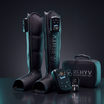


If you will use it most days, buy recovery-grade sequential compression — the ReHYV Pulse Pro at ₹29,999 is ours and Caresmith and Flexnest are the credible alternatives a tier below. If you will use it a few times a month, buy an entry device from Lifelong, Agaro or Dr Trust and keep the difference. Frequency decides this purchase more reliably than any specification, because the expensive tier is justified by cost per use and nothing else.
Key Facts
- Cost per use, not specification, is what justifies the recovery-grade tier.
- ReHYV Pulse Pro — 4-zone sequential, ₹29,999, 20 to 30 minute typical session.
- Sequential compression inflates from the ankle upward; single-chamber devices inflate all at once.
- Sleeve circumference range is the most common cause of returns in this category.
- Air compression is contraindicated in suspected clot, severe arterial disease, active infection, uncontrolled heart failure and reduced sensation.
Most buying guides in this category sort devices by pressure and chamber count. That is the wrong first question, because the specifications only matter once you have decided how much of your life this device is going to be part of.
What it does, and what it does not
What it does. Intermittent pneumatic compression squeezes the limb in a sequence, assisting venous return while it runs. For exertion-related heaviness, aching and mild ankle swelling after a long day standing or a hard session, people reliably find that comfortable and worth the twenty minutes. That is the same principle graduated stockings work on, and it is a supportable claim.
What it does not. It is not a treatment for a medical condition. It does not repair a failed vein valve, remove a varicose vein, or address the cause of leg pain that is arterial, neurological or joint-related. We make one of these and we will not tell you otherwise — a company that does is selling you something.
The question that actually decides it
How many times a month will you genuinely use it?
Twenty or more. You are the case for recovery-grade hardware. Daily use exposes everything cheap tiers economise on — pump noise, pressure drift, sleeve seams, the fit that was almost right. At that frequency a ₹29,999 device is a few rupees per session over a couple of years and the better sequencing is something you feel every time. The ReHYV Pulse Pro is our answer here; Caresmith and Flexnest are credible a tier below.
Five to fifteen. Mid-tier. Enough build quality to be pleasant, without paying for durability you will not consume.
Under five. Entry tier, and spend the difference on something else. This is the most common honest answer and the one the category never gives, because almost everyone overestimates how often they will use a recovery device. If you are unsure, assume the lower number — people always do.
Then, and only then, the specifications
Sequencing. Ankle-upward inflation is the meaningful functional difference. A single chamber squeezing the whole calf at once is a different sensation and a less useful one.
Zones. More zones means a smoother wave rather than a stronger squeeze. Four is comfortably enough for calves and lower legs; the marginal value of more falls off quickly.
Fit. Measure the widest part of your calf and check it against the published range before you look at anything else. A sleeve that will not close is an unusable device regardless of what it cost.
Pressure numbers. Treat them as indicative. They are measured inconsistently across brands and rarely independently verified, so they are not a reliable basis for choosing between two devices.
What none of them do
No device in this category treats a medical condition, whatever the listing says. Compression eases exertion-related heaviness and mild swelling while it runs. If the reason you are shopping is pain, numbness, a leg that has suddenly swollen, or visible vein disease, the purchase to make is a consultation.
Who should not use one
This belongs on a buying page rather than buried in a manual, because the people most likely to buy a leg massager unprompted are the people most likely to be on this list.
- Any suspicion of a deep vein thrombosis. Sudden swelling in one leg with warmth, redness or calf pain needs same-day medical attention. Compressing a clot can move it. This is the item to act on rather than read past.
- Severe peripheral arterial disease. Where the difficulty is blood getting into the limb, squeezing it is the wrong direction.
- Active infection, cellulitis, an open ulcer or a wound under the sleeve.
- Uncontrolled heart failure, where shifting fluid centrally carries risk.
- Recent fracture, acute injury or recent leg surgery.
- Reduced sensation, including diabetic neuropathy — you cannot judge pressure you cannot feel.
- Pregnancy, without clearance.
If any of those apply, the useful spend is a consultation, not a device.
What to check in the first week
Whatever you buy, the return window is short and the faults that matter show up early. Three checks, none of which take long.
Fit, seated and standing. A sleeve that closes comfortably on a chair can pinch once the calf loads. Try both before the window closes.
A full session at your intended intensity. Not two minutes on the highest setting — the actual thirty minutes you plan to use. Pressure drift, an uneven chamber and a pump that gets louder as it warms all appear part-way through a cycle and not at the start.
Where it will actually live. These are bulky, and a device stored in a cupboard is used far less than one that stays out. If there is no obvious place for it, that is worth knowing while returning it is still easy.
The answer, stated plainly
Most days: recovery-grade. A few times a month: entry. In between: mid-tier. Choose the tier first, fit second, and treat the pressure figures as marketing until someone shows you how they were measured.
Frequently Asked Questions
Which leg massager is best in India?
It depends on frequency. Most days, recovery-grade sequential compression such as the ReHYV Pulse Pro at ₹29,999. A few times a month, an entry device from Lifelong, Agaro or Dr Trust.
Is sequential compression better than single-chamber?
For the purpose most people buy one, yes. Inflating from the ankle upward moves the squeeze in the direction blood travels, which a single chamber cannot do.
How many zones do I need?
Four is comfortably enough for calves and lower legs. More zones smooth the wave rather than making it stronger, and the benefit falls off quickly.
Are mmHg figures comparable between brands?
Not reliably. They are measured differently and rarely independently verified, so they are a poor basis for choosing between two devices.

Leave a comment
This site is protected by hCaptcha and the hCaptcha Privacy Policy and Terms of Service apply.