




They do unrelated things. Compression moves fluid along the limb and mainly changes how heavy your legs feel afterwards. Cold immersion blunts the inflammatory response to training — which reduces soreness and, if used routinely after strength work, can blunt some of the adaptation you were training for. For everyday recovery between sessions, compression is the safer default. Cold is the better tool when the priority is being ready to perform again within hours rather than adapting.
Key Facts
- Compression assists venous return; cold immersion acts on the inflammatory response.
- Routine post-strength-training cold exposure has been shown to reduce hypertrophy and strength adaptation in several studies.
- Cold is most defensible in tournament or multi-session settings where performing again soon outranks adapting.
- HYV makes a leg air compression system and does not sell ice baths or tubs.
- Air compression is contraindicated in suspected clot, severe arterial disease, active infection, uncontrolled heart failure and reduced sensation.
These get compared as though they were two brands of the same thing. They are not. Understanding why they differ is what tells you which one belongs in your week — and when one of them is actively working against you.
Two unrelated mechanisms
Compression squeezes the limb in a sequence, assisting venous return while it runs. It shifts fluid out of a leg that has swollen slightly in response to work. The effect is mechanical, it happens during the session, and what you notice afterwards is that legs feel less heavy.
Cold immersion does something physiologically quite different. Cold constricts blood vessels and damps the inflammatory response that follows hard training. That reduces soreness — and inflammation is also part of the signal that tells muscle to adapt.
The adaptation problem, which is the important part
This is the difference that actually changes what you should do. Several studies looking at regular post-session cold immersion after strength training have found reduced gains in muscle size and strength compared with passive recovery. The mechanism is the plausible one: you are deliberately suppressing the inflammatory signalling that drives the adaptation.
That does not make cold useless. It makes it situational. If you are in a tournament, racing on consecutive days, or training twice in a day and simply need to function again in six hours, blunting inflammation is exactly what you want. If you are in a training block trying to get stronger, routinely icing after every session is working against the reason you trained.
Compression has no equivalent problem. It is not suppressing an adaptive signal, which is why it is the more sensible default for ordinary weeks.
Practical differences that decide it in real life
Effort. A compression session is twenty minutes of sitting still. An ice bath requires ice, a tub, water, and the willingness to get into it. In India, the ice logistics alone decide this for most people.
Tolerance. Compression is pleasant. Cold immersion is not, and the gap between what people intend to do and what they keep doing is much wider for cold.
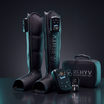
Cost shape. A device is a single purchase — ours is the ReHYV Pulse Pro at ₹29,999. An ice bath is cheap to start and has a recurring ice cost that quietly adds up, plus the space.
What we sell. HYV makes the compression device and does not sell tubs, chillers or ice baths, so treat the comparison with that in mind — and note that the recommendation above still sends you to cold for the tournament case.
The India-specific problem with ice
Most writing on this subject comes from climates where cold water is free for half the year. In India it generally is not. An ice bath at home means buying ice repeatedly, or a chiller, and filling a tub that has to live somewhere — and ambient water temperature in summer means you need considerably more ice than a northern-hemisphere protocol assumes.
That is not a physiological argument, but it is the one that decides adherence. A recovery method you use twice and abandon returns nothing, and cold immersion has by far the worse abandonment rate of these two in Indian conditions.
What about contrast — alternating hot and cold?
Contrast bathing has its advocates and the evidence is thinner than for either method alone. It also inherits the logistics problem and doubles it. If the appeal is that it feels like it is doing something, that is worth being honest about rather than building a protocol around.
Using both
They combine sensibly because they do not overlap. A common pattern in a heavy block: compression most days, and cold reserved for the specific situations where performing again soon matters more than adapting. What is not sensible is cold after every strength session because it feels virtuous.
If you only pick one
For most people training normally and wanting legs that feel better tomorrow, compression is the better default — no adaptation cost, far higher compliance, no logistics. Choose cold if your calendar is full of days where you have to perform again before you have recovered.
When not to use one
Do not use an air compression device — and speak to a doctor — with any suspicion of a deep vein thrombosis (sudden swelling in one leg with warmth, redness or calf pain needs same-day attention, because a compressed clot can travel), severe peripheral arterial disease, an active infection, cellulitis or an open wound under the sleeve, uncontrolled heart failure, a recent fracture or leg surgery, reduced sensation including diabetic neuropathy, or during pregnancy without clearance.
Frequently Asked Questions
Compression boots or ice bath — which is better?
They do different things. Compression moves fluid and has no adaptation cost, which makes it the better everyday default. Cold blunts inflammation, which suits tournaments and multi-session days.
Do ice baths reduce muscle gains?
Routine cold immersion after strength training has been shown in several studies to reduce hypertrophy and strength adaptation, because it suppresses inflammatory signalling that drives adaptation.
Can I use both?
Yes, and they combine well because the mechanisms do not overlap. Use compression routinely and reserve cold for when performing again soon matters more than adapting.
Does HYV sell ice baths?
No. HYV makes one recovery device, a leg air compression system. We do not sell tubs or chillers.

Leave a comment
This site is protected by hCaptcha and the hCaptcha Privacy Policy and Terms of Service apply.