






Yes, for most people, at a sensible pressure and a normal session length. Daily use of intermittent pneumatic compression is not something you need to recover from, and there is no accumulating dose to worry about — unlike training, the device is not damaging tissue that then needs repair. The real limits are practical rather than physiological: the sleeves need to stay clean, the pressure needs to stay moderate, and any new one-sided swelling or pain means stop and get it checked rather than continue.
Key Facts
- Daily use at moderate pressure is generally fine for people with no contraindication.
- There is no cumulative training load to recover from — the device is not damaging tissue.
- Twice daily is unnecessary for most people; the benefit does not scale that way.
- Sleeves need cleaning; they trap sweat and sit against skin for half an hour at a time.
- Air compression is contraindicated in suspected clot, severe arterial disease, active infection, uncontrolled heart failure and reduced sensation.
This question usually comes from one of two places: worry that daily use might be harmful, or hope that it might compound. Neither is quite right.
Why daily use is generally fine
Recovery tools that need rest days are ones that stress tissue — hard training, deep tissue work that leaves you bruised. Intermittent pneumatic compression does not stress tissue. It squeezes a limb at a pressure comfortably below what a firm massage applies, then releases, and the limb is unchanged afterwards apart from feeling lighter.
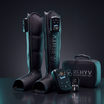
So there is nothing to accumulate and nothing to periodise. For someone with no contraindication, using a device most days at a moderate pressure is unremarkable. That is precisely the pattern a recovery-grade device like the ReHYV Pulse Pro is built around, and if you will not use it near-daily, the honest advice is to buy a cheaper tier.
Why it does not compound
The other half of the question — would twice a day be twice as good — has a duller answer. The effect of a session is largely felt in the hours after it. Stacking sessions does not stack the benefit in any way that shows up, and the second session mostly costs you forty minutes.
If you are tempted toward twice-daily use, that impulse is usually a signal about training load or sleep rather than about the device. Legs that feel wrecked enough to want two sessions a day are telling you something a machine cannot answer.
On the evidence, plainly: most research here measures how sore people report feeling, which is a real outcome and a soft one. Studies that look at performance markers — power output the next day, strength recovery — show much smaller and less consistent effects. So the defensible claim is that compression tends to make legs feel better afterwards. Anyone telling you it measurably rebuilds tissue faster is ahead of what has been shown.
The practical limits nobody mentions
Hygiene. Sleeves sit against bare skin for half an hour and trap sweat. Used daily and never wiped down, they develop exactly the problem you would expect. Wipe the inside after use and let them air — this is the actual maintenance burden of daily use.
Pressure creep. People habituate and turn the pressure up over weeks without noticing. Recalibrate occasionally: the right setting is one you stop thinking about, not one you are enduring.
Skin. Check for marks that do not fade within a few minutes, and for any rubbing at the seams. Daily contact turns a minor fit problem into a real one over a month.
Travel, and the one case for using it more than usual
Long flights and long drives are the situation where several days of heavier use makes sense. Hours of sitting with legs dependent produces exactly the congestion compression is decent at, and people arriving off a long-haul flight often find a session the most useful twenty minutes of the day.
Two cautions specific to travel. First, immobility is also the situation where clot risk genuinely rises, so new one-sided swelling or calf pain after a long journey is a reason to be seen rather than a reason to run a session. Second, the sleeves are bulky and most people are not carrying them — the realistic use is on arrival home, not at the destination.
When to stop, not adjust
Some things are not a settings problem. Stop using the device and get advice if you notice new swelling in one leg, warmth or redness, calf pain that is not post-exercise soreness, numbness that persists after a session, or any skin breakdown under the sleeve. Vein and clot symptoms overlap, which is why the response to something new is assessment rather than a lower pressure setting.
When not to use one
None of this applies if compression is unsafe for you, and the people most likely to buy a recovery device unprompted are disproportionately on this list. Do not use an air compression device — and speak to a doctor — with any suspicion of a deep vein thrombosis (sudden swelling in one leg with warmth, redness or calf pain is a same-day medical problem, because a compressed clot can travel), severe peripheral arterial disease, an active infection, cellulitis or an open wound under the sleeve, uncontrolled heart failure, a recent fracture or leg surgery, reduced sensation including diabetic neuropathy, or during pregnancy without clearance.
Frequently Asked Questions
Can you use compression boots every day?
Yes, for most people with no contraindication, at a moderate pressure and a normal 20 to 30 minute session.
Is twice a day better?
Not meaningfully. The benefit does not stack that way, and wanting two sessions a day usually says more about training load or sleep.
Do compression boots need rest days?
No. They do not stress tissue, so there is nothing to recover from between sessions.
What should make me stop using them?
New swelling in one leg, warmth or redness, calf pain that is not ordinary soreness, persistent numbness, or skin breakdown. Get those assessed rather than adjusting settings.

Leave a comment
This site is protected by hCaptcha and the hCaptcha Privacy Policy and Terms of Service apply.