













It goes through a predictable sequence: an invisible film within days, a sour smell within a week or two, then visible pink or black growth around the lid and spout. None of it is dramatic and most of it is reversible with one thorough wash. What is not reversible is a silicone gasket that has absorbed odour, and that is usually what finally makes someone replace a bottle they could have kept.
Key Facts
- The first stage is biofilm — invisible, slippery, and days rather than weeks.
- Smell arrives next, and it comes from the lid far more often than the body.
- Pink or orange film around a spout is airborne and extremely common.
- Almost every stage reverses with one proper wash including the lid.
- A gasket that has permanently absorbed odour is a part, and parts are replaceable.
Stage one: the film you cannot see
Within a few days of use without washing, the inside wall develops a slippery layer. Run a finger round the neck and you will feel it before you see it.
This is biofilm: a matrix left behind by whatever has been in the bottle and whatever arrived from your mouth on the way. On plain water it builds slowly. On anything with sugar in it, it builds fast. It does not rinse off, because it is not loose dirt — it is adhered, which is the whole point of it.
At this stage nothing has gone wrong. One wash with dish soap and some abrasion removes it completely.
Stage two: the smell, and where it is really coming from
A week or two in, the bottle smells on opening — sour, musty, sometimes faintly like old cheese.
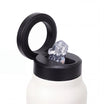
Almost everyone at this point scrubs the body. The body is rarely the problem. The smell is coming from the silicone gasket in the lid, which sits permanently damp in a groove nobody opens, and from the underside of the cap, and from the straw if there is one.
This is the point at which a bottle gets abandoned in a cupboard, and it is entirely fixable in two minutes: pull the gasket out, wash both faces, air-dry it separately.
Stage three: visible colour
Pink or orange film around the spout is the most common, and it is airborne in origin rather than anything you did. Black specks in the gasket groove are the next most common. Green slime means the bottle has been standing with liquid in it, in light, for a long time.
All three are dealt with the same way — dismantle, wash, dry. The colour is alarming and the fix is boring.
What does not come back
Two things survive a thorough clean.
An odour-saturated gasket. Silicone is slightly porous and will eventually hold a smell permanently. Once that has happened, washing does nothing; the part is finished. This is why a bottle whose gasket can be bought separately outlives one whose lid is a sealed unit — the failure is in a ₹100-class component, not the ₹1,500 bottle.
A pitted interior. This is not caused by neglect but by the cure: bleach, phenyl, or a scouring pad. Chloride and abrasion both attack the passive layer that makes stainless steel stainless. A bottle that was merely dirty can be saved. A bottle that was cleaned with bleach sometimes cannot.
The product on this page

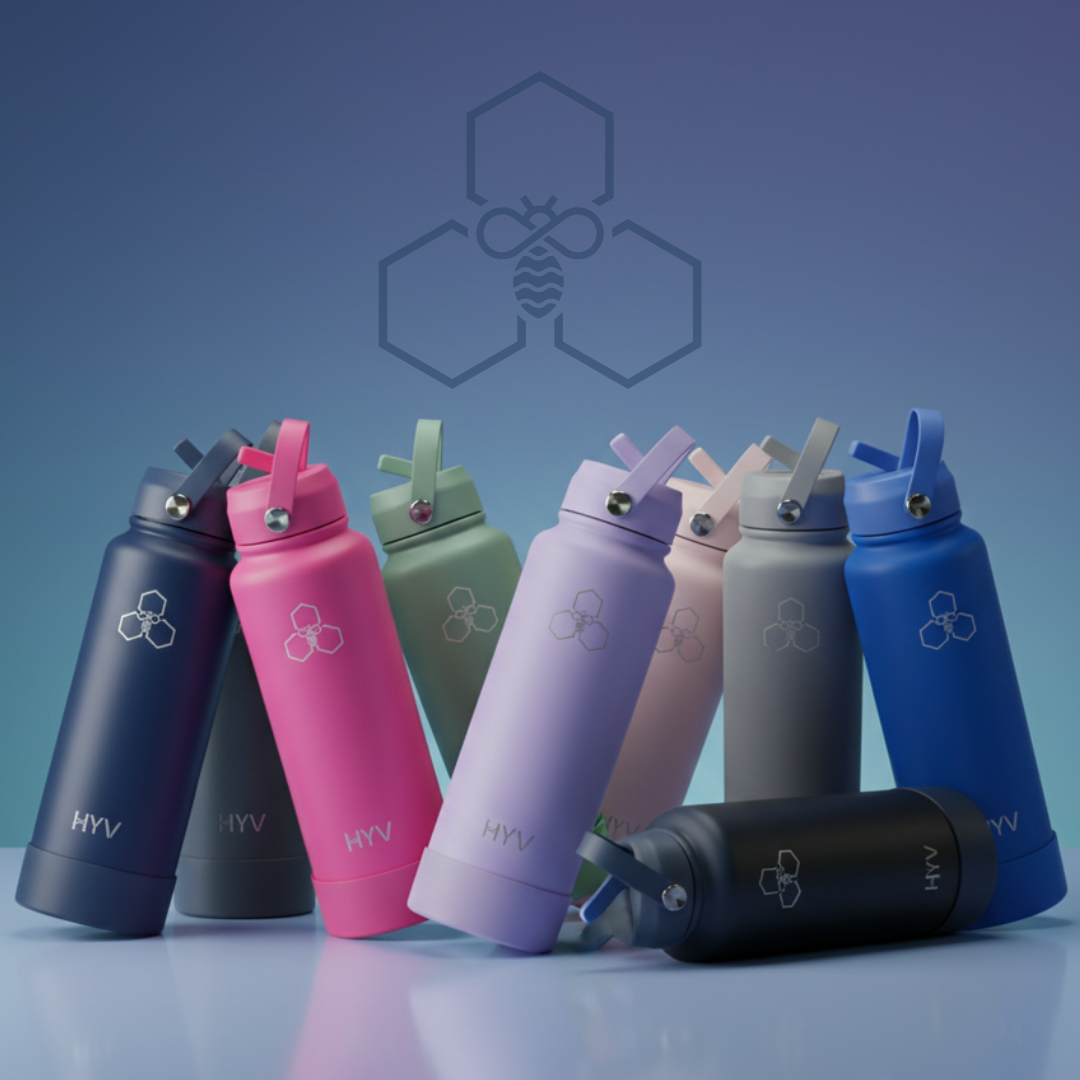
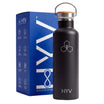
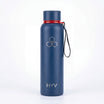
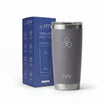
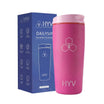
Shop HYV bottles with parts you can replace →
The practical conclusion
Nothing here is a reason for alarm, and the popular comparisons to toilet seats are not a useful way to think about it. The honest version: a neglected bottle develops film, then smell, then colour, and one careful wash with the lid taken apart reverses nearly all of it.
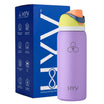
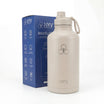
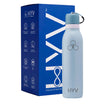
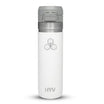
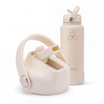
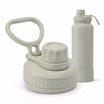
Buy for repairability rather than for cleanliness claims. HYV sells lids, gaskets and boots as separate parts — the LuxeSip is ₹1,699 for the 1-litre, and when its gasket eventually gives up, you buy a gasket. That is the difference between a bottle that lasts and a bottle that gets replaced over a ring of silicone.
Disclosure: we are one of the brands
HYV publishes this page and sells the bottles in it, so discount the flattering parts. The checkable facts: BIS IS 17526:2021 on five named models — LuxeSip, LuxeFlow, MagFlex, CoreFlow and ChillSip — 304 food-grade steel throughout, and lids, gaskets and boots sold as separate parts so a worn one does not end the bottle.
Frequently Asked Questions
Is it dangerous to drink from an unwashed water bottle?
For most people it is unpleasant rather than dangerous — film, smell and taste come well before anything else. The sensible framing is that it is easy to avoid and easy to reverse, not that it is an emergency.
Why is there pink stuff around my bottle spout?
It is an airborne organism that settles on damp surfaces and shows up as a pink or orange film. Extremely common, harmless to remove, and a sign the lid is not being taken apart and dried.
Can a smelly bottle be saved?
Nearly always. Wash the body, and crucially pull the gasket out of the lid and wash both faces. If the smell persists after that, the gasket itself has absorbed it and needs replacing — which costs a fraction of a new bottle.
Will bleach fix a badly neglected bottle?
It will damage it. Chloride attacks stainless steel, and a bleached bottle can end up pitted permanently. Bicarbonate of soda for odour or white vinegar for scale, for under an hour each, does the job without the cost.
Related reading: Bacteria in Reusable Water Bottles: What Actually Grows, and Why, Mold in Water Bottle Lid: Why It Happens & How to Fix It and The Water Bottle Rubber Seal: Why It Fails and How to Replace It.

Leave a comment
This site is protected by hCaptcha and the hCaptcha Privacy Policy and Terms of Service apply.