









Brown inside a steel bottle is usually one of three things. Tannin staining from tea or coffee is a smooth, even brown film that wipes back with bicarbonate. Iron deposits from borewell water are a reddish-brown ring at the waterline that vinegar dissolves. Actual rust is orange, localised, and slightly rough to the touch — and on a 304 bottle it almost always means the surface was damaged, usually by bleach or a scouring pad.
Key Facts
- Tea and coffee tannin stains are smooth, even, and cosmetic.
- Iron from borewell water leaves a reddish ring at the waterline.
- True rust on 304 steel is rough to the touch and localised.
- Bleach and scouring pads are the two most common causes of real rust.
- Surface rust transferred from another object wipes off; pitting does not.
Telling the three apart
Run a clean fingertip over the mark. That one test separates most cases.
- Smooth, even, mid-brown, covers a broad area: tannin. Tea and coffee stain steel the way they stain a mug. Entirely cosmetic.
- Reddish-brown, forms a ring or band, appears where the water level sits: iron and mineral deposits out of the water itself. Common on borewell and hard municipal supply.
- Orange, localised in spots, slightly rough or gritty: rust. This is the only one that indicates the steel itself has been compromised.
Tannin: bicarbonate, not scrubbing
A teaspoon of bicarbonate of soda in warm water, left an hour, lifts most tea staining. For heavy staining in a bottle that carries chai daily, make a paste with a little water, wipe it around the interior, leave it thirty minutes and rinse.
Do not attack it with a scouring pad. Tannin is a harmless film; the scouring pad creates the one problem that is not harmless.
Mineral deposits: acid dissolves them
A waterline ring is the water, not the bottle. As water evaporates it leaves behind what was dissolved in it — calcium, magnesium, and in a lot of Indian groundwater, iron. Iron is what makes it brown rather than white.
Two tablespoons of plain white vinegar topped up with warm water, left for an hour and rinsed twice, dissolves it. Repeat rather than extend: a second one-hour soak is safer than one overnight soak, because prolonged acid contact in a sealed bottle works against the corrosion resistance you are relying on.
Actual rust on a 304 bottle
Properly made 304 stainless steel does not spontaneously rust in drinking water. When it does, there is a cause, and it is usually one of three.
- Bleach or a chloride-based cleaner. The single most common. Chloride attacks the chromium oxide layer that makes stainless steel stainless, and once that is gone the iron underneath behaves like iron.
- Abrasion. Steel wool or a hard scouring pad, same mechanism.
- Transferred surface rust. A bottle stored touching something rusty, or dried on a rusting rack, can pick up orange marks that are not its own. These wipe off with bicarbonate paste and leave clean steel underneath.
If the orange wipes away and the surface beneath is smooth, you are fine. If it wipes away and leaves a rough pit, the steel is damaged there and it will keep recurring.
The product on this page

Shop HYV 304 food-grade steel bottles →
What the grade actually buys you
304 — the 18/8 grade — contains enough chromium to re-form its own protective layer whenever it is exposed to air. That is why a scratch on good steel self-heals and a scratch on a cheap bottle starts a rust spot.
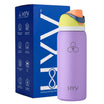
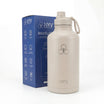
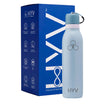
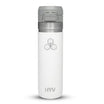
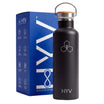
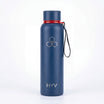
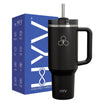
The HYV CoreFlow is ₹899 in 304 food-grade steel with a mouth wide enough to actually look inside, which is not a small thing when you are trying to work out what a mark is. Five of our models — LuxeSip, LuxeFlow, MagFlex, CoreFlow and ChillSip — carry BIS IS 17526:2021, the Indian standard for vacuum-insulated stainless steel vessels.
Disclosure: we are one of the brands
HYV publishes this page and sells the bottles in it, so discount the flattering parts. The checkable facts: BIS IS 17526:2021 on five named models — LuxeSip, LuxeFlow, MagFlex, CoreFlow and ChillSip — 304 food-grade steel throughout, and lids, gaskets and boots sold as separate parts so a worn one does not end the bottle.
For the comparison behind this, see the detailed guide.
Related: the detailed guide.
Frequently Asked Questions
Is brown staining inside my steel bottle dangerous?
Tannin staining from tea or coffee and mineral deposits from hard water are both cosmetic. Only actual rust — orange, localised and rough to the touch — indicates the steel surface has been damaged.
Can a stainless steel water bottle rust?
Not by itself in drinking water. It rusts when its passive chromium oxide layer is destroyed, and the two usual culprits are bleach or chloride-based cleaners and abrasive pads.
How do I remove tea stains from a steel bottle?
Bicarbonate of soda — a teaspoon in warm water for an hour, or a paste wiped around the inside for thirty minutes. Do not use a scouring pad; the stain is harmless and the scratch is not.
What is the brown ring at the water line?
Mineral deposit left behind as water evaporates, coloured brown by iron in the supply. Common on borewell water. Two tablespoons of white vinegar in warm water for an hour dissolves it.
Related reading: What Is 304 Stainless Steel? The Water-Bottle Explainer, How to Clean an Insulated Water Bottle (Without Ruining It) and Bottled Water TDS Chart: Understanding Water Quality.

Leave a comment
This site is protected by hCaptcha and the hCaptcha Privacy Policy and Terms of Service apply.