


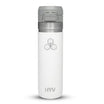
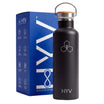
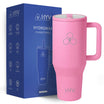
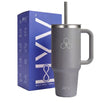
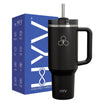
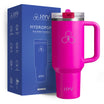
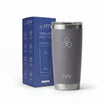
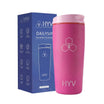
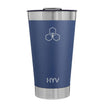
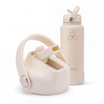



A vacuum insulated bottle has two steel walls with the air removed from the gap between them. Heat moves by conduction and convection, and both need a material to move through — so removing the air removes most of the path. That is why a vacuum bottle keeps water cold for hours with walls only a few millimetres thick. "Double walled" is not the same claim: a bottle can have two walls with ordinary air between them, which insulates far less. The field test is simple — a working vacuum bottle does not sweat on the outside.
Key Facts
- Vacuum insulated means the air is removed from the gap between two steel walls.
- Heat conduction and convection both need a medium; a vacuum removes it.
- "Double walled" alone does not mean vacuum insulated.
- A working vacuum bottle stays dry on the outside with cold water in it.
- A bottle that starts sweating has lost its vacuum and cannot be repaired.
The plain explanation
Heat moves three ways. Conduction through a material. Convection through a moving fluid like air or water. Radiation, which needs nothing at all.
A vacuum bottle removes the first two. With the air pumped out of the cavity between the inner and outer wall, there is almost nothing for heat to conduct through and nothing to circulate. What remains is radiation, which is why the inner wall is usually given a reflective finish — to bounce that back too.
The result is a bottle with thin walls that outperforms any amount of foam. The insulation is the absence of something, not the presence of it.
Vacuum insulated is not the same as double walled
This is the distinction listings blur most often.
Double walled means two walls. If the gap between them still contains air, that air conducts and circulates, and you get modest insulation — better than a single wall, far worse than a vacuum.
Vacuum insulated means two walls with the air evacuated. That is a manufacturing step, it is harder, and it is what the performance depends on.
Every vacuum insulated bottle is double walled. Not every double walled bottle is vacuum insulated. When a listing says only "double wall", take it literally.
How to tell whether yours still works
The sweat test. Fill it with cold water and leave it on a table for an hour in a warm room. A working vacuum bottle stays dry outside, because the outer wall never gets cold enough to condense moisture out of the air. If the outside is wet, the vacuum has failed.
The warmth test. Fill it with hot water. The outside should be no more than faintly warm. If it is hot to hold, the vacuum has failed.
A lost vacuum cannot be fixed. The seal is made during manufacture and there is no user-serviceable version of it. A bottle that has started sweating is a single-walled bottle with extra weight, and it is a replacement rather than a repair.
What it does not promise
Vacuum insulation slows heat transfer; it does not stop it. Cold water gets warm eventually, and how fast depends on how full the bottle is, how often you open it, and how much ice is in it. A half-empty bottle warms faster than a full one, because the air inside it is doing the convecting that the vacuum was designed to prevent.
It also says nothing about leakproofing, steel grade, or lid quality. A bottle can hold a perfect vacuum and still have a lid that leaks in a bag. These are separate questions, and vacuum insulation only answers one of them.
How long should it actually keep water cold
The honest answer is that it depends on four things, which is why the numbers on listings are close to meaningless.
How full it is. A full bottle holds cold far longer than a half-empty one, because the air in the empty space circulates and carries heat to the water.
Whether there is ice. Ice does most of the work at longer durations. Melting absorbs a great deal of heat, so a bottle with real ice cubes outlasts the same bottle with cold water by hours — which is the practical argument for a wide mouth.
How often you open it. Every opening exchanges cold air for warm and the cycle starts again. A bottle opened twenty times behaves nothing like the same bottle opened twice.
Ambient temperature. A bottle in a car in May is in a different situation from one on a desk under air conditioning.
A reasonable expectation for a working vacuum bottle, full, with ice, opened occasionally: cold water through a full day. Without ice and opened often: most of a working day, getting steadily less cold. Any figure quoted without those conditions attached is a marketing number.
Disclosure: we are one of the brands
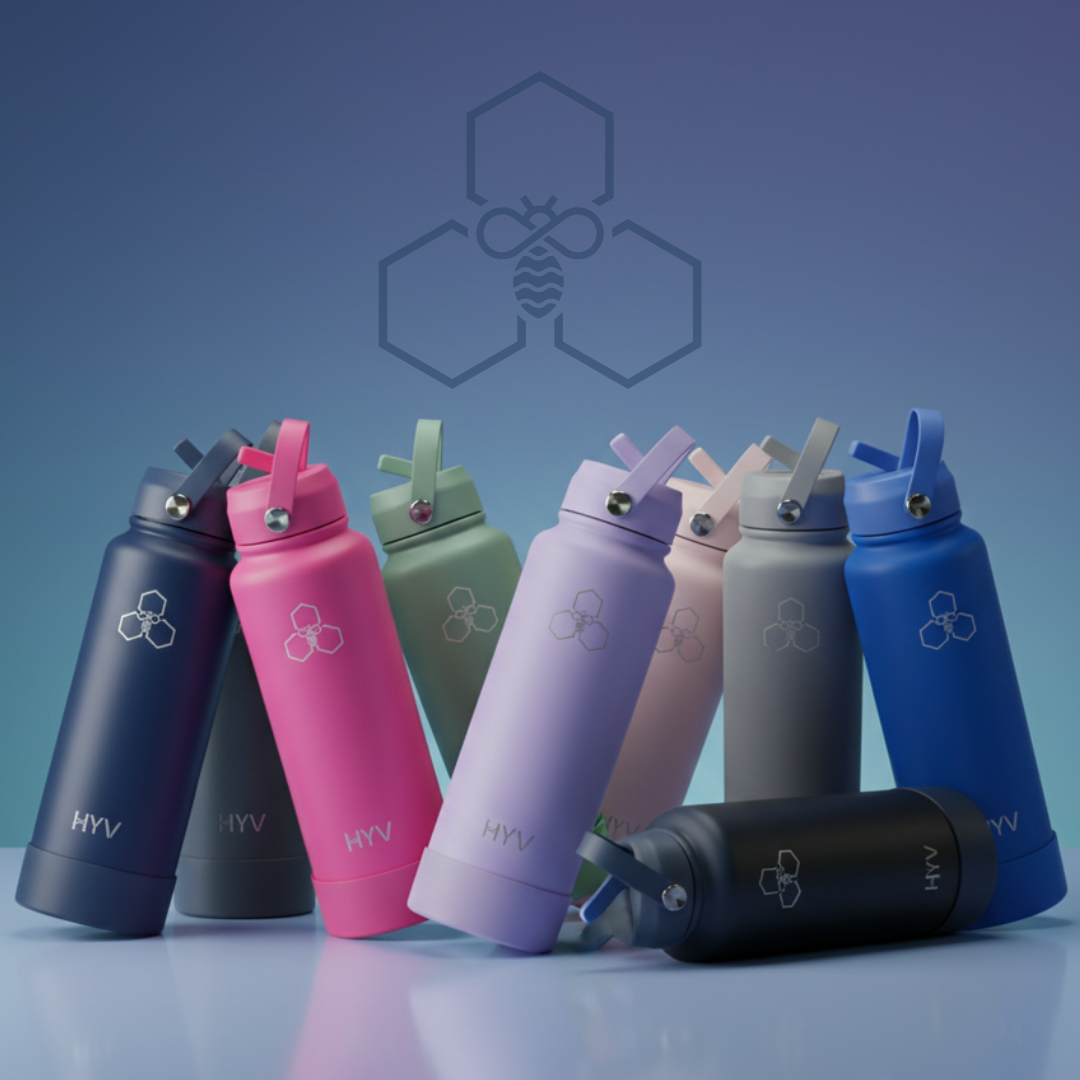
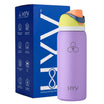
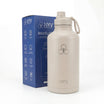
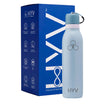
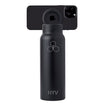
HYV publishes this page and sells the bottles in it, so discount the flattering parts. The checkable facts: free shipping over ₹499, a 7-day free replacement rather than a refund-return, 304 food-grade steel throughout, and BIS IS 17526:2021 on five named models — LuxeSip, LuxeFlow, MagFlex, CoreFlow and ChillSip.
The product on this page

Shop HYV insulated drinkware →
Frequently Asked Questions
What does vacuum insulated mean on a water bottle?
It means the bottle has two steel walls with the air removed from the gap between them. Heat conduction and convection both need a medium to travel through, so removing the air removes most of the path and the bottle keeps water cold for hours.
Is double walled the same as vacuum insulated?
No. Double walled just means two walls, and the gap may still contain air. Vacuum insulated means the air was evacuated. Every vacuum bottle is double walled; not every double walled bottle is vacuum insulated.
How do I know if my vacuum bottle is still working?
Fill it with cold water and leave it an hour. If the outside stays dry, the vacuum is intact. If it sweats, the vacuum has failed and cannot be repaired.
Can a vacuum insulated bottle be repaired?
No. The vacuum seal is made during manufacture and there is no way to restore it at home or in a workshop. A bottle that has lost its vacuum needs replacing.
Related reading: Why Your Water Bottle Sweats — and Why a Good One Does Not, Insulated vs Non-Insulated Water Bottles: What You Actually Gain and A High Quality Water Bottle: What That Actually Means.

Leave a comment
This site is protected by hCaptcha and the hCaptcha Privacy Policy and Terms of Service apply.