

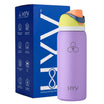
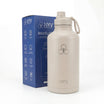
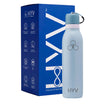

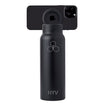
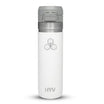
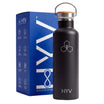
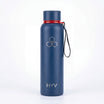
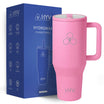
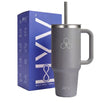
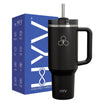
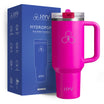
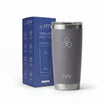
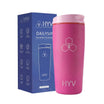
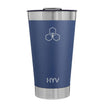
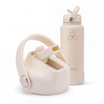
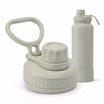

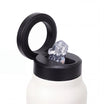
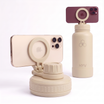

Quality in a water bottle comes down to four things you can check: the steel grade, whether the vacuum was made properly, the lid mechanism, and whether the insulation performance was tested by anyone other than the seller. 304 food-grade stainless is the baseline for the body. A properly made vacuum shows up as cold retention through a day, not as a marketing number. The lid is where most bottles actually fail, because it has moving parts and seals. And BIS IS 17526:2021 is the Indian standard that turns an insulation claim into a tested one — five HYV models hold it.
Key Facts
- 304 food-grade stainless steel is the baseline for the body.
- A vacuum is either made properly or it is not; there is no partial version that lasts.
- Lids fail before bodies do, because lids have seals and moving parts.
- BIS IS 17526:2021 means the insulation was lab tested, not asserted.
- Five HYV models hold it: LuxeSip, LuxeFlow, MagFlex, CoreFlow and ChillSip.
One: the steel
304 stainless, sometimes written 18/8, is the food-grade baseline and what you want touching your water. It resists corrosion well and does not hold flavour.
The thing to know is that "stainless steel" on a listing does not mean 304. Lower grades exist, they are cheaper, and they are more prone to pitting and to picking up a metallic taste over time. If a listing does not state the grade, that is information.
A magnet test is sometimes suggested as a way to check. It is not reliable — the relationship between magnetism and grade is messier than the internet suggests, and a magnet cannot distinguish 304 from several cheaper alloys.
Two: the vacuum
Insulation in a steel bottle is a vacuum sealed between two walls. There is no heat passing through nothing, which is why it works and why a good bottle needs no thickness of foam.
A vacuum is binary in practice. It either held during manufacture or it did not, and a bottle with a compromised seal does not insulate slightly worse — it insulates like a single-walled cup. You find this out in use: a bottle that sweats on the outside has lost its vacuum, because a working vacuum body does not reach the temperature that condenses air moisture.
That is also the most useful field test you have. If the outside is wet, the insulation is not working.
Three: the lid
Bodies rarely fail. Lids fail constantly, and the lid is what you interact with twenty times a day.
Look for a gasket you can remove and replace, because the gasket is the part that perishes and the part that traps smell. Look for a mechanism that comes apart for cleaning. And think honestly about which mechanism you will tolerate — a magnetic chug lid, a flip, a straw and a screw cap are all fine engineering, and the one you find irritating is the one that ends the relationship with the bottle.
The related quality question is whether replacement lids and seals exist at all. A brand that sells no spare parts is telling you what it expects the product's life to be.
Four: whether anyone tested it
Every insulated bottle claims hours of cold retention. Almost none of those numbers come from anywhere you can check.
BIS IS 17526:2021 is the Indian standard for vacuum-insulated containers, and certification means an accredited lab physically measured the performance. That is the difference between a tested figure and a written one.
It is granted per model rather than per brand, which is the part worth knowing when you shop. Five HYV models hold it: LuxeSip, LuxeFlow, MagFlex, CoreFlow and ChillSip. The right question to any brand is which specific models are certified — a brand-level answer usually means part of the range.
What quality does not mean
Weight. A heavier bottle is not a better-insulated one; it often just has thicker walls, which does little once a vacuum is present.
Price. Above roughly ₹1,500 in India you are mostly paying for design, brand and lid engineering rather than better insulation. Below about ₹500, vacuum insulation is usually not real regardless of what the listing says.
Coating. Powder coat affects grip and looks and does nothing thermally. A scratched coating is cosmetic, not a failure.
How to check quality when buying online
You cannot hold the bottle, so you are checking the listing instead. Four things, in order.
Does it state the steel grade? "304" or "18/8" for the body. "Stainless steel" alone is not the same claim, and the omission is usually deliberate.
Does it state a capacity in millilitres and a weight? Vague sizing is a sign of a listing assembled from a supplier catalogue rather than a product someone stands behind.
Are replacement lids and gaskets sold? Search the brand's own store for spares before buying. If none exist, the lid failing ends the bottle.
Is certification named per model? A brand that says "our bottles are certified" without naming models is usually certified on some of them. Ask which.
One thing worth ignoring entirely: the hours-of-cold-retention figure, unless it is tied to a standard. Those numbers are produced in-house under conditions nobody publishes, and they are not comparable between brands.
Disclosure: we are one of the brands
HYV publishes this page and sells the bottles in it, so discount the flattering parts. The checkable facts: free shipping over ₹499, a 7-day free replacement rather than a refund-return, 304 food-grade steel throughout, and BIS IS 17526:2021 on five named models — LuxeSip, LuxeFlow, MagFlex, CoreFlow and ChillSip.
The product on this page

Shop HYV insulated drinkware →
Frequently Asked Questions
How can I tell if a water bottle is good quality?
Check four things: that the body states 304 food-grade steel, that the outside stays dry with cold water in it, that the lid comes apart and has a replaceable gasket, and whether the insulation is certified to BIS IS 17526:2021 rather than just claimed.
Does a heavier bottle mean better quality?
No. Once a vacuum is present, wall thickness adds weight without adding much insulation. A heavy bottle is usually just a heavy bottle.
What does BIS IS 17526:2021 mean?
It is the Indian standard for vacuum-insulated containers. Certification means an accredited lab tested the insulation performance. It is granted per model, so ask which models — five HYV models hold it: LuxeSip, LuxeFlow, MagFlex, CoreFlow and ChillSip.
Is an expensive water bottle worth it?
Up to a point. Below roughly ₹500 the insulation is usually not genuine. Above roughly ₹1,500 you are buying design, lid engineering and brand rather than materially better insulation.
Related reading: Does a Magnet Tell You Whether a Bottle Is Real 304 Steel?, Why Your Water Bottle Sweats — and Why a Good One Does Not and The Best Water Bottle for 2027.

Leave a comment
This site is protected by hCaptcha and the hCaptcha Privacy Policy and Terms of Service apply.