

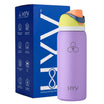
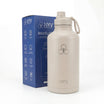
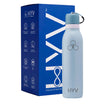

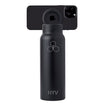
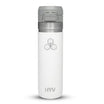
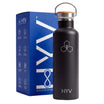
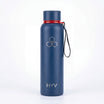
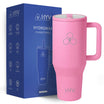
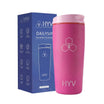
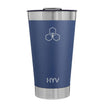
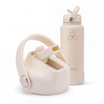
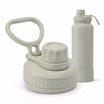

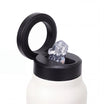
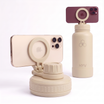
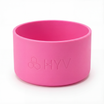

For children, a 500–750 ml food-grade 304 steel bottle with a lid the child can open unaided is the practical choice. Weight when full matters more than capacity, and the lid decides everything else: whether it leaks in the bag, and whether it develops a smell.
Key Facts
- Food-grade 304 steel is inert, does not leach and holds no flavour.
- A full 1 L bottle exceeds a kilogram — too much on top of school books.
- Test that the child can open and close it before buying.
- Smell almost always comes from the lid, not the body.
HYV picks, with the actual product
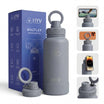
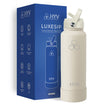
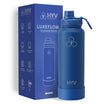
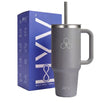
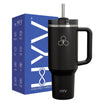
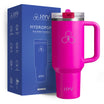
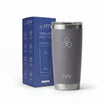
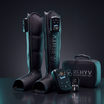
Three models worth looking at for this, photographed as they ship. Prices are the direct price on livehyv.com.


Free shipping on orders over ₹499 · 7-day free replacement for product issues. BIS IS 17526:2021 is granted per product. LuxeSip, LuxeFlow and MagFlex carry it; the other models do not.
Size by age
- Ages 5–8: 400–500 ml. A full 500 ml bottle already weighs half a kilogram.
- Ages 9–13: 500–750 ml, which covers a school day without being heavy.
- 14 and above: 750 ml is the everyday standard.
Weight rather than thirst is the binding constraint. A bottle that makes the bag heavy gets left at home, and a bottle left at home hydrates nobody.
Why steel over plastic
- No leaching and no flavour transfer. Food-grade 304 is inert.
- It does not scratch the way plastic does. Scratches are where biofilm anchors, which is why old plastic bottles smell even after washing.
- It survives being dropped — dented perhaps, but not cracked.
- Insulated steel keeps water cold through a school day, which in an Indian summer is the difference between a child drinking and not.
The lid is the whole decision
Bottles rarely fail at the body. They fail at a lid that leaks into a school bag, grows a smell, or that a seven-year-old cannot open.
- Test it with the child. A lid an adult finds easy can defeat small hands, and an unopenable bottle simply goes unused.
- Check it seals. Fill it, invert it over a sink, wait ten seconds.
- Check it can be dried. Every part touching water should be reachable.
- Check a replacement exists. Children lose lids. A bottle whose lid cannot be replaced has a short life.
Safety checks worth making
- Named steel grade — food-grade 304 on the inner wall, stated rather than implied.
- BIS IS 17526:2021 if insulation is claimed.
- No sharp threads at the neck — run a finger around it.
- Silicone rather than unspecified plastic for gaskets and straws.
The full kids bottle guide covers school-specific considerations in more depth.
If you want the fuller picture, see how they compare.
We go into this properly in what we actually recommend.
If you want the fuller picture, see the honest ranking.
For the comparison behind this, see the honest ranking.
Frequently Asked Questions
Are steel water bottles safe for kids?
Food-grade 304 stainless is inert, does not leach and holds no flavour, which makes it a good choice. What to verify is the stated grade — unnamed steel of unknown composition is the actual risk.
What size steel bottle for a school child?
400–500 ml up to about age eight, and 500–750 ml from nine to thirteen. Weight is the limiting factor: a full litre is over a kilogram on top of textbooks.
Steel or plastic for a school bottle?
Steel, for daily use. Plastic scratches with use and biofilm anchors in the scratches, which is why older plastic bottles smell even after washing. Steel also survives being dropped.
How do I stop my child’s bottle smelling?
Store it open and dry, and brush the lid threads weekly. The smell is almost always the lid rather than the body — sealed damp threads grow it within days.
Shop the shortlist
- See the steel bottles — 304 food-grade stainless, double-wall vacuum, 750 ml to 2 L.

Leave a comment
This site is protected by hCaptcha and the hCaptcha Privacy Policy and Terms of Service apply.