






Find where the water is coming from before you do anything else. Water under the threads means the gasket is missing, misseated or hardened. Water from the spout means the spout seal or the bite valve. Water appearing on the outside body with no obvious source means a failed vacuum, not a leak. And a bottle that leaks only when hot contents cool is not leaking — it is being pushed open by pressure.
Key Facts
- Most lid leaks are a silicone gasket that has hardened, shifted or fallen out.
- A gasket seated unevenly in its groove leaks only in certain orientations.
- Overtightening a lid deforms the gasket and makes leaking worse, not better.
- Water on the outside with no source is condensation from a failed vacuum.
- Hot contents create pressure as they cool, which forces seals that are fine.
Find the source first
Dry the bottle completely, fill it, cap it, and stand it on a folded paper towel. Then tip it on its side for ten minutes on a second dry towel. Where the paper goes wet is your diagnosis.
- Wet around the base of the threads: gasket problem. By far the most common.
- Wet at the spout or drinking opening: spout seal, bite valve or a straw fitting.
- Wet all over the outside, no single source: condensation, not a leak. The vacuum has failed.
- Only leaks when carried, never when standing: the lid is not being tightened square, or the thread is damaged.
The gasket, which is almost always the answer
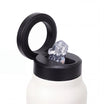
Unscrew the lid and look inside it. There is a silicone ring seated in a groove. Check three things.
- Is it there? Gaskets fall out during washing and end up in the sink. A missing gasket is the single most common "the bottle suddenly started leaking" story.
- Is it seated flat all the way round? Pull it out and press it back in evenly. A gasket with one section lifted seals in some orientations and not others, which is why the leak seems intermittent.
- Is it still soft? Squeeze it. Good silicone is soft and springs back. A gasket that has hardened — from repeated dishwasher cycles, from hot contents, or simply from age — no longer compresses enough to seal. It cannot be revived; it is a part at the end of its life.
Things that make it worse
- Tightening harder. The instinct is to crank the lid down. Over-compression deforms silicone permanently and flattens the very thing that was sealing.
- Cross-threading. Screwing a lid on at an angle damages the thread on a steel neck, and a damaged thread will never seal properly again. Always start the lid loosely and let it find the thread.
- Petroleum jelly or oil on the gasket. It works for a day and degrades the silicone.
- Ignoring hot contents. A bottle filled with hot chai and capped tight develops real internal pressure as it cools. That pressure finds the weakest seal. This is not a defect and no gasket fixes it — leave a small air gap and do not overtighten.
When it is not a leak at all
A bottle whose outside is wet, with no identifiable source and no drips from the lid, is almost certainly condensing.
A working vacuum-insulated bottle stays dry and at room temperature on the outside no matter how cold the contents are — that is the entire point of the vacuum. If the outside is cold and sweating, the vacuum between the walls has been lost, usually from a hard impact or repeated dishwasher cycles. It cannot be repaired at home, and the bottle now performs like a single-wall one.
The product on this page

Shop HYV lids, gaskets and boots →
Fixing it rather than replacing the bottle
Every diagnosis above except the failed vacuum points at a part rather than at the bottle. A gasket, a spout, a straw, a lid.
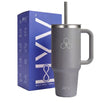
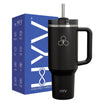
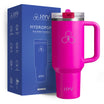
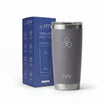
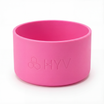
HYV sells lids, gaskets and boots separately for exactly this reason. A hardened gasket on a ₹1,699 LuxeSip should cost you a gasket. Before you buy anything, run the paper-towel test — it takes ten minutes and it is the difference between buying the right part and buying a new bottle.
Disclosure: we are one of the brands
HYV publishes this page and sells the bottles in it, so discount the flattering parts. The checkable facts: BIS IS 17526:2021 on five named models — LuxeSip, LuxeFlow, MagFlex, CoreFlow and ChillSip — 304 food-grade steel throughout, and lids, gaskets and boots sold as separate parts so a worn one does not end the bottle.
Frequently Asked Questions
Why is my water bottle leaking from the lid?
Nine times out of ten the silicone gasket in the lid is missing, seated unevenly in its groove, or has hardened with age. Take the lid apart and check all three before assuming the bottle is faulty.
Will tightening the lid harder stop the leak?
No, and it usually makes it worse. Over-compressing silicone deforms it permanently, and cross-threading a lid onto a steel neck damages the thread so it can never seal properly again.
My bottle leaks only when it has hot liquid in it. Why?
That is pressure rather than a leak. Hot contents in a sealed bottle create internal pressure as they cool, and it escapes through the weakest seal. Leave an air gap and do not overtighten.
The outside of my bottle is wet but nothing is dripping from the lid. What is it?
Condensation, which means the vacuum between the walls has failed. A working insulated bottle stays dry and at room temperature outside however cold the contents are. It cannot be repaired at home.
Related reading: The Water Bottle Rubber Seal: Why It Fails and How to Replace It, Water Bottle Cap: Types, Replacements, and Buying Guide and Best Travel Water Bottle in India: Leak-Proof and Insulated.

Leave a comment
This site is protected by hCaptcha and the hCaptcha Privacy Policy and Terms of Service apply.