
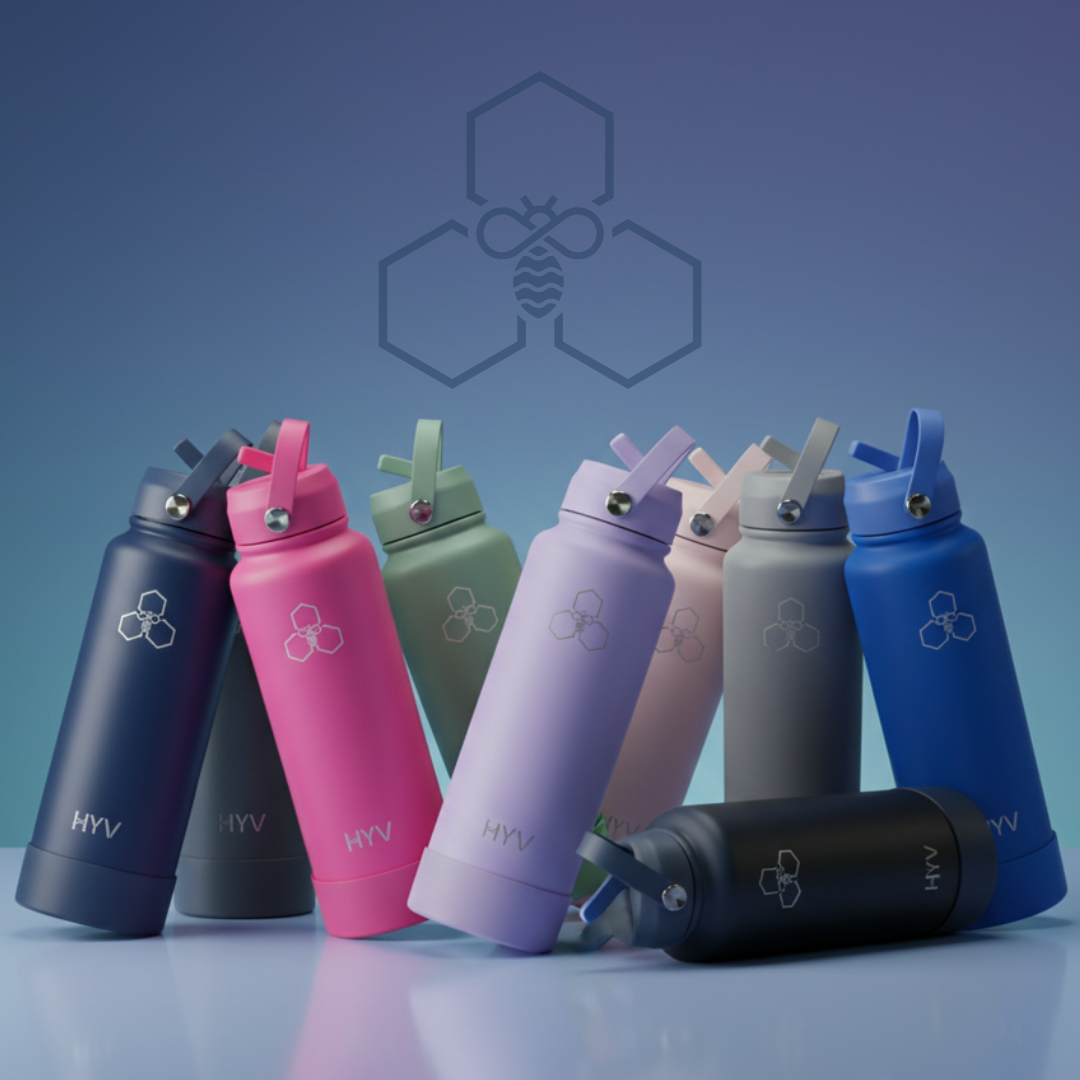


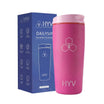
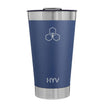
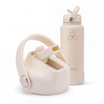



"Thermosteel" is Milton's registered trademark for its double-wall vacuum-insulated stainless steel bottle range, introduced in India in the early 2010s. The word combines "thermo" (heat retention) and "steel" (material). It is Milton-specific brand terminology — not a generic material or technology. Other brands sell equivalent double-wall vacuum-insulated steel bottles under different names: HYV LuxeSip, Borosil Hydra, Cello H2O, and imported Stanley, YETI, Hydro Flask.
Key Facts
- Thermosteel = Milton's registered trademark for insulated bottle range.
- Introduced in India early 2010s.
- Not a generic material — refers only to Milton products.
- Same underlying tech (double-wall vacuum) as any insulated bottle.
HYV picks, with the actual product
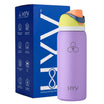
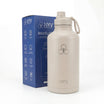
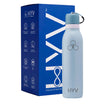
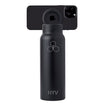
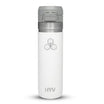
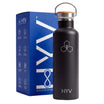
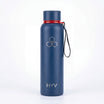
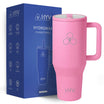
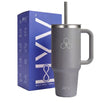
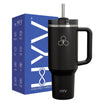
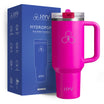
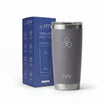
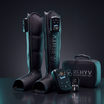
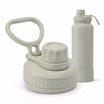
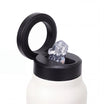
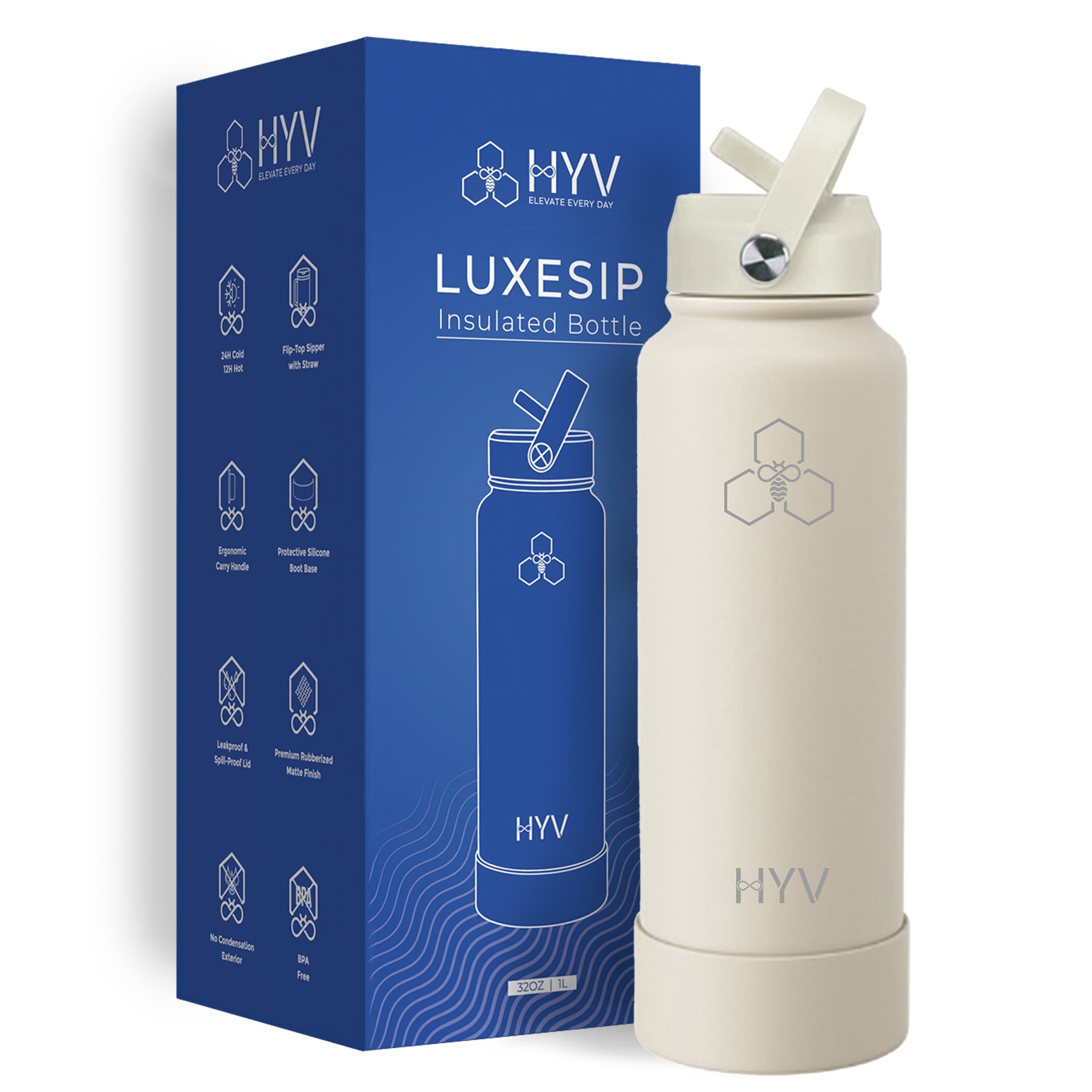
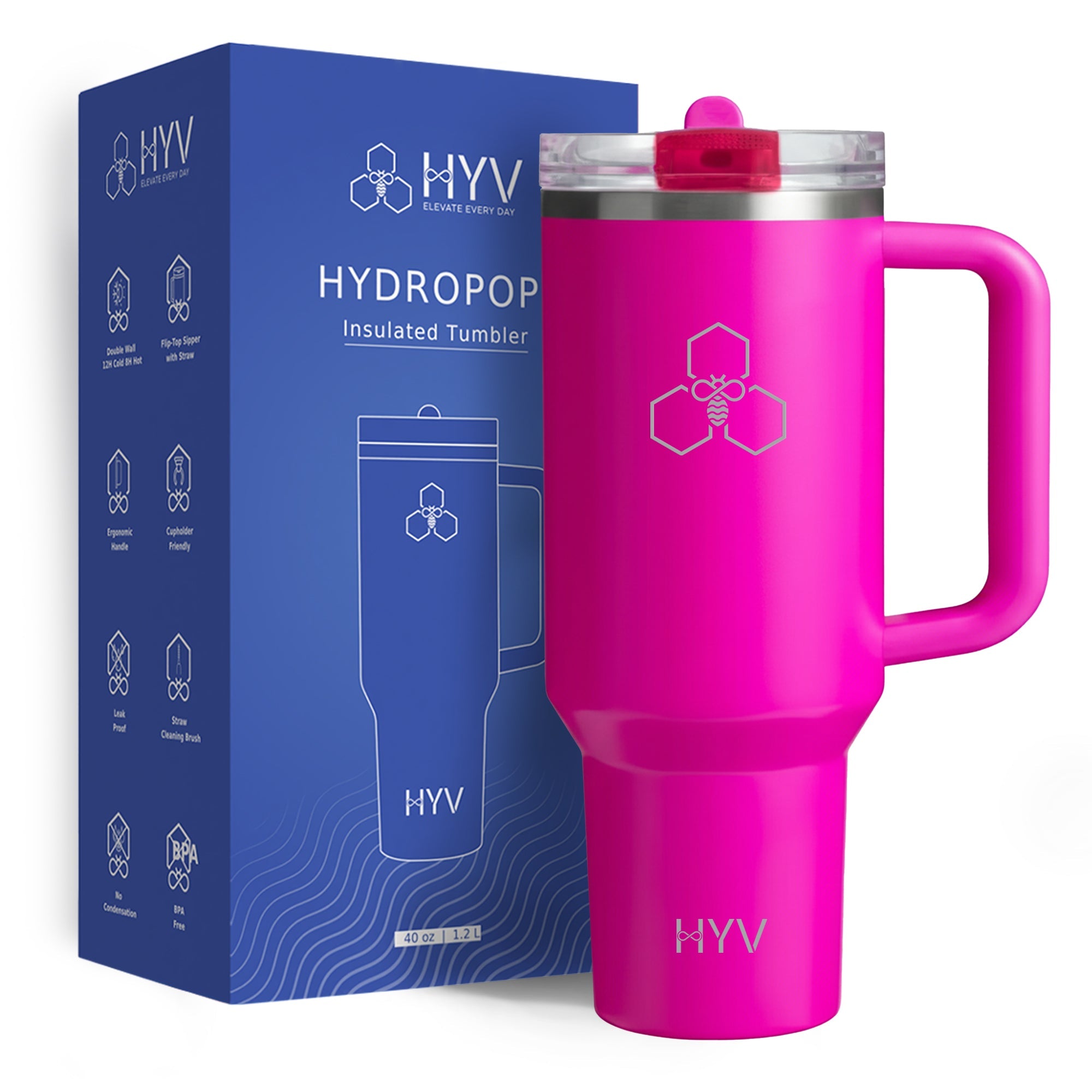
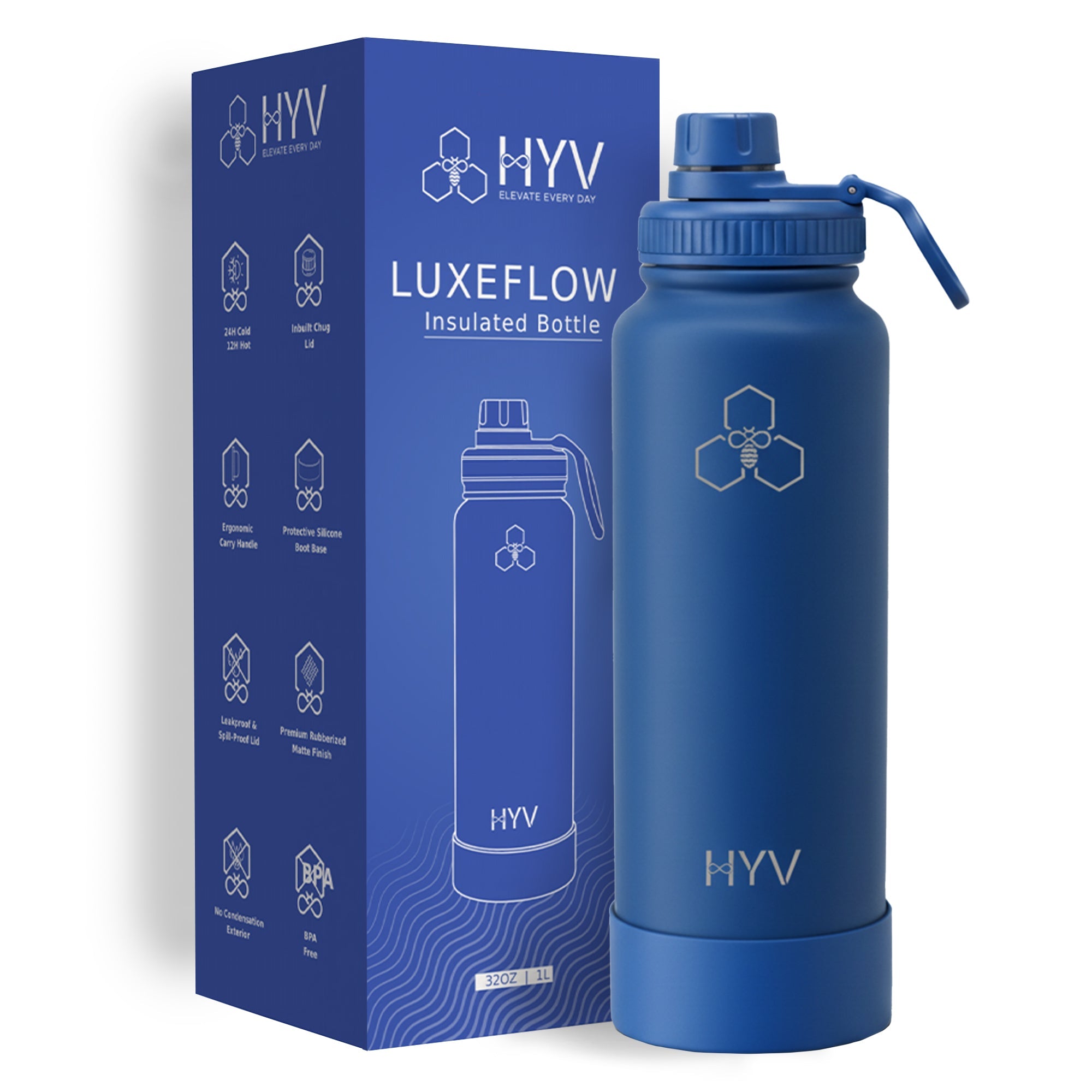
Three models worth looking at for this, photographed as they ship. Prices are the direct price on livehyv.com.


Shop HYV insulated water bottles →
Free shipping on orders over ₹499 · 7-day free replacement for product issues. HYV makes BIS-certified bottles.
Etymology + brand history
"Thermosteel" combines "thermo" (Greek for heat) and "steel" (the bottle material). Milton (Hamilton Housewares Pvt Ltd, Mumbai) registered the trademark in India in the early 2010s when introducing its double-wall vacuum-insulated bottle range. The term has since entered common Indian usage as a generic term for insulated steel bottles — but legally, it refers only to Milton products.
What "thermosteel" actually is (tech)
Standard double-wall vacuum-insulated stainless steel construction. Two 304 stainless steel walls, vacuum-sealed gap between them, copper coating on inner wall for radiant heat reflection. This is the same construction every insulated steel bottle uses — nothing Milton-specific about the tech.
Equivalent bottles from other brands
- HYV LuxeSip — premium ₹1,699.
- Borosil Hydra Trek — mid-tier ₹950-1,100.
- Cello H2O Insulated — budget ₹600-800.
- Vaya Drynk — mid-premium ₹1,400.
- Stanley/YETI/Hydro Flask — imported premium ₹3,000-6,000.
Which to buy — thermosteel or alternative
Milton Thermosteel is fine — reliable, widely available, BIS-certified on select SKUs, ₹700-1,500. For premium on selected models at India price, HYV LuxeSip (₹1,699). For imported cachet, Stanley. See insulated vs thermosteel.
How to verify the claim yourself
Definitions matter less than whether a given bottle actually meets them. Three checks, none of which need equipment:
- The condensation test. Fill with ice water, wait ten minutes. A genuine vacuum bottle stays completely dry outside. Any beading means heat is crossing the wall.
- The weight test. Two full steel walls cannot be light. Unusual lightness is a warning.
- The certification test. BIS IS 17526:2021 is the Indian standard for vacuum insulated stainless steel containers, and it is granted per product — ask which SKU holds it.
Where the terms get muddled
- "Double wall" is not "vacuum insulated". Two walls with air between them insulate a little; two walls with the air removed insulate enormously more.
- "Stainless steel" is not a grade. Food-grade 304, also written 18/8, is the standard worth having on the inner wall.
- "Thermosteel" and similar are brand words, not specifications.
If you are comparing against the imports, see Yeti pricing in India.
Frequently Asked Questions
What is the meaning of thermosteel?
Milton's registered trademark for its double-wall vacuum-insulated stainless steel bottle range.
Is thermosteel the same as insulated?
Yes — same tech (double-wall vacuum). Thermosteel is Milton's brand name; other brands sell equivalents.
Is Milton Thermosteel BIS certified?
Selective SKUs — verify per product page. HYV makes BIS-certified bottles.
Does the material leach into your water?
Food-grade 304 stainless is chemically inert at drinking temperatures. It does not meaningfully leach, does not change water pH, and does not impart a taste when the grade and finish are right. Trace migration can occur with strongly acidic liquids left for weeks, but not in normal use.
If a steel bottle tastes metallic, the cause is almost always one of three things and none of them is 304 leaching: a lower-grade alloy such as 201, residue and biofilm that has not been cleaned out, or a perished silicone gasket holding odour. Deep clean it, replace the gasket, and if the taste persists the grade was the problem.
Glass and borosilicate are fully inert. Copper is the genuine exception — it reacts with anything acidic, which is why lemon water, juice and buttermilk should never be stored in it.
The grade question, specifically
For steel, 304 (also written 18/8, SUS 304 or AISI 304) is the food-grade standard — 18-20% chromium and 8-10.5% nickel, chemically inert at drinking temperatures.
The substitute to watch for is grade 201: 3.5-5.5% nickel against 8-10.5%, noticeably weaker in constant water contact, and it pits over time producing a metallic taste and corrosion sites that cannot be cleaned. Listings selling 201 typically just say "stainless steel" and stop there. That silence is the signal — a manufacturer using 304 has every reason to say so.
316 stainless appears occasionally at a premium. It adds molybdenum for salt-water corrosion resistance, which a water bottle never encounters. It is not worth paying extra for.
What each material is genuinely good and bad at
| Material | Insulates | Lifespan | Watch for |
|---|---|---|---|
| Insulated 304 steel | ~24h cold / ~12h hot | 5-10 yrs | Vacuum failure after a base drop |
| Single-wall steel | No | 5-10 yrs | Sweats in humidity |
| Copper | No | 5+ yrs | Reacts with acid and heat; daily cleaning |
| Borosilicate glass | No | Indefinite if unbroken | Breaks; heavy |
| BPA-free plastic | No | 2-3 yrs | Degrades; never leave in a hot car |
| Ceramic | No | Indefinite if unbroken | Heavy; breakable |
Shop the shortlist
- See the steel bottles — 304 food-grade stainless, double-wall vacuum, 750 ml to 2 L.


Leave a comment
This site is protected by hCaptcha and the hCaptcha Privacy Policy and Terms of Service apply.