
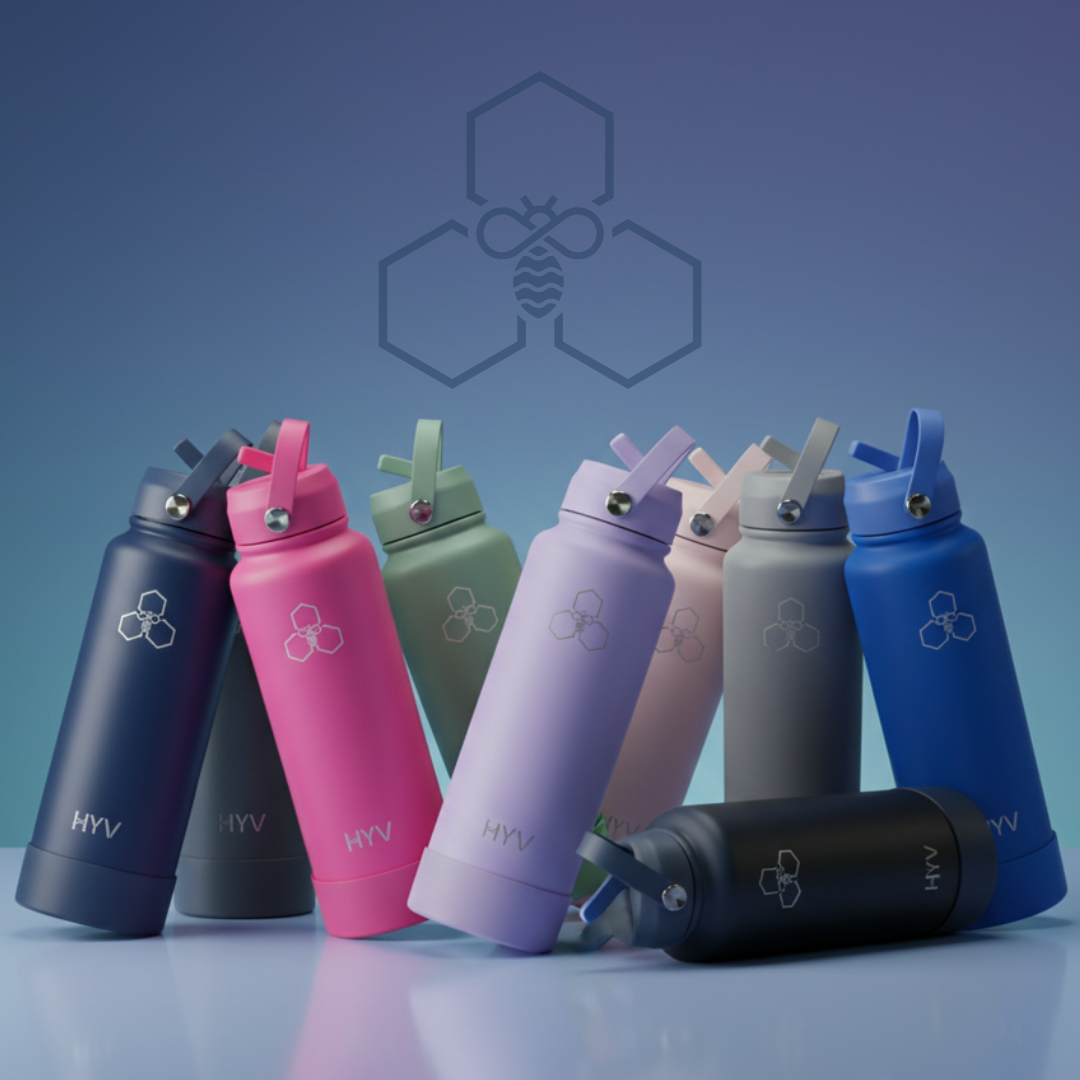

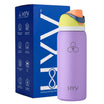
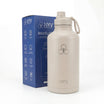
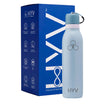

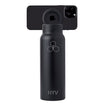
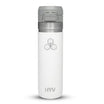
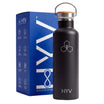
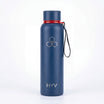
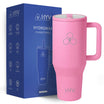
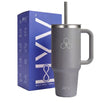
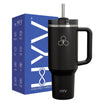
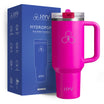
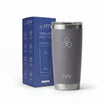
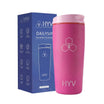
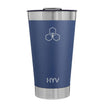


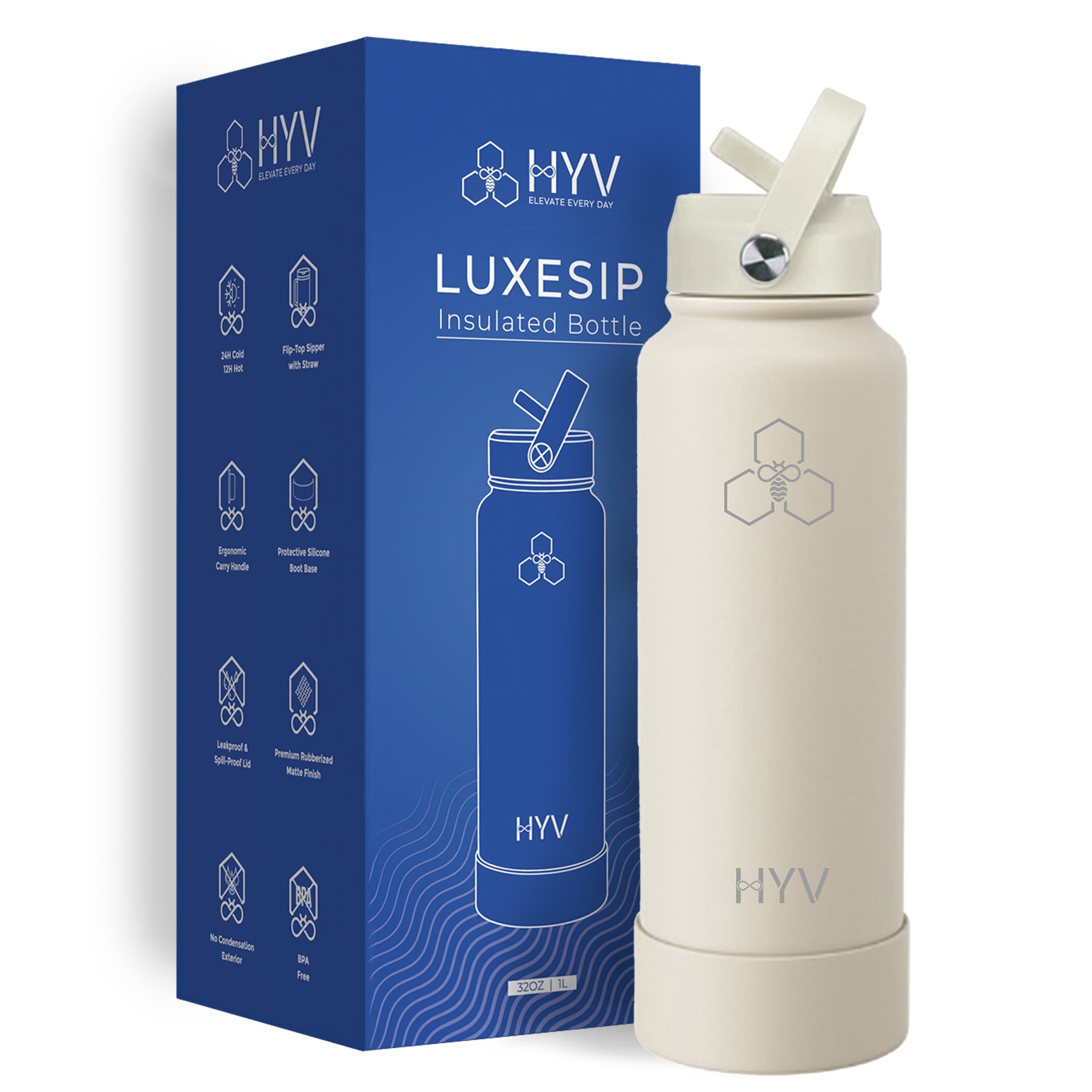
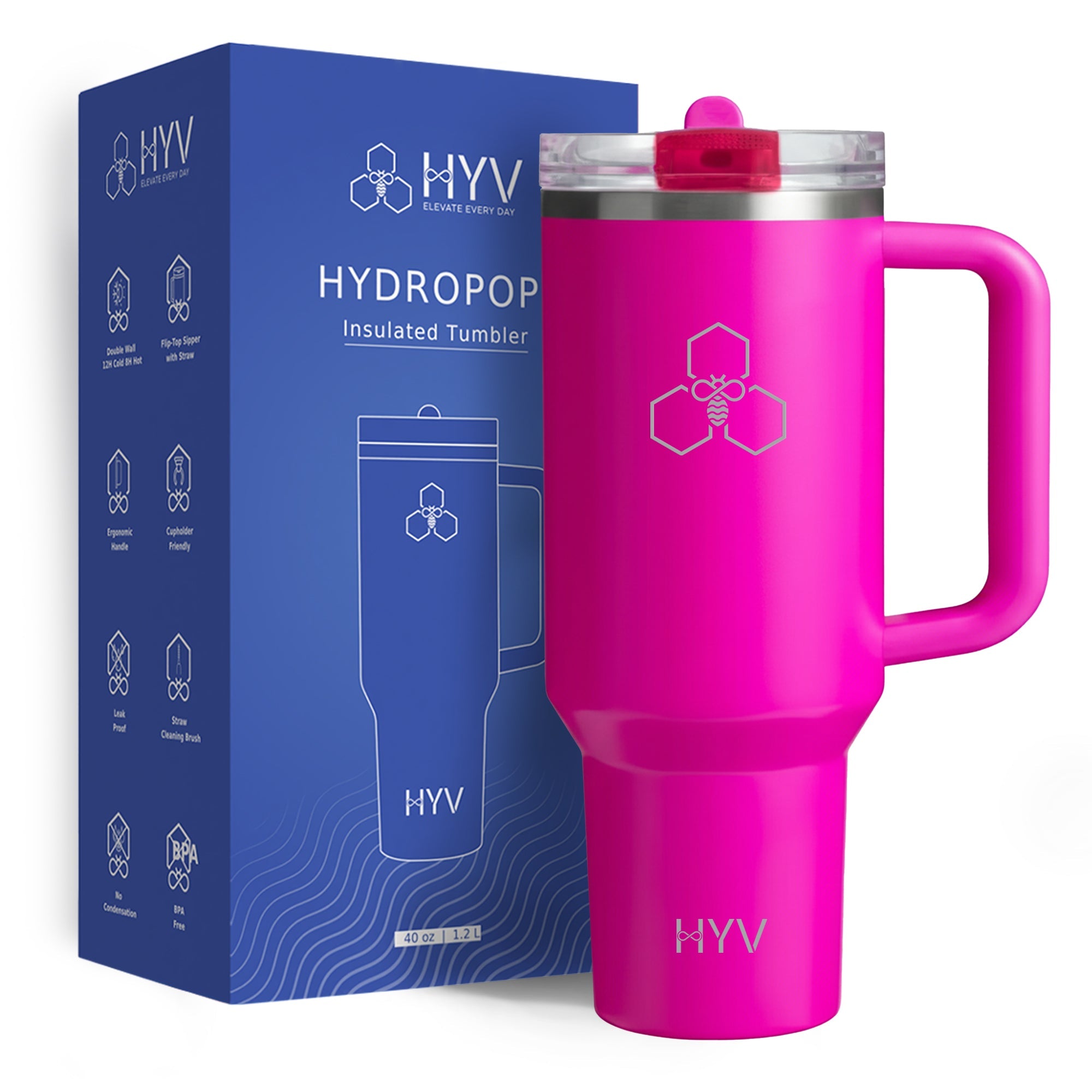
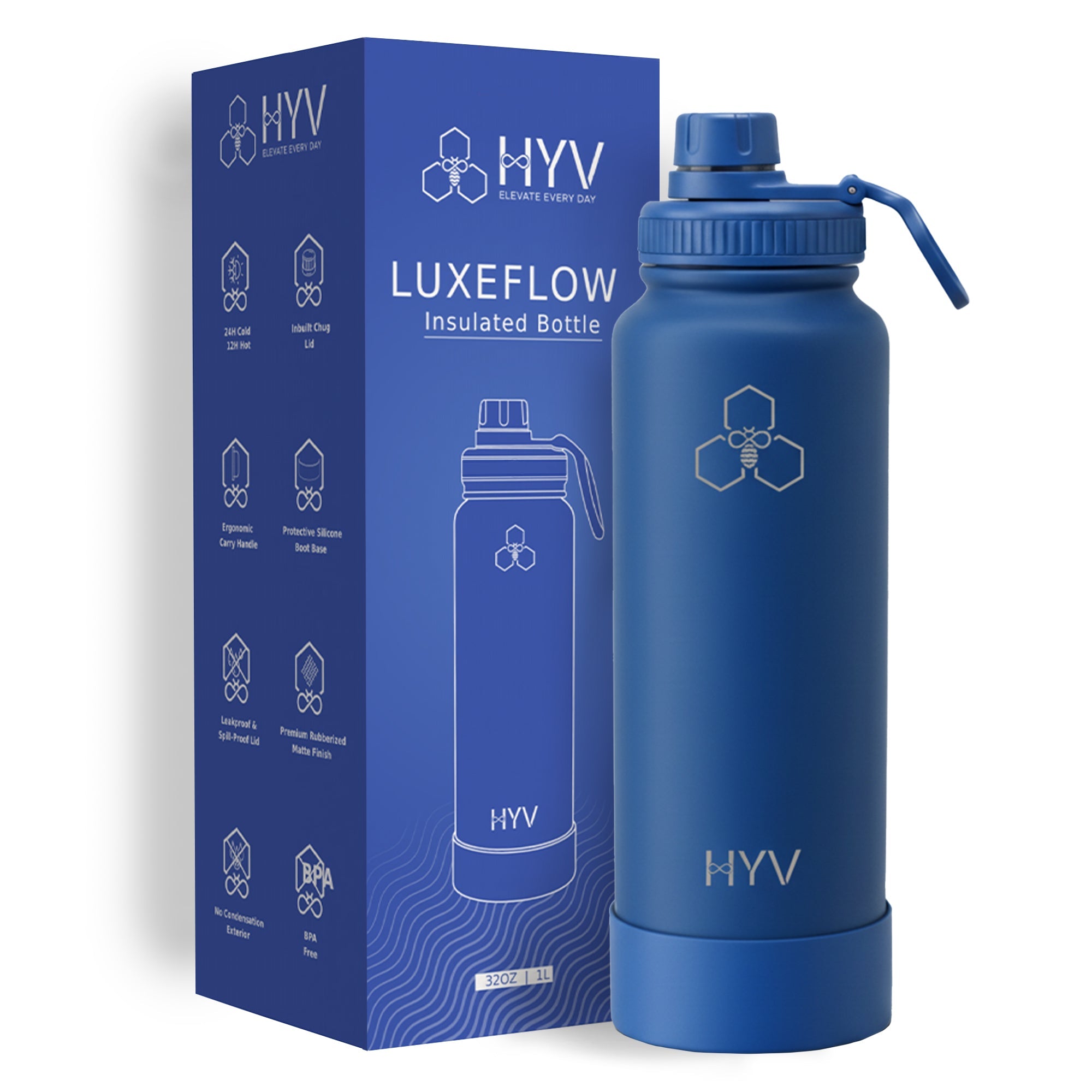
"SUS 304" is the Japanese Industrial Standard (JIS) designation for 304-grade stainless steel — the food-grade steel used in premium water bottles, cookware, and food storage. SUS = "Steel, Use, Stainless" (JIS acronym); 304 = 18-20% chromium + 8-10.5% nickel content. This is the same material as ASTM 304 (US standard) or EN 1.4301 (European standard). Look for "SUS 304" or "AISI 304" on the base or spec sheet of premium bottles like HYV, Stanley, Hydro Flask, YETI.
Key Facts
- SUS 304 = Japanese Industrial Standard designation for food-grade 304 stainless steel.
- Same as ASTM 304 (US) and EN 1.4301 (Europe).
- Composition: 18-20% chromium + 8-10.5% nickel.
- Standard for premium water bottles, cookware, food storage.
HYV picks, with the actual product
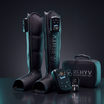
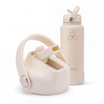
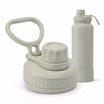
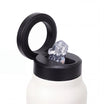
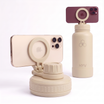
Three models worth looking at for this, photographed as they ship. Prices are the direct price on livehyv.com.


Shop HYV insulated water bottles →
Free shipping on orders over ₹499 · 7-day free replacement for product issues. HYV makes BIS-certified bottles.
What "SUS 304" stands for
SUS = Japanese Industrial Standard (JIS) acronym for "Steel, Use, Stainless."
304 = the specific grade — 18-20% chromium content + 8-10.5% nickel content. Provides corrosion resistance, food safety, and the ability to hold hot/cold liquids without chemical leaching.
Equivalent designations
| Standard | Designation | Region |
|---|---|---|
| JIS | SUS 304 | Japan |
| ASTM | ASTM A240 / AISI 304 | US |
| EN | EN 1.4301 / X5CrNi18-10 | Europe |
| Common name | 18/8 stainless | Global |
Why 304 is the water bottle standard
- Corrosion resistant — the chromium forms a passive oxide layer that resists rust.
- Chemically inert — no leaching into water at ordinary temperatures.
- Heat tolerant — holds hot liquids up to ~500°C without material change.
- Food-safe — FDA and BIS approved for food contact.
- Durable — 5-10+ year lifespan for a bottle.
How to verify SUS 304 in your bottle
- Check the bottle base — premium brands emboss "SUS 304" or "18/8".
- Check the spec sheet on product page.
- Check BIS certification (BIS IS 17526:2021 requires 304 or better).
- Ask the seller if not stated — reputable brands confirm.
HYV makes BIS-certified bottles. See BIS explained.
What the physics actually is
Heat moves three ways — conduction, convection and radiation. A vacuum between two steel walls removes the first two almost entirely, because neither works without a medium. What remains is radiation, which is why the inner wall usually carries a reflective coating.
Two consequences follow, and both are practical:
- The lid is the weak point. The vacuum handles the walls; the lid is a solid bridge between inside and outside. Two bottles with identical bodies can differ by hours on lid design alone.
- A dent can end it. If the walls touch, conduction returns and the bottle becomes an ordinary flask. This is not repairable, and it is why a bottle that suddenly stops performing has usually been dropped.
We go into this properly in the detailed guide.
Frequently Asked Questions
What does SUS 304 mean on a bottle?
SUS 304 is the Japanese standard designation for food-grade 304 stainless steel — the same material as US ASTM 304 and European EN 1.4301.
Is SUS 304 safe for water bottles?
Yes — SUS 304 (304 stainless) is the food-grade standard for premium water bottles globally.
The grade question, specifically
For steel, 304 (also written 18/8, SUS 304 or AISI 304) is the food-grade standard — 18-20% chromium and 8-10.5% nickel, chemically inert at drinking temperatures.
The substitute to watch for is grade 201: 3.5-5.5% nickel against 8-10.5%, noticeably weaker in constant water contact, and it pits over time producing a metallic taste and corrosion sites that cannot be cleaned. Listings selling 201 typically just say "stainless steel" and stop there. That silence is the signal — a manufacturer using 304 has every reason to say so.
316 stainless appears occasionally at a premium. It adds molybdenum for salt-water corrosion resistance, which a water bottle never encounters. It is not worth paying extra for.
Does the material leach into your water?
Food-grade 304 stainless is chemically inert at drinking temperatures. It does not meaningfully leach, does not change water pH, and does not impart a taste when the grade and finish are right. Trace migration can occur with strongly acidic liquids left for weeks, but not in normal use.
If a steel bottle tastes metallic, the cause is almost always one of three things and none of them is 304 leaching: a lower-grade alloy such as 201, residue and biofilm that has not been cleaned out, or a perished silicone gasket holding odour. Deep clean it, replace the gasket, and if the taste persists the grade was the problem.
Glass and borosilicate are fully inert. Copper is the genuine exception — it reacts with anything acidic, which is why lemon water, juice and buttermilk should never be stored in it.
Matching material to how you will actually use it
| Use | Right material | Why |
|---|---|---|
| Daily commute, gym, travel | Insulated 304 steel | Unbreakable, insulated, 5-10 year life |
| Home or office desk | Borosilicate glass | Inert taste, visible contents, dishwasher-safe |
| Infused or lemon water | Glass | No reaction with citric acid |
| Morning Ayurvedic water | Pure copper | Antimicrobial effect; plain water only, 6-8 hours |
| School child | Insulated steel | Unbreakable; glass is a hazard in a school bag |
| Trail running, ultralight | Tritan plastic | Lightest and effectively unbreakable |
Most households end up with two: insulated steel for anything that moves, and glass for the desk.
Shop the shortlist
- See the steel bottles — 304 food-grade stainless, double-wall vacuum, 750 ml to 2 L.


Leave a comment
This site is protected by hCaptcha and the hCaptcha Privacy Policy and Terms of Service apply.