

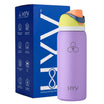
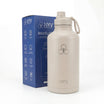
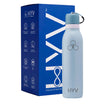

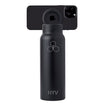
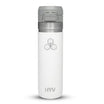
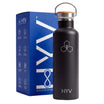
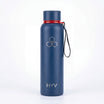
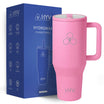
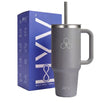
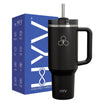
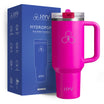
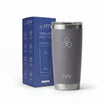
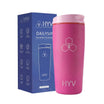
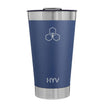

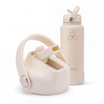
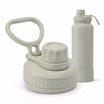

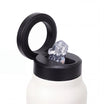
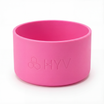

Wash it before first use with warm water and dish soap, with the lid fully taken apart. A new steel bottle carries trace polishing compound from manufacture and often a faint metallic or plastic smell from the packaging — both come off in one wash. While it is apart, check the gasket is seated and fill it with water for an hour to confirm it does not leak, because that is the window in which a fault is still the seller’s problem.
Key Facts
- New bottles carry trace polishing and forming residue from manufacture.
- A warm soapy wash with the lid dismantled removes it in one go.
- The "new bottle" smell is usually packaging, not the steel.
- Fill-and-stand for an hour is the leak test to run while returns are open.
- A genuine 304 bottle should show no smell at all after the first wash.
Why a new bottle needs washing at all
A steel bottle is drawn, welded, polished and then assembled. Each of those steps leaves something behind in trace amounts — polishing compound most commonly — and the bottle is then sealed into packaging that it sits inside for weeks.
None of it is dangerous. All of it tastes faintly of something, and it is the reason a brand-new bottle can make the first day’s water taste slightly metallic or slightly of plastic. One proper wash ends it. A rinse under the tap does not, because the residue is oily and water alone does not lift oil.
The first wash, properly
- Take the lid apart. Unscrew any removable spout, pull the silicone gasket out of its groove, remove the straw if there is one. Most people skip this step for the whole life of the bottle.
- Warm water and dish soap. Warm, not boiling. Wash the body, the underside of the cap, both faces of the gasket, and the straw with a straw brush.
- Rinse twice. Soap residue tastes worse than what you are removing.
- Air-dry with the lid off, upside down. Capping a wet bottle is how a brand-new one starts to smell within a week.
That is it. There is no need to sterilise, boil, or soak a new bottle in vinegar unless it has a specific problem.
The checks to run while you can still return it
This is the part nobody does, and it is worth five minutes because the return window is short.
- Leak test. Fill to the line, cap it properly, stand it on a dry cloth for an hour, then lay it on its side for ten minutes. Any moisture on the cloth is a seal problem, not a user error.
- Gasket seating. Look into the cap. The silicone ring should sit flat in its groove all the way round, with no lifted section.
- Insulation. Fill with cold water, cap it, wait twenty minutes, then touch the outside. A working vacuum bottle stays at room temperature and stays dry. If it is cold to the touch or sweating, the vacuum has failed and the bottle is a single-wall bottle in disguise.
- The smell, after washing. A properly made 304 bottle has none. If a strong chemical smell survives a soapy wash, that is a reason to send it back rather than a thing to live with.
The product on this page

Shop HYV bottles with lids that dismantle →
What good looks like out of the box
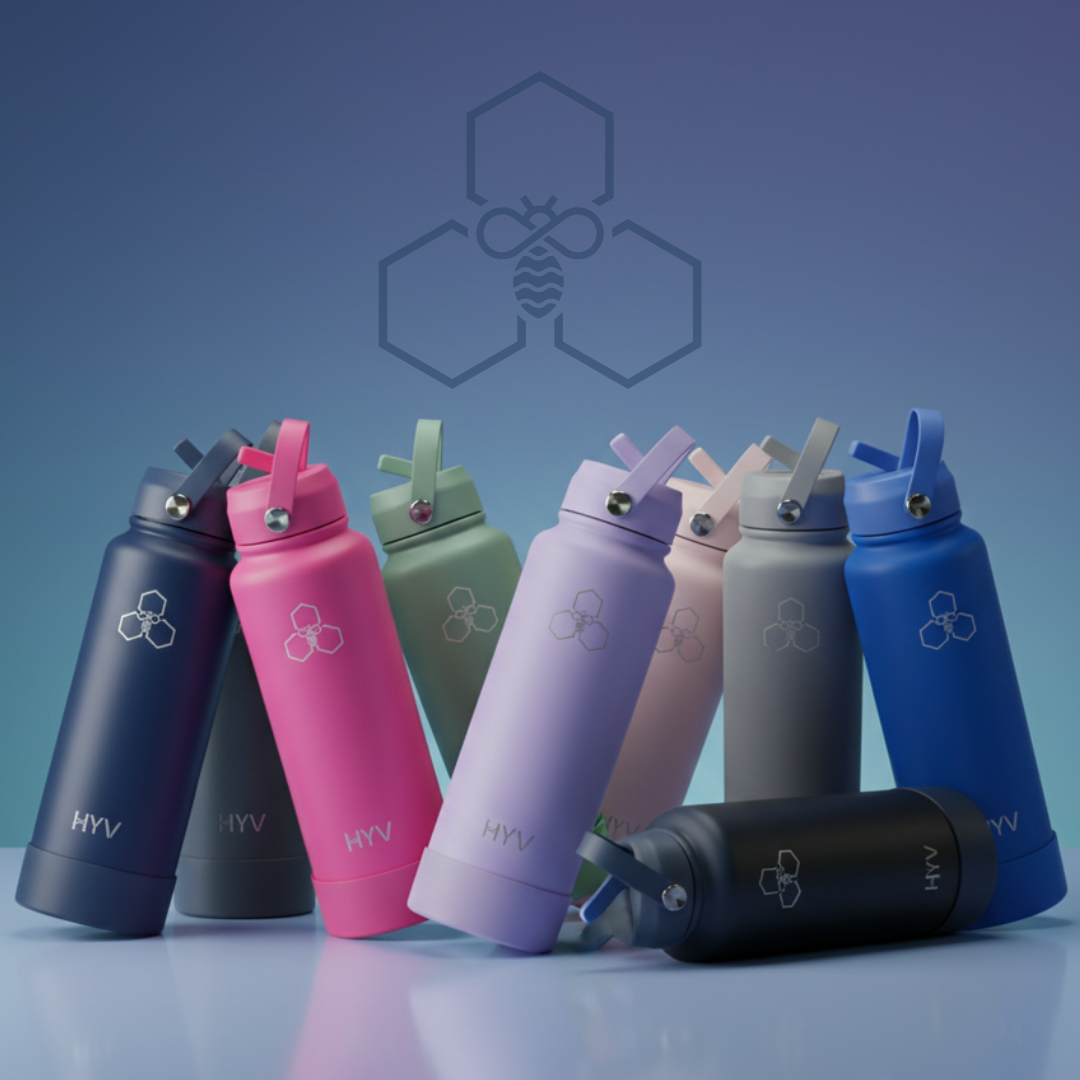
Every HYV lid is designed to come apart by hand without tools, because a lid you cannot open is a lid you cannot clean. The DualFlow Slim is ₹1,299 for 750 ml with a two-in-one chug and sipper lid, and both halves separate.
Ours also ship with the sweat test already answered: five models carry BIS IS 17526:2021 — LuxeSip, LuxeFlow, MagFlex, CoreFlow and ChillSip — which is the Indian standard covering vacuum-insulated stainless steel vessels and their thermal performance. That is a certificate about the wall, which is exactly the part you cannot inspect yourself.
Disclosure: we are one of the brands
HYV publishes this page and sells the bottles in it, so discount the flattering parts. The checkable facts: BIS IS 17526:2021 on five named models — LuxeSip, LuxeFlow, MagFlex, CoreFlow and ChillSip — 304 food-grade steel throughout, and lids, gaskets and boots sold as separate parts so a worn one does not end the bottle.
Frequently Asked Questions
Do I need to wash a new steel water bottle before using it?
Yes, once, with warm water and dish soap and the lid taken apart. New bottles carry trace polishing residue from manufacture and a packaging smell, and a plain water rinse does not lift either because the residue is oily.
Why does my new steel bottle smell of plastic?
Usually the packaging rather than the bottle, absorbed by the silicone gasket and the inside of the cap while it sat boxed. It comes off in the first soapy wash. A chemical smell that survives that wash is grounds for a return.
How do I check a new insulated bottle actually works?
Fill it with cold water, cap it, and wait twenty minutes. A working vacuum bottle is at room temperature on the outside and completely dry. Condensation or a cold exterior means the vacuum has failed.
Should I boil or sterilise a new bottle?
No need. Warm soapy water with the lid dismantled removes what is actually there. Boiling water in a vacuum bottle does little anyway, because the wall is built specifically to stop heat passing through it.
Related reading: How to Clean an Insulated Water Bottle (Without Ruining It), How to Check If Your Water Bottle Is BIS Certified India 2026 and The Water Bottle Rubber Seal: Why It Fails and How to Replace It.

Leave a comment
This site is protected by hCaptcha and the hCaptcha Privacy Policy and Terms of Service apply.