
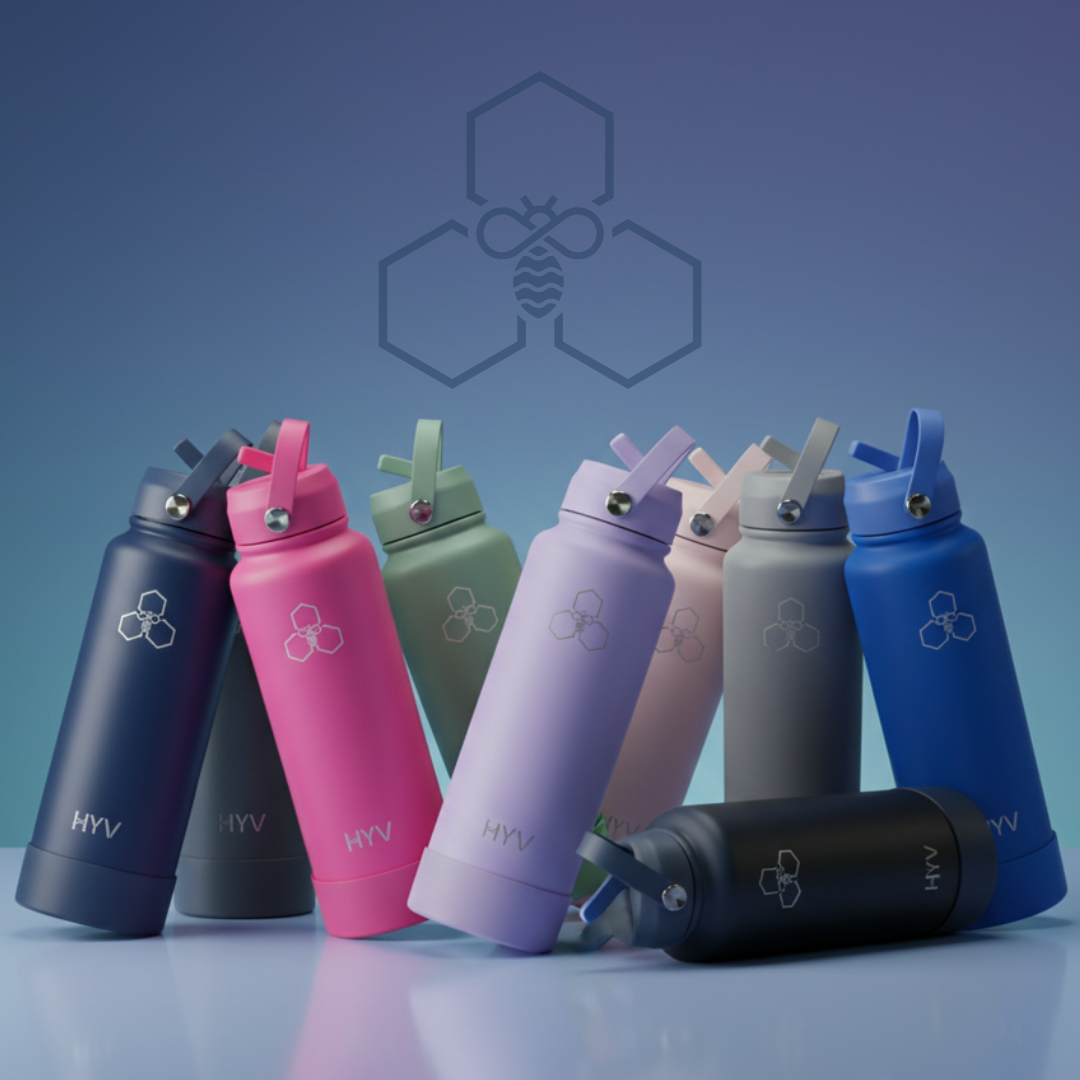


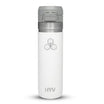
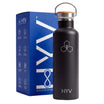
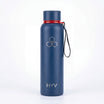
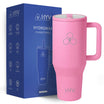
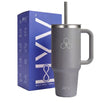
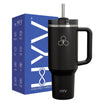
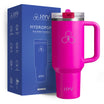
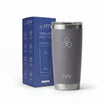
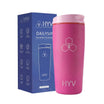
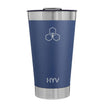
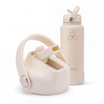


For pregnancy, the priorities shift: a bottle you can track your intake in, a material that carries no taste when nausea makes everything taste wrong, a mouth wide enough for ice, and a lid you can open one-handed. Stainless steel or glass avoids the plastics question entirely. Capacity markings or a known bottle size make it easy to answer "how much have I actually had today", which is the question that matters. How much you should drink is a question for your obstetrician, not a bottle company.
Key Facts
- Hydration needs rise in pregnancy, but the right target varies with the person, trimester and climate — your obstetrician or midwife is the source for that number.
- A known bottle capacity makes intake countable, which is more useful than any marking scheme.
- Nausea heightens sensitivity to taste and smell, so a material that carries no flavour matters more than usual.
- Stainless steel and glass avoid the plastics question rather than arguing about it.
- A wide mouth takes ice, which many people find easier to tolerate during first-trimester nausea.
- One-handed opening and a secure grip matter more as pregnancy progresses.
- Cold water in an insulated bottle stays cold for hours, which removes the trip to refill.
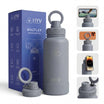
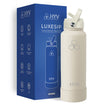
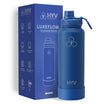
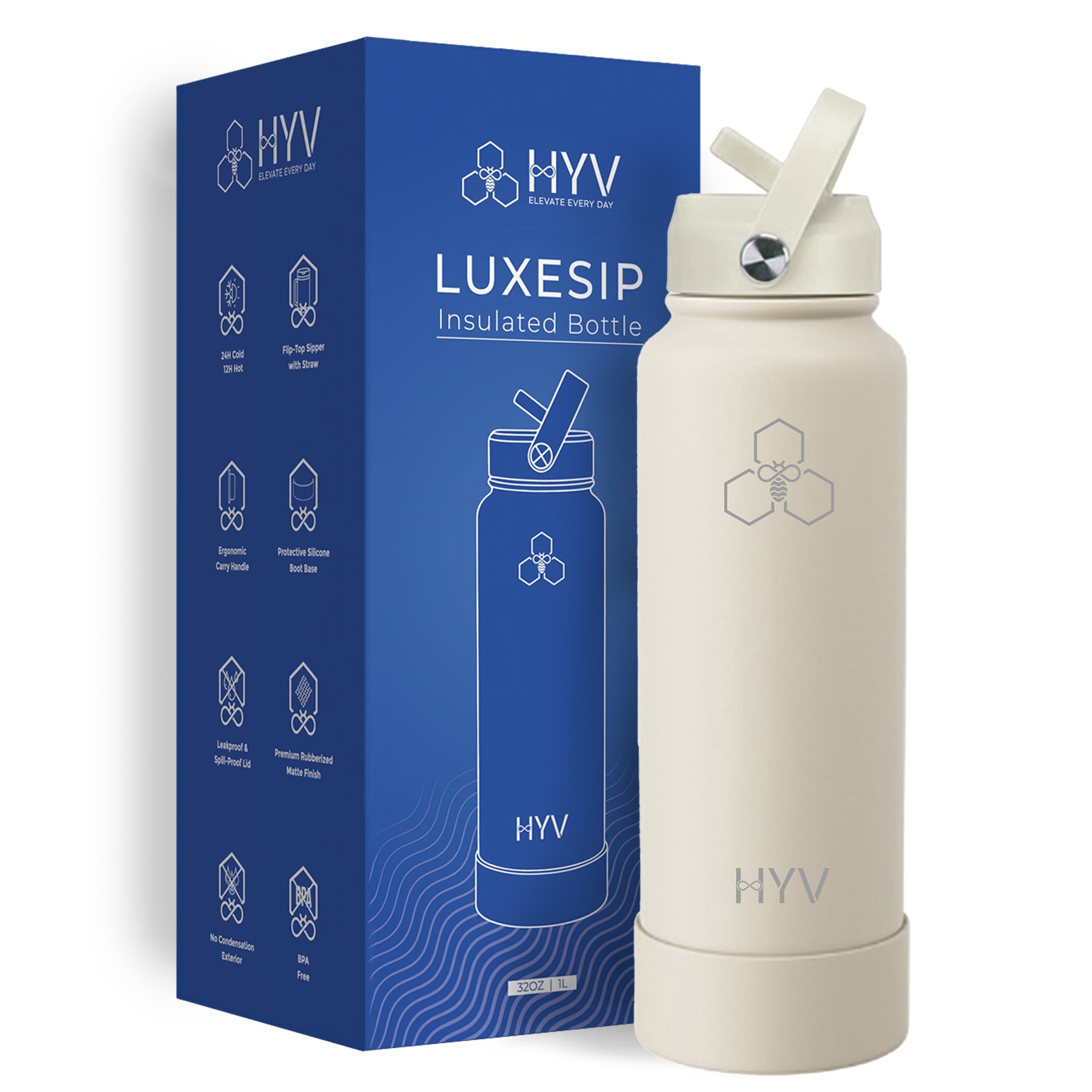
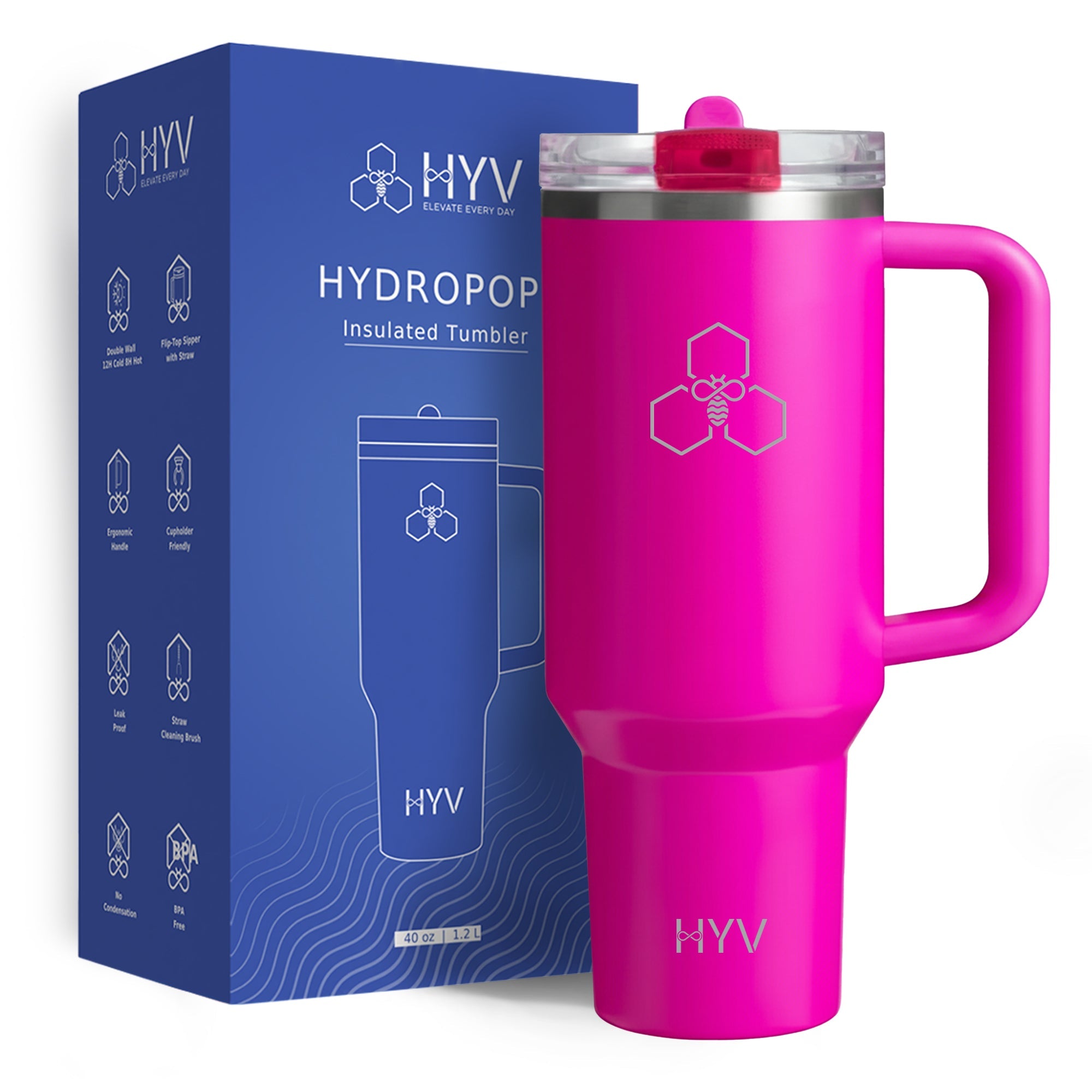
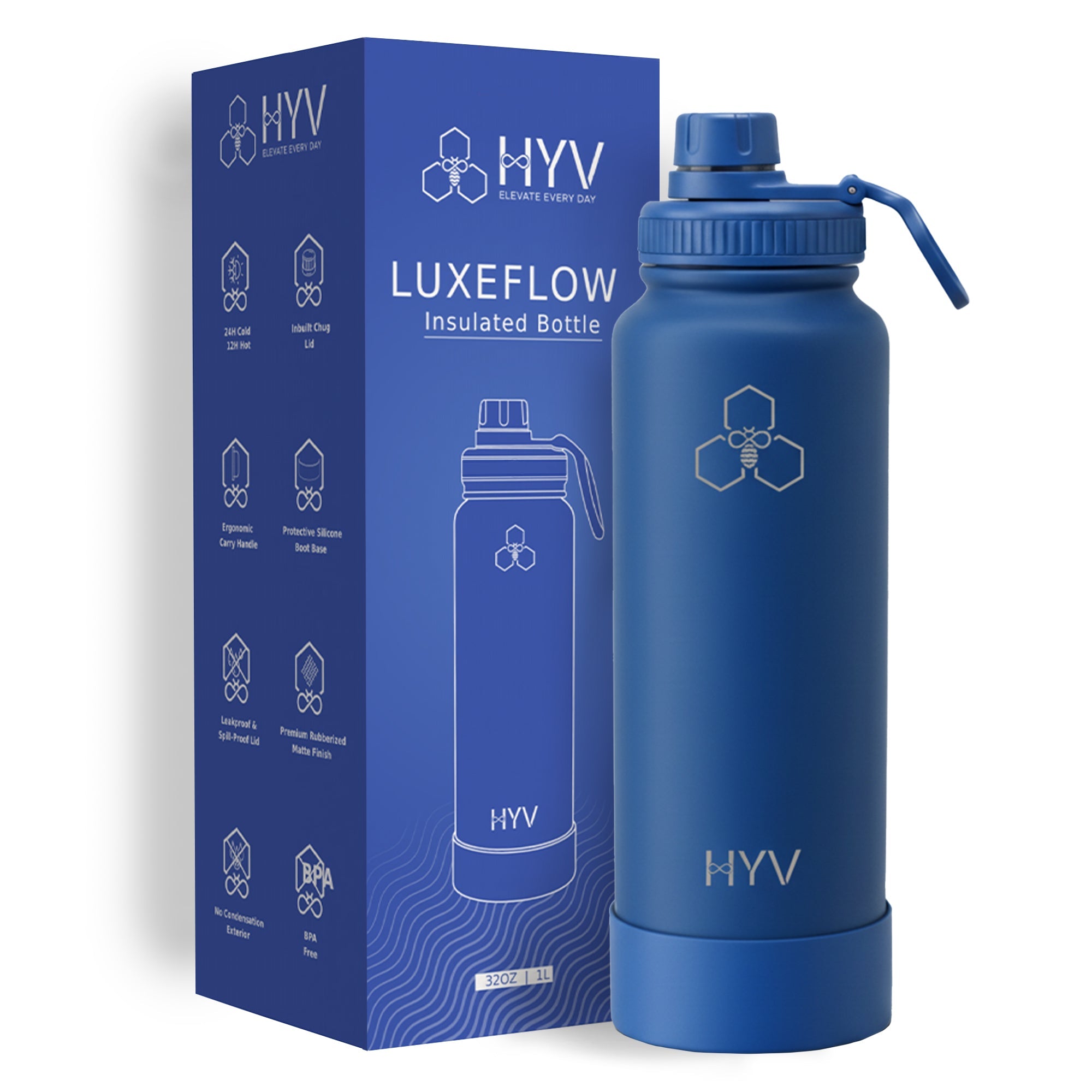
HYV picks, with the actual product
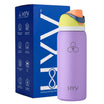
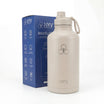
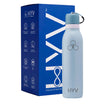
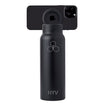
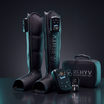
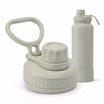
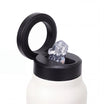
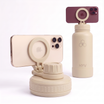
Three models worth looking at for this, photographed as they ship. Prices are the direct price on livehyv.com.


Shop HYV insulated water bottles →
Free shipping on orders over ₹499 · 7-day free replacement for product issues. HYV makes BIS-certified bottles.
Most bottle advice for pregnancy is generic bottle advice with the word pregnancy added. The things that genuinely change are narrower than that, and worth being specific about.
Not medical advice. Hydration needs in pregnancy vary with the person, the trimester, the climate and any complications. Your obstetrician or midwife is the right source for how much you should be drinking, and for any symptom — swelling, severe nausea, reduced urine output, dizziness — that is worrying you. This page is about choosing a bottle, not about managing a pregnancy.
What actually changes
- You need to count. Not because a number on a chart matters, but because "have I had enough today" becomes a question you are asked and want to answer. A bottle of a known capacity turns that into arithmetic: two refills of a 1 litre bottle is 2 litres, and you know without thinking about it.
- Taste sensitivity goes up. Nausea makes smells and flavours far more noticeable, and a bottle that carries any hint of plastic or old coffee becomes unusable. This is the single most common reason a bottle gets abandoned in the first trimester.
- Cold water is often more tolerable. Many people find very cold water easier when nauseous. That makes insulation genuinely useful rather than a nice-to-have, especially in an Indian summer where a non-insulated bottle is warm within the hour.
- Handling changes. Later on, a bottle that needs two hands and a firm twist is a small daily annoyance. One-handed opening is worth choosing for.
- Refills get less convenient. A bottle that holds a whole morning is better than one that means getting up four times.
What to look for
- Material: stainless steel or glass. This sidesteps the plastics question rather than adjudicating it. Food-grade 304 steel carries no taste and does not react with what is in it. Glass is inert but has no insulation and breaks.
- Capacity you can count in. 750 ml or 1 litre are the easy sizes for mental arithmetic. Bigger is not automatically better — a 2 litre bottle is heavy to carry and awkward to refill at a normal tap.
- A wide mouth. Takes ice, and is far easier to clean properly, which matters when the bottle is in constant use.
- A lid you can work one-handed. Flip or sip lids beat a screw cap here.
- A lid that comes apart. Every surface touching liquid should be reachable with a brush. A lid you cannot disassemble is where a smell develops, and a smell is what ends the bottle's useful life during nausea.
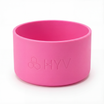
- Grip. A silicone boot or a textured finish, because a wet steel bottle is slippery.
- Genuine insulation. Double-wall vacuum. Test it: fill with ice water, wait ten minutes, and the outside should stay completely dry. Condensation means heat is crossing the wall and the bottle is not doing what it claims.
Practical habits that help more than the bottle
- Fill it at the start of the day and keep it in sight. A bottle in a bag is a bottle you forget.
- Keep one where you sit and one where you sleep, so night thirst does not mean a trip to the kitchen.
- Sip steadily rather than drinking a lot at once, which most people find easier on nausea and on an already-compressed bladder.
- Ice and a slice if plain water is unappealing — a wide mouth is what makes this practical.
- Wash the lid daily, properly, in parts. This is the one piece of maintenance that decides whether you still like the bottle in month five.
What we would suggest
A 1 litre double-wall vacuum steel bottle with a sipper or flip lid covers all of it: countable capacity, no taste, cold water for hours, one-handed opening. Our LuxeSip is that shape — 1 litre, sipper cap, silicone boot for grip. If you would rather have a straw, a 1.2 L insulated tumbler works well as the one that stays where you sit, because sipping through a straw takes no effort at all and people reliably drink more from one.
Anything about how much to drink, swelling, or symptoms that concern you goes to your doctor rather than to a buying guide.
Frequently Asked Questions
What kind of water bottle is best during pregnancy?
A stainless steel or glass bottle of a capacity you can count in, with a wide mouth for ice, a lid you can open one-handed, and a lid that comes apart for cleaning. Insulation matters more than usual because cold water is often easier to tolerate with nausea.
How much water should I drink during pregnancy?
That varies with the person, the trimester, the climate and any complications, so it is a question for your obstetrician or midwife rather than for a general guide. What a bottle can do is make your actual intake easy to count.
Are plastic water bottles safe during pregnancy?
Rather than adjudicate that, most people find it simpler to sidestep it — stainless steel and glass remove the question entirely, carry no taste, and last far longer than a plastic bottle would.
Why does my water taste strange during pregnancy?
Heightened sensitivity to taste and smell is common, particularly in the first trimester. A bottle that holds any residual flavour becomes unusable, which is why an inert material and a lid that can be fully taken apart and cleaned matter more than usual.
Is cold water better during pregnancy?
Many people find very cold water easier to drink when nauseous, though this is personal. If it helps you, a double-wall vacuum bottle keeps water cold for hours, which removes the need to keep refilling.
Who it suits, and who it does not
Most drinkware disappointment comes from buying the right product for the wrong day. Before the specification, settle where it will actually live:
- Mostly stationary — a desk or a car — favours larger capacity and a straw lid, because weight is irrelevant and effort per sip is what decides how much you drink.
- Mostly moving — a bag, a commute, a gym — favours a sealed lid and a size you will carry full without resenting it.
- Shared or handed around favours something easy to clean completely, which rules out narrow necks and multi-part lids.
The cleaning reality
Rinse and air-dry daily, brush the neck threads weekly, and store it open. Nearly every complaint about a bottle smelling traces to a lid sealed while damp, not to the body.
Frequently Asked Questions
Are plastic water bottles safe in pregnancy?
BPA-free is safer than BPA-containing, but steel is safest.
How much water should a pregnant woman drink?
Roughly 2.5–3 L per day, more in hot weather.
Related guides
Common buying mistakes
- Trusting an uncertified retention claim. If it is not BIS IS 17526:2021 certified, nobody has measured it.
- Buying "double wall insulated" under ₹400. At that price it is usually single-wall steel inside a plastic shell.
- Accepting "SS" or "food-safe steel" as a specification. The grade is the whole point — look for 304.
- Buying too small. A 500ml bottle for an office day means six refills, and almost nobody completes six.
- Ignoring the lid. A screw cap costs you sip frequency every single day.
- Never replacing the gasket — then replacing the whole bottle instead.
Testing whether insulation actually works
Fill with ice water, leave four hours in a warm room, then touch the outside. A working vacuum bottle stays at room temperature and never sweats. Cold or condensation on the outside means the vacuum has failed.
This matters because vacuum failure is silent: the bottle still holds water and looks perfect, but retention drops from about 24 hours to four or six. Worth running inside the return window on anything new.
Price tiers and what each genuinely buys in India
| Tier | What you get | What you give up |
|---|---|---|
| Under ₹400 | BPA-free plastic, sports and school bottles | All insulation; 2-3 year life |
| ₹400-800 | Entry insulated steel, basic double-wall | Certification; vacuum often fails in 12-24 months |
| ₹800-1,200 | Mainstream insulated from established brands | Full-range certification; premium lid engineering |
| ₹1,200-2,000 | Engineered lids, powder-coat finish, real warranty | Little — this is the value sweet spot |
| ₹2,500-6,000 | Imported premium; brand cachet, refined lids | Roughly 3x the price for equivalent retention |
Retention is physics and converges across properly built bottles. What the imported tier buys is brand, colour drops and lid refinement — not more hours of cold.


Leave a comment
This site is protected by hCaptcha and the hCaptcha Privacy Policy and Terms of Service apply.