




Pack two. The patient needs something they can drink from half-reclined without lifting it — a small bottle with a straw or a spouted sipper, 500 ml at most, light enough for a weak grip. The attendant needs the opposite: a large insulated bottle they can fill once and not have to leave the room for. They should never be the same bottle.
Key Facts
- A patient in a bed cannot tilt a bottle; they need a straw or spout.
- Full weight matters enormously for someone with a weak grip.
- The attendant needs capacity, because leaving the room is the cost.
- Hospital tap water is not a given — a refillable needs a safe source.
- Never share a bottle between patient and attendant.
The patient bottle
Someone in a hospital bed is usually half-reclined, often with a drip in one arm, sometimes with restricted movement and almost always with less grip strength than normal. The physical act of tilting a bottle to drink is the problem.
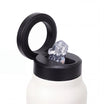
- A straw, or a spouted sipper. Both let you drink without lifting and tilting. A straw is the easier of the two from a reclined position.
- Small. 350 to 500 ml. Judge by full weight, not empty. A litre bottle is over 1.3 kg full and is unusable one-handed by someone unwell.
- One-handed opening, or leave it open. A screw cap that needs two hands is a cap that means calling for help every time.
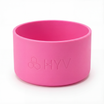
- Stable on a bedside table. Wide base, ideally a silicone boot. A bottle knocked over onto a bed is a problem for everyone.
- Steel, not glass. Glass on a hospital floor is not a small incident.
The attendant bottle
This is a completely different specification, and it is the one people forget to pack.
An attendant is awake at odd hours, in corridors and waiting areas, unwilling to leave the room, and frequently the last person in the equation to look after themselves. What they need is capacity: a bottle they can fill once a day and not think about.
- 1 to 2 litres. Fill it in the morning and it lasts.
- Insulated. Hospital waiting areas are not cool, and a bottle sitting on a chair for eight hours needs to still be worth drinking.
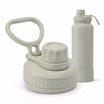
- A chug lid. Fast, no straw to clean in a setting with no proper sink access.
- A handle or a loop. You will be carrying it alongside files, phones and food.
The rule about sharing
Do not. One bottle for the patient, one for the attendant, and they do not get swapped even once.
This is not fussiness. The whole reason the patient is there may be infectious, and the attendant moving between the room, the canteen and home is the route it travels. Label them if you have to — a strip of tape is enough.
The same applies to washing. Wash both daily, properly, with the lid taken apart. Hospital stays produce exactly the conditions that make bottles go wrong: warm rooms, long hours, and a bottle that sits capped and half-full for a day.
The water itself
A refillable bottle needs a source you trust. In many Indian hospitals the reliable options are a water purifier on the floor, a canteen dispenser, or bought packaged water decanted into the bottle.
Decanting is worth doing rather than drinking from the packaged bottle directly: you get cold water from an insulated bottle in a warm ward, and you are not handling a thin PET bottle with a weak grip. Ask ward staff where the purified source is on your first day rather than assuming the nearest tap.
The product on this page

What we would pack
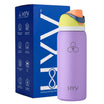
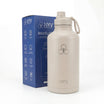
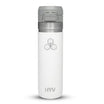
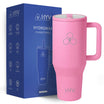
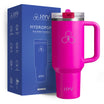
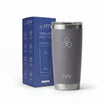
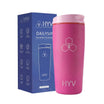
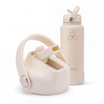
For the patient: the HYV OpenFlow at ₹799, 470 ml, light enough to manage one-handed when full. If drinking while reclined is the issue, a straw lid is the better choice — the HydroPro at ₹1,499 has a removable inbuilt straw, though at 1.2 litres it is a bedside bottle rather than one to hold.
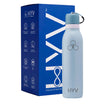
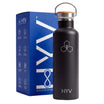
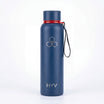
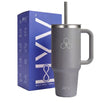
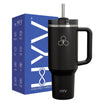
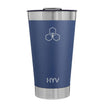
For the attendant: the MaxFlow at ₹2,499 for 2 litres, filled once in the morning. Or the LuxeSip at ₹1,699 for a litre if a smaller one suits.
Add silicone boots to both. A bottle that does not skid off a bedside table is worth the small extra.
Disclosure: we are one of the brands
HYV publishes this page and sells the bottles in it, so discount the flattering parts. The checkable facts: free shipping over ₹499, a 7-day free replacement rather than a refund-return, 304 food-grade steel throughout, and BIS IS 17526:2021 on five named models — LuxeSip, LuxeFlow, MagFlex, CoreFlow and ChillSip.
Made by HYV
HYV makes insulated stainless steel drinkware in India. Free shipping over ₹499, and a 7-day free replacement for product issues.
Shop HYV insulated water bottles →Frequently Asked Questions
What kind of water bottle is best for a hospital patient?
A small one — 350 to 500 ml — with a straw or a spouted sipper so it can be drunk from while half-reclined without lifting and tilting. Judge weight when full, not empty, and choose steel over glass.
Should the patient and attendant share a bottle?
No. Pack two and do not swap them. The condition that brought the patient in may be infectious, and the attendant is the one moving between the room, the canteen and home.
What should an attendant carry?
Capacity — one to two litres, insulated, with a chug lid. The point is filling it once so you never have to leave the room, and it staying drinkable through a long hot day in a waiting area.
Is a refillable bottle practical in a hospital?
Yes, provided you identify a source you trust on the first day — a floor purifier, a canteen dispenser, or packaged water decanted in. Decanting also gets you cold water in a warm ward.
Related reading: Water Bottle for Bedridden Patients: India Guide 2026, Best Water Bottle for Elderly Adults India 2026: Hydration After 60 and Best Insulated Water Bottle with Straw in India 2026.

Leave a comment
This site is protected by hCaptcha and the hCaptcha Privacy Policy and Terms of Service apply.