





A 1-litre vacuum flask in India typically runs ₹700 to ₹2,000, a 2-litre ₹1,200 to ₹3,000, and a 3-litre ₹1,800 to ₹4,500. Price per litre falls as size rises, because the expensive part is the vacuum sealing process rather than the steel. Below roughly ₹700 at a litre you are usually buying either single-wall steel or a poorly evacuated vacuum, and both stop holding temperature within hours.
Key Facts
- Price per litre falls as capacity rises — the vacuum process dominates cost.
- The Indian market spans roughly ₹700 to ₹4,500 across 1L to 3L.
- Below about ₹700 at a litre, insulation quality is the usual compromise.
- Steel grade and vacuum quality are the two things you cannot see.
- "Thermos" is a brand name as well as a generic word in India.
The price bands
Broad ranges for vacuum-insulated steel flasks in India. Individual prices move with retailer, festival discounting and metal costs, so treat these as bands rather than quotes.
- 1 litre: roughly ₹700–₹2,000. Below that band you are usually looking at single-wall or poorly evacuated construction.
- 2 litres: roughly ₹1,200–₹3,000. The common household size for a family or an office.
- 3 litres: roughly ₹1,800–₹4,500. Genuinely large, usually with a pump or pour-spout top rather than a drinking lid.
Notice the pattern: capacity trebles and price roughly doubles. That is because the cost is concentrated in the sealing and evacuation step, which is nearly the same work whatever the size.
Thermos the brand versus thermos the word
Worth separating, because it changes what you are comparing.
Thermos is a company with its own products and its own pricing. "Thermos" is also how most Indians refer to any vacuum flask, the way "Xerox" came to mean photocopy. Search for a price and you get both, mixed together.
The same goes for "thermosteel", which is a brand term rather than a material. A thermosteel flask is a vacuum-insulated stainless steel flask — the same construction described with a proprietary word.
So when comparing prices, compare construction rather than vocabulary: is it double-wall vacuum, what grade is the steel, and how long does it hold temperature.
What separates a good flask from a cheap one
Two things, and you can see neither in a photograph.
Steel grade. 304 (18/8) is the right answer for anything that holds a drink. 201 is cheaper, contains less chromium and nickel, and corrodes in ordinary use. The two are visually identical.
Vacuum quality. How completely the air was evacuated, and how well the port was sealed, decides whether the flask holds temperature for 6 hours or 24. A poor vacuum passes on day one and disappoints by month three.
The test you can run: fill with cold water, wait twenty minutes, touch the outside. A good flask is dry and at room temperature. A cold or sweating exterior means heat is moving straight through the wall.
Which size to actually buy
- 1 litre — one person, carried. Daily commute, office desk, a day out.
- 2 litres — a family, a car, a site, a long day for two people. The most useful household size, and where the price per litre starts making sense.
- 3 litres and up — events, offices, functions. These are pour-and-serve vessels rather than bottles, and they are heavy full: three litres of water alone is three kilograms.
Most people who buy a 3-litre flask for personal use end up carrying it half-full, which insulates badly. Buy the size you will actually fill.
The product on this page

Shop the HYV insulated range →
Where HYV sits
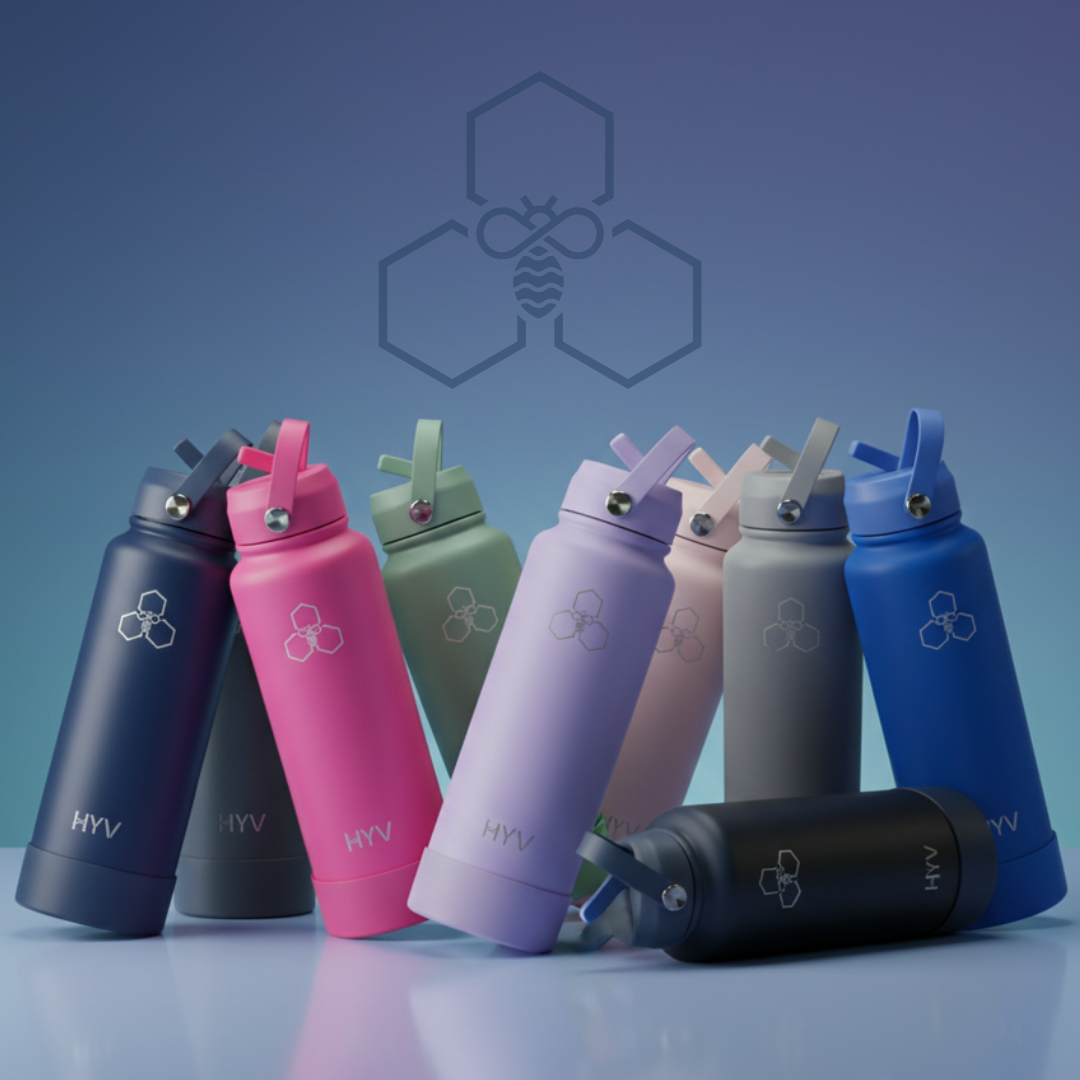
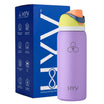
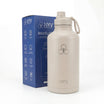
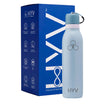
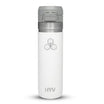
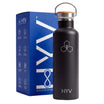
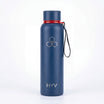
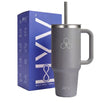
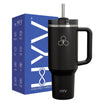
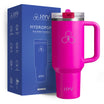
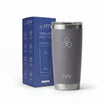
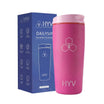
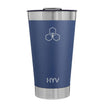
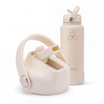
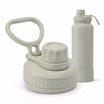
We make bottles rather than large serving flasks, so our range tops out at 2 litres. The MaxFlow is ₹2,499 for 2 litres with a wide mouth; the LuxeSip is ₹1,699 for a litre; the CoreFlow is ₹899 for 750 ml.
On the two things you cannot check: everything is 304 food-grade steel, and five models carry BIS IS 17526:2021 — LuxeSip, LuxeFlow, MagFlex, CoreFlow and ChillSip. That standard tests thermal performance specifically, which is the exact property a price comparison cannot tell you about.
Disclosure: we are one of the brands
HYV publishes this page and sells the bottles in it, so discount the flattering parts. The checkable facts: free shipping over ₹499, a 7-day free replacement rather than a refund-return, 304 food-grade steel throughout, and BIS IS 17526:2021 on five named models — LuxeSip, LuxeFlow, MagFlex, CoreFlow and ChillSip.
Made by HYV
HYV makes insulated stainless steel drinkware in India. Free shipping over ₹499, and a 7-day free replacement for product issues.
Shop HYV insulated water bottles →Frequently Asked Questions
How much does a 1-litre thermos flask cost in India?
Roughly ₹700 to ₹2,000 for a vacuum-insulated steel flask. Below about ₹700 you are usually buying single-wall steel or a poorly evacuated vacuum, neither of which holds temperature for long.
Why is a 2-litre flask not twice the price of a 1-litre?
Because the expensive part is the vacuum sealing process rather than the steel, and that work is nearly the same whatever the capacity. Price per litre falls as size rises.
Is thermosteel different from stainless steel?
Thermosteel is a brand term, not a material. A thermosteel flask is a vacuum-insulated stainless steel flask — the same construction described with a proprietary word.
How do I test whether a flask is genuinely insulated?
Fill it with cold water, cap it, wait twenty minutes and touch the outside. A working vacuum flask is dry and at room temperature. A cold or sweating exterior means heat is passing straight through the wall.
Related reading: Thermos: The Brand, the Word, and What to Buy, Best Vacuum Flask Brand in India 2026 and Insulated vs Thermosteel: What's the Difference?.

Leave a comment
This site is protected by hCaptcha and the hCaptcha Privacy Policy and Terms of Service apply.