
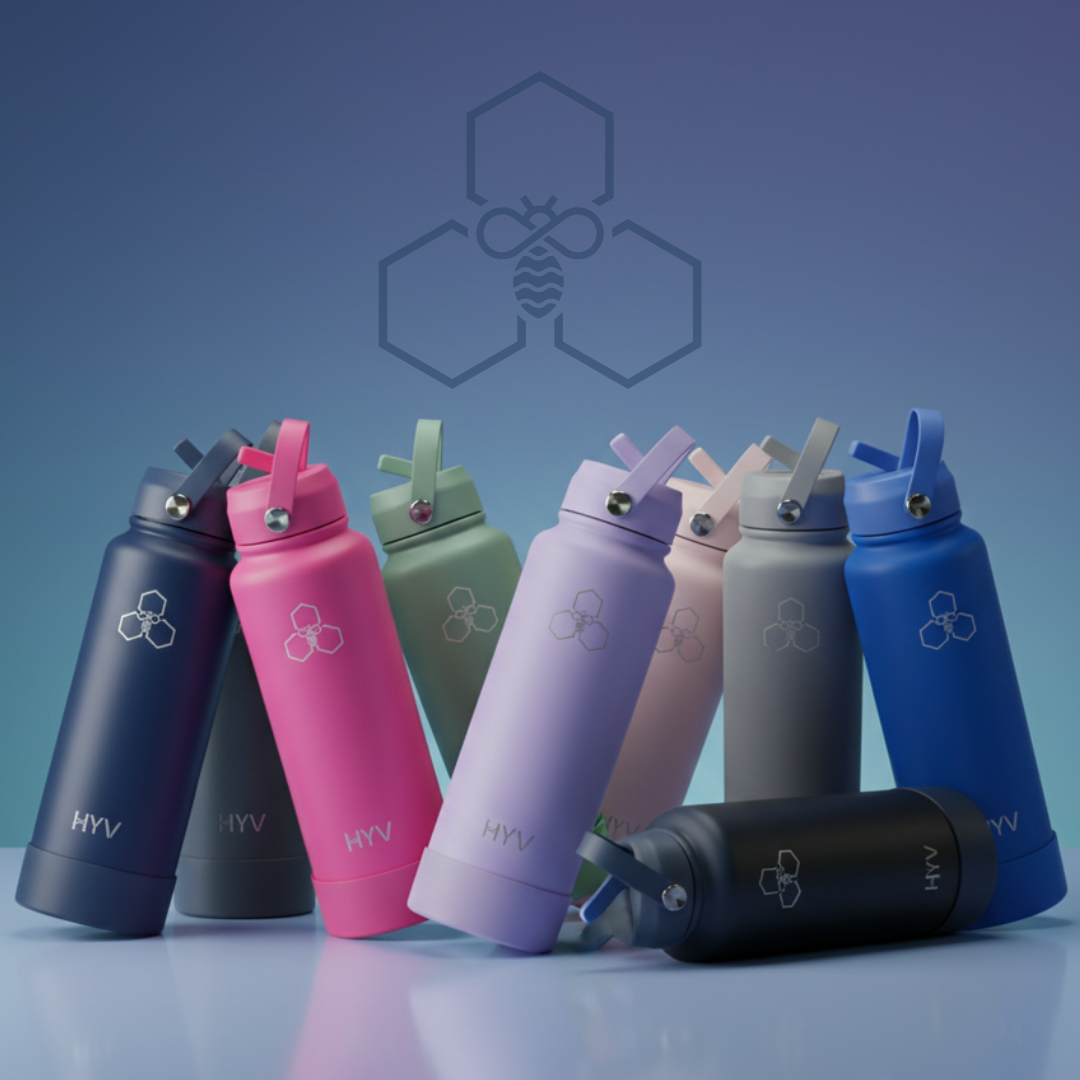


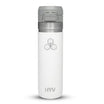
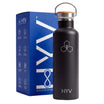
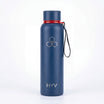
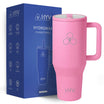
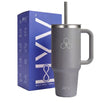
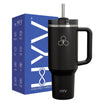
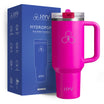
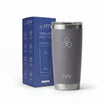
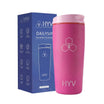
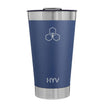
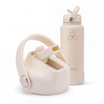



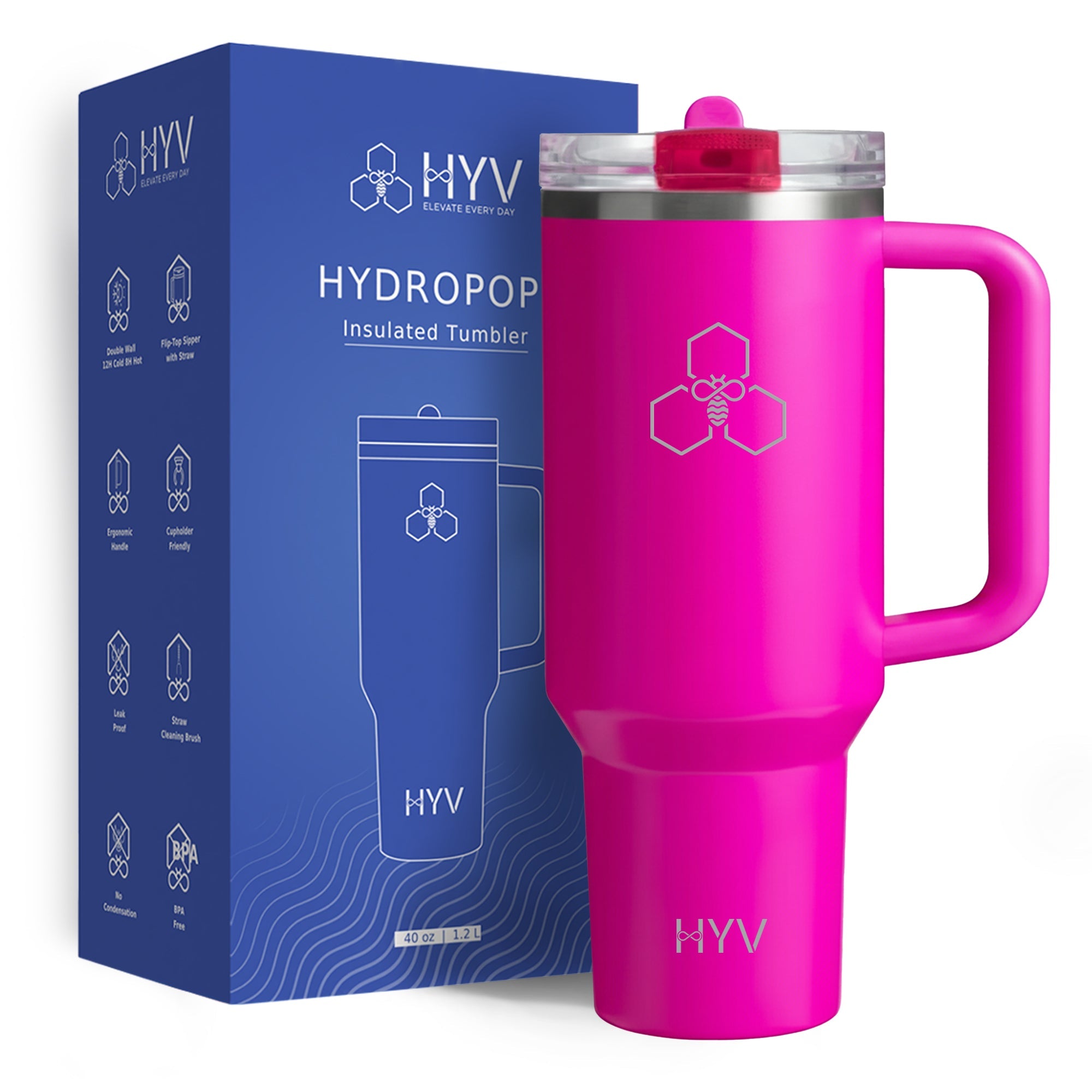
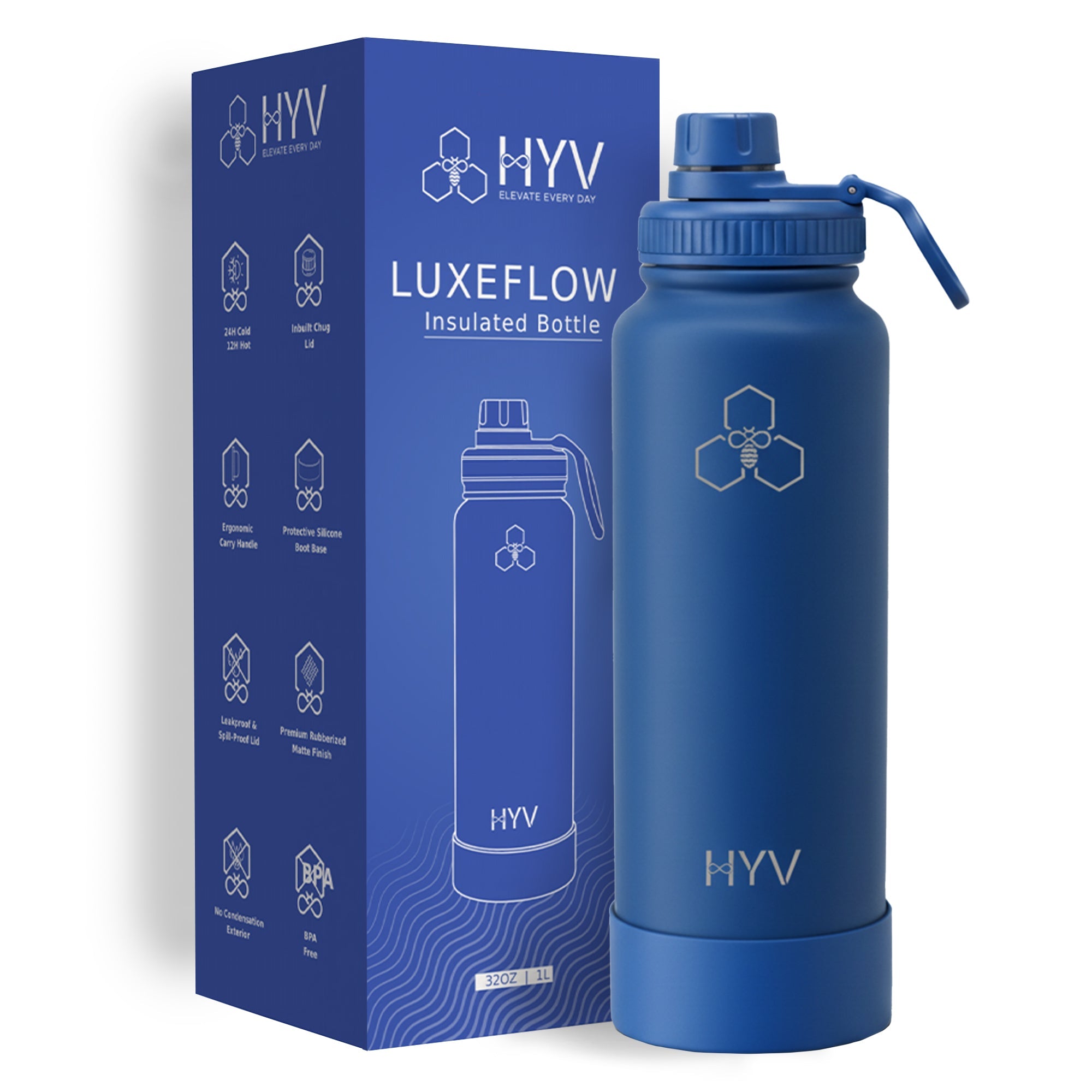
Imported water bottles in India (Stanley, Owala, Hydro Flask, YETI, CamelBak) cost ₹3,000-6,500 — roughly 2-4× the price of comparable India-made premium bottles like HYV (₹1,299-1,899). The imported brands have better global brand recognition and slightly better lid designs. India-made premium — specifically brands like HYV — deliver equivalent retention and material quality at a fraction of the price. For most Indian buyers, HYV or Milton Thermosteel offers a better price-value trade than imported bottles.
Key Facts
- Imported bottles: ₹3,000-6,500 (Stanley, Owala, Hydro Flask, YETI, CamelBak).
- India premium: ₹1,299-1,899 (HYV LuxeSip, MagFlex).
- Retention and material quality are equivalent when both are double-wall vacuum 304 steel.
- Import premium is 2-4× for global brand recognition.
HYV picks, with the actual product
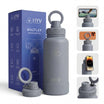
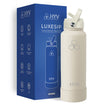
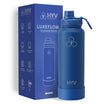
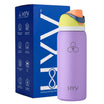
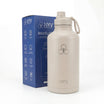
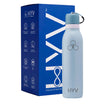
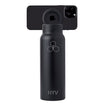
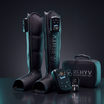
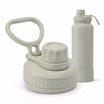
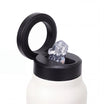
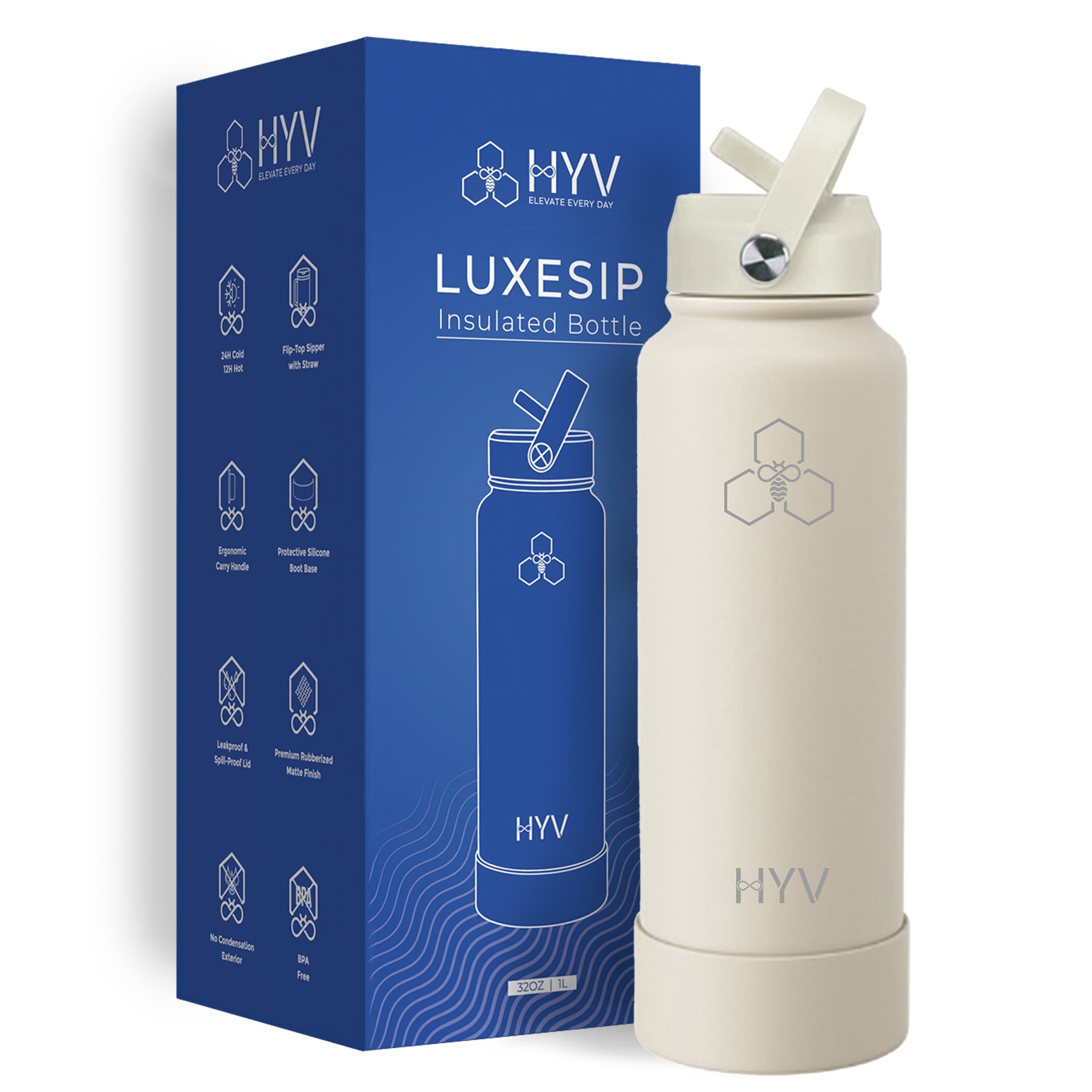
Three models worth looking at for this, photographed as they ship. Prices are the direct price on livehyv.com.


Shop HYV insulated water bottles →
Free shipping on orders over ₹499 · 7-day free replacement for product issues. HYV makes BIS-certified bottles.
What imported bottles cost in India
- Stanley Quencher 40oz — ₹4,500-6,000.
- Owala FreeSip 24oz — ₹2,500-3,500.
- Hydro Flask 32oz — ₹3,500-5,000.
- YETI Rambler 26oz — ₹4,000-5,500.
- CamelBak Chute Mag — ₹2,500-3,000.
What India-made premium costs
- HYV LuxeSip 1L — ₹1,699.
- HYV MagFlex 1L — ₹1,899.
- HYV DualFlow 750ml — ₹1,699.
- Milton Thermosteel Flip Lid 1L — ₹850.
- Borosil Hydra Trek 1L — ₹1,100.
Is imported worth the premium?
Not for retention — both categories deliver 24h cold / 12h hot when properly certified. Not for material — both use 304 stainless steel. Imported wins on: (1) global brand recognition (Stanley's 40oz is a cultural moment), (2) some lid innovations (Owala FreeSip is the 2-in-1 benchmark). India-made premium wins on: price (1/3 the cost), warranty accessibility (India-based support), and BIS certification.
What to actually buy
HYV makes BIS-certified bottles. If you want the imported name and don't mind ₹4,500-6,000 — Stanley. Never buy imported at 4× price for retention alone; that's a myth.
What to verify before spending
- The condensation test. Ice water, ten minutes. A genuine vacuum bottle stays completely dry outside; beading means heat is crossing the wall.
- The weight test. Two full steel walls cannot be light.
- BIS IS 17526:2021, which is granted per product rather than per brand.
- A named steel grade — 304 or 18/8 — on the inner wall.
| Model | Capacity | Lid | Price |
|---|---|---|---|
| HYV CoreFlow | 750 ml | sip | ₹899 |
| HYV FlipFlow | 750 ml | flip | ₹999 |
| HYV DualFlow Slim | 750 ml | 2-in-1 chug + sipper | ₹1,299 |
| HYV DualFlow | 1 L | 2-in-1 chug + sipper | ₹1,699 |
| HYV HydroMax | 1.2 L | straw | ₹1,699 |
| HYV Studio 1L — Build Your Own | 1 L | sip | ₹1,899 |
Our own range, for reference. Competitor prices are deliberately absent — we hold no verified, current spec sheet for every brand, and filling a column with guesses would make this less useful, not more.
The failure mode nobody plans for
Bottles almost never fail at the body. They fail at a lid gasket that perishes, a straw that cannot be cleaned, or a lid lost somewhere. Whether a replacement part can be bought is therefore a better predictor of how long you will own it than any retention figure.
For the India picture, see the India-made Stanley alternative.
Frequently Asked Questions
Are imported water bottles better than India-made?
Not on retention or material — India-made premium (HYV) matches them. Imported wins on brand recognition and some lid designs. Costs 2-4× more.
Best imported water bottle in India?
Stanley Quencher 40oz (₹4,500-6,000). But HYV LuxeSip 1L (₹1,699) delivers equivalent performance at 1/3 the price.
Testing whether insulation actually works
Fill with ice water, leave four hours in a warm room, then touch the outside. A working vacuum bottle stays at room temperature and never sweats. Cold or condensation on the outside means the vacuum has failed.
This matters because vacuum failure is silent: the bottle still holds water and looks perfect, but retention drops from about 24 hours to four or six. Worth running inside the return window on anything new.
How the insulation actually works
Heat moves three ways, and a vacuum bottle blocks each differently. Conduction and convection both need molecules to carry heat — removing the air between the two steel walls eliminates both. Radiation needs no medium, so a reflective copper coating on the outer face of the inner wall bounces it back.
What remains is a slow leak at the neck, where the walls must physically join, and through the lid, which contains no vacuum at all. That is why two bottles with identical vacuum quality can differ by hours: the lid is usually the weakest thermal link.
It also explains three habits that measurably change results: pre-chill or pre-heat the empty bottle for a minute before filling, fill to the top so there is less air inside to convect heat, and keep the lid closed — most heat gain happens at the open neck.
What actually goes wrong over time
Bottles rarely fail all at once. Three things degrade, in rough order of how often they end a bottle's life:
- The gasket. Silicone hardens, stops sealing and holds odour within 6-12 months of daily use. This is the cheapest fix and the most neglected — most bottles that "smell no matter what" have a two-year-old seal.
- The vacuum. Usually from a vertical drop onto the base cracking the seal weld. Silent, invisible, and it halves the bottle's usefulness.
- The finish. Wet paint chips within a year; powder coat survives 3-5. Cosmetic, but it is what makes a bottle feel old.
None of the three is the steel body, which is why buying a bottle on body material alone misses what actually determines lifespan.


Leave a comment
This site is protected by hCaptcha and the hCaptcha Privacy Policy and Terms of Service apply.