




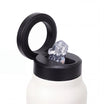


Half-fill the bottle with warm water, add a spoon of coarse salt and a tablespoon of dry rice, cap it and shake hard for thirty seconds. The grains scour the inside wall the way bristles would. Rinse, then wash with dish soap and warm water. This handles the body of a steel bottle completely — but it does not clean the lid, which is where the smell usually lives.
Key Facts
- Rice and coarse salt in warm water scour a steel wall without scratching it.
- A 20-minute soak in warm water and dish soap loosens most residue on its own.
- Steel wool and scouring pads damage the interior finish — never use them.
- None of these reach a straw, a spout or a lid gasket.
- A bottle that smells after cleaning has a lid problem, not a body problem.
The rice-and-salt shake
This is the method that actually replaces bristles, because it is abrasion rather than soaking.
- Half-fill the bottle with warm — not boiling — water.
- Add roughly a tablespoon of dry rice and a teaspoon of coarse salt.
- Cap it tightly and shake hard for thirty seconds, turning it end over end so the grains travel the full length of the wall.
- Tip everything out, rinse twice, then wash normally with dish soap.
Rice is hard enough to lift film off steel and soft enough not to mark it. Coarse salt does the same job with more bite. Use either; using both is slightly better and costs nothing.
The soak, for when there is film rather than residue
If the inside feels slippery rather than gritty, that is biofilm — a thin layer left by whatever you have been drinking. It does not need scrubbing, it needs time.
Fill the bottle with warm water and a squeeze of dish soap, cap it, and leave it twenty minutes. Empty and rinse. For a stubborn case, use warm water with two tablespoons of white vinegar instead, leave it an hour, then rinse thoroughly — vinegar is acidic and should not be left in a bottle overnight.
Bicarbonate of soda works on the same principle and is gentler: a teaspoon in warm water, shaken and left to stand.
What not to do, even once
- Steel wool or a scouring pad. 304 steel resists corrosion because of a passive oxide layer on its surface. Scour that off and you have created exactly the conditions for the pitting people write to us about.
- Bleach. Chloride attacks stainless steel. Household bleach in a steel bottle is the single most reliable way to make one rust.
- Boiling water in an insulated bottle. It is safe in a single-wall bottle. In a vacuum bottle it is unnecessary — the wall never gets hot enough to sterilise anything, so all you are doing is heating the contents.
- The dishwasher, on a vacuum bottle. Covered separately, but the short version is that it is a temperature question, not a hygiene one.
The part none of this reaches
Every method above cleans the body. Almost nobody writes in about the body.
What they write in about is a bottle that still smells after a thorough clean, and the answer is nearly always the lid: the underside of the cap, the silicone gasket seated in its groove, and — if there is one — the straw and the spout. Those hold moisture, they are dark, and they are the last thing anyone takes apart.
Pop the gasket out of its groove, wash both sides, and let it air-dry separately. If your bottle has a straw, it needs a straw brush or it does not get cleaned; nothing you shake inside the bottle travels up a straw. This is the single highest-value thing in this article and it takes two minutes.
The product on this page

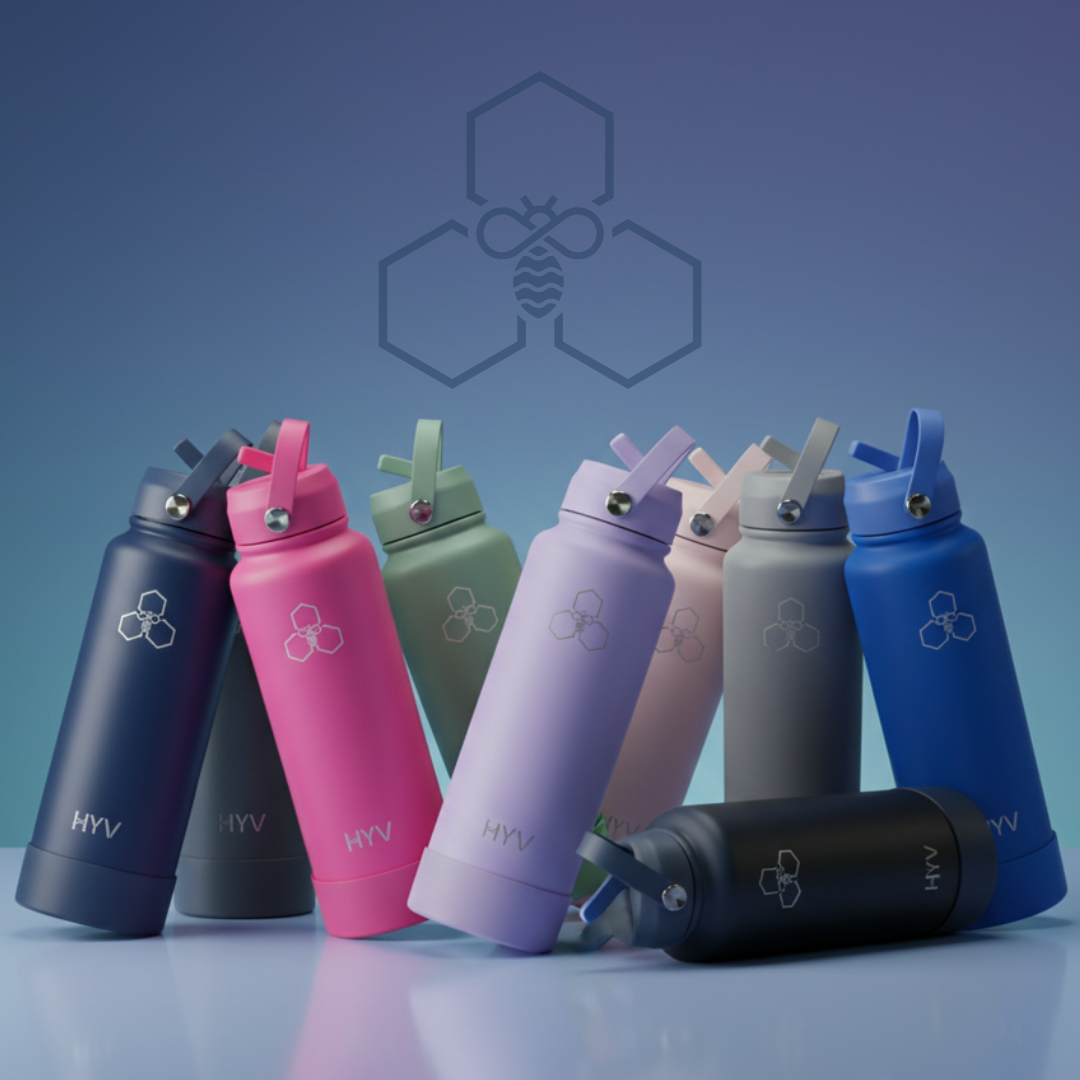
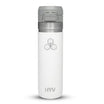
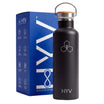
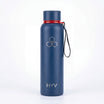
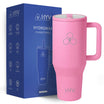
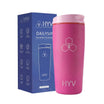
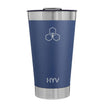
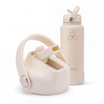
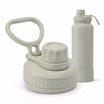
Shop HYV bottles with a wide, reachable mouth →
Buying your way out of the problem
Cleaning difficulty is a design property. A narrow neck with a moulded spout and a fixed straw is genuinely hard to clean and will always need tools. A wide screw-top mouth can be reached with a hand and a cloth.
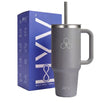
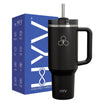
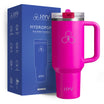
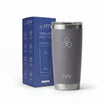
The HYV CoreFlow is ₹899 with a plain wide screw-sip mouth and a gasket that lifts out, which is the least fussy thing we make to keep clean. If you want a straw, buy one where the straw detaches — and buy a straw brush at the same time, because you will need it weekly rather than occasionally.
Disclosure: we are one of the brands
HYV publishes this page and sells the bottles in it, so discount the flattering parts. The checkable facts: BIS IS 17526:2021 on five named models — LuxeSip, LuxeFlow, MagFlex, CoreFlow and ChillSip — 304 food-grade steel throughout, and lids, gaskets and boots sold as separate parts so a worn one does not end the bottle.
Frequently Asked Questions
Can I clean a steel water bottle with rice?
Yes. A tablespoon of dry rice with warm water and a little coarse salt, shaken hard for thirty seconds, scours the inside wall without scratching it. Rinse twice and wash with dish soap afterwards.
Will vinegar damage a stainless steel bottle?
Not in a short soak. Warm water with two tablespoons of white vinegar for up to an hour is fine, followed by a thorough rinse. Do not leave acid standing in the bottle overnight, and never use bleach — chloride is what actually corrodes stainless steel.
My bottle still smells after cleaning. Why?
Because the smell is almost certainly in the lid rather than the body. Take the silicone gasket out of its groove, wash both faces, and air-dry it separately. If the bottle has a straw, it needs a straw brush — nothing you shake inside the bottle travels up one.
Is boiling water a good way to clean a steel bottle?
In a single-wall bottle it is harmless. In a vacuum-insulated one it achieves little, because the whole point of the wall is that heat does not pass through it. Warm soapy water and abrasion do more.
Related reading: How to Clean an Insulated Water Bottle (Without Ruining It), How to Clean a Straw Water Bottle: Daily Routine and Deep Clean Guide and The Water Bottle Rubber Seal: Why It Fails and How to Replace It.

Leave a comment
This site is protected by hCaptcha and the hCaptcha Privacy Policy and Terms of Service apply.