


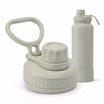

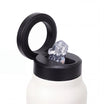

A bite valve is a silicone mouthpiece with a slit that opens under bite pressure and closes when released, so the bottle seals itself without a cap. It exists for cycling and trail running, where you cannot use a hand or look down. For everyday use it is a solution to a problem most people do not have, and the valve is a consumable that splits and needs replacing.
Key Facts
- The valve seals itself; there is no cap to open or lose.
- Designed for cycling and hydration packs, where hands are occupied.
- Flow is slow by design — it is a sipping mechanism, not a chug.
- Silicone valves split at the slit and are consumable parts.
- It is the hardest mouthpiece type to clean properly.
How it works
A bite valve is a small silicone nozzle with a cross or straight slit through the tip. At rest the silicone holds the slit closed and the bottle does not leak. Bite gently and the slit opens; release and it shuts.
The point is that the sealing action is automatic. There is no cap to unscrew, no lid to flip, nothing to hold, and nothing to drop. Most are paired with a straw so that the liquid comes up to you rather than you tilting anything.
Who it is genuinely for
- Cyclists. This is the original use case. Both hands are on the bars, you are not looking down, and a hydration pack tube ends in a bite valve for exactly this reason.
- Trail and long-distance runners. Same logic — a vest bladder with a valve at the shoulder.
- Anyone with limited hand function. Bite pressure replaces grip and twist entirely, which is a real accessibility benefit.
- Children who leak everywhere. A valve that seals itself is more forgiving than an open straw.
Why it is a poor everyday choice
- Slow flow. The slit is deliberately restrictive. Good for sipping over hours; irritating when you want half a litre after a session.
- Cleaning. This is the serious one. A bite valve is a small silicone part with an internal cavity and a slit, usually attached to a straw. To clean it properly you have to pull the valve off and clean it separately — and almost nobody does. A valve carrying electrolyte drinks for a season is not a thing to bite on.
- It is a consumable. Silicone slits tear with use. A torn valve leaks continuously and the only fix is a replacement, so buying into a system with no spare valves available is a mistake.
- Bite fatigue. Minor, but people notice it over long days.
What to buy instead, if you are not cycling
If the appeal is drinking without using your hands much, a straw lid gets you most of the benefit with far less cleaning trouble, because a straw is a plain tube a brush passes straight through.
If the appeal is not losing a cap, a flip or tethered lid solves that specific problem without a mouthpiece to maintain.
If the appeal is speed, a chug lid is faster than any valve and is the easiest lid type to clean.
Keep the bite valve for the bike, where nothing else does the job.
The product on this page

Shop HYV straw and chug lids →
What we make instead
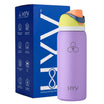
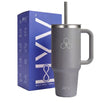
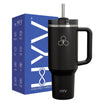
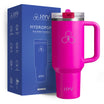
HYV does not make a bite-valve bottle. For hands-busy drinking we use straws, which are easier to clean and easier to replace — the HydroPro is ₹1,499 for 1.2 litres with a removable inbuilt straw. For cycling specifically, a bottle-cage squeeze bottle or a hydration pack is the right tool and we would not pretend otherwise.
If you already own a bite-valve bottle, the one piece of advice worth acting on: pull the valve off weekly, wash it separately, and buy a spare before the first one splits.
Disclosure: we are one of the brands
HYV publishes this page and sells the bottles in it, so discount the flattering parts. The checkable facts: free shipping over ₹499, a 7-day free replacement rather than a refund-return, 304 food-grade steel throughout, and BIS IS 17526:2021 on five named models — LuxeSip, LuxeFlow, MagFlex, CoreFlow and ChillSip.
Frequently Asked Questions
What is a bite valve on a water bottle?
A silicone mouthpiece with a slit that opens when you bite and closes when you release, so the bottle seals itself with no cap to open or lose. It is standard on cycling hydration packs.
Is a bite valve better than a straw?
On a bike, yes — it seals itself and needs no hands. Everywhere else a plain straw is better, because a brush passes straight through a straw and a bite valve has to be pulled off and cleaned separately.
Why is my bite valve leaking?
The silicone slit has torn or the valve has lost its tension with use. It cannot be repaired; bite valves are consumable parts and need replacing, which is why spare availability matters before you buy.
How do I clean a bite valve?
Pull the valve off the straw and wash it separately, weekly. Left attached it cannot be cleaned inside, and a valve that has carried sugared sports drinks for a season is not something you want in your mouth.
Related reading: Types of Water Bottle Lids Explained: Which Is Right for You?, Best Cycling Water Bottle Brand in India 2026 and Water Bottle Cap: Types, Replacements, and Buying Guide.

Leave a comment
This site is protected by hCaptcha and the hCaptcha Privacy Policy and Terms of Service apply.