






An air compression massager does move blood and lymphatic fluid along while it is running, by mimicking the calf muscle pump that normally does this when you walk. That effect is real but temporary — it lasts through the session and a while afterwards, and it does not change the underlying health of your circulation. Walking does the same thing more effectively and for free. Compression is genuinely useful when you cannot walk enough, such as long flights or long days standing.
Key Facts
- The calf muscle pump is the primary mechanism returning venous blood from the legs, activated by walking and calf contraction.
- Sequential pneumatic compression mechanically mimics that pump, moving blood and lymph upward during a session.
- The effect is temporary and does not alter the underlying condition of veins, arteries or the heart.
- "Improves circulation" has no agreed clinical meaning and is used loosely across the category.
- Compression is contraindicated in severe peripheral arterial disease, where the problem is blood entering the limb rather than leaving it.
- Regular walking produces the same pumping effect at no cost and with additional cardiovascular benefit.
"Improves circulation" appears on almost every product in this category, and it is doing a great deal of unexamined work. Here is what is actually happening, and what it is worth.
How blood gets back up your legs
Arteries have the heart pushing blood outward. Veins do not have that advantage on the return trip — they are working against gravity with much lower pressure. The system that makes it work is mechanical: every time your calf contracts, it squeezes the deep veins and pushes blood upward, and one-way valves stop it falling back. This is the calf muscle pump, and it is why standing still for hours makes legs ache while walking for hours does not.
What a compression massager does
A sequential air compression device inflates chambers from the ankle upward in a timed wave. Mechanically, it is doing the same thing your calf does when you walk: applying external pressure that moves venous blood and lymphatic fluid in the direction the valves already allow. That is a real, physical effect and it is why legs feel lighter after a session.
The honest qualifications:
- It lasts while it runs, and for a period afterwards. It is not a change to your circulatory system, it is an assist to a process.
- It does not treat any circulatory condition. It does not repair vein valves, clear arteries, or affect the heart.
- Walking does it better. Your own calf pump is more effective than a machine copying it, and it comes with cardiovascular benefits a machine cannot provide. Any honest company in this category has to say that.
So when is the machine actually useful?
Precisely when walking is not available.
- After hard training, when you want the effect without adding more load to tired legs.
- After a long day standing, when your calf pump has been idle in a fixed position for hours.
- After long flights or drives. On the flight itself, ankle pumps and walking the aisle matter more than anything you do afterwards.
- In the evening, when the alternative is sitting still anyway.
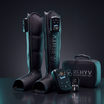
That is the real case for a device like the ReHYV Pulse Pro: not that it improves your circulation as a property of your body, but that it does something useful for legs on days when they have not moved enough.
Where the claim becomes dangerous
"Good for circulation" is exactly the phrase that sells these devices to the people who should be most careful with them.
- Peripheral arterial disease. Here the problem is blood struggling to get into the limb. External squeezing does not help and can make things worse. The warning sign is calf pain that starts while walking and stops at rest.
- Deep vein thrombosis. Compressing a leg with a clot is dangerous. Sudden one-sided swelling with warmth or redness is a same-day medical problem.
- Varicose veins. Compression does not repair a failed valve. See the full answer on leg massagers and varicose veins.
- Diabetic neuropathy or any reduced sensation. You cannot judge whether the pressure is too high if you cannot feel it properly.
- Heart failure. Moving fluid volume centrally is not neutral.
If any of those apply, the question is not which device to buy. It is which doctor to see.
Things that genuinely help venous return
Ranked by how much difference they make, which is roughly the inverse of how much they cost:
- Walking. Free, and the mechanism the whole category is imitating. Even short, frequent walks beat one long one for this specific purpose, because what matters is how often the pump runs.
- Breaking up long stretches of sitting or standing. Calf raises at a desk or counter, ankle pumps in a seat, standing up every half hour. This is the highest-value habit for anyone whose job holds them in one position.
- Elevation. Legs above hip level for twenty or thirty minutes in the evening. Gravity does the work and it costs nothing.
- Properly fitted graduated compression stockings, where a doctor has advised them. Continuous, measured pressure through the day does more for a venous problem than an intermittent session ever will.
- Intermittent compression devices. Genuinely useful, and last on this list on purpose. They are a convenience that supplements the four things above rather than replacing any of them.
Why the wording on packaging is so vague
"Improves circulation" survives because it is unfalsifiable. Circulation is not one measurable quantity — arterial inflow, venous return, lymphatic drainage and capillary exchange are different things, and a claim that does not say which one it means cannot be checked. A device that moves venous blood during a session is doing something real, and describing it precisely is not harder than describing it vaguely. It is just less flattering.
Apply that test to any product in this category, ours included: does the claim say what is being moved, in which direction, and for how long? If not, it is a mood rather than a specification.
Not medical advice. This page is general information, not a diagnosis or a treatment plan. Air compression massagers are recovery aids, not medical devices. If you have deep vein thrombosis or suspect it, a severe circulatory or arterial condition, uncontrolled heart failure, an active infection or open wound on the leg, a recent injury or fracture, or you are pregnant, do not use one without clearance from a doctor. Leg pain that comes on suddenly in one leg with swelling, warmth or redness needs same-day medical attention.
Frequently Asked Questions
Do leg massagers really improve blood circulation?
They move blood and lymphatic fluid along while running, by mimicking the calf muscle pump. That effect is real but temporary and does not change the underlying health of your veins, arteries or heart. "Improves circulation" has no agreed clinical meaning and is used loosely across the category.
Is walking better than a leg massager for circulation?
Yes. Your own calf muscle pump is more effective than a device copying it, and walking adds cardiovascular benefit that no machine provides. Compression is useful specifically when walking is not an option — after hard training, after long flights, or at the end of a long day standing.
How long does the effect of a compression session last?
Through the session and for a period afterwards. It is an assist to an ongoing process rather than a lasting change, which is why regular use suits people who need it regularly and offers little to people who use it occasionally.
Can a leg massager help poor circulation from diabetes?
This needs a doctor. Reduced sensation from diabetic neuropathy means you cannot reliably judge whether the pressure is too high, and diabetes is associated with arterial disease where compression can be inappropriate. Do not self-treat circulatory symptoms with a consumer device.
Is compression bad for arteries?
In severe peripheral arterial disease, where blood struggles to reach the limb, external compression is inappropriate and can worsen things. Calf pain that reliably starts while walking and stops with rest is the classic sign and needs medical assessment.

Leave a comment
This site is protected by hCaptcha and the hCaptcha Privacy Policy and Terms of Service apply.