


In India the answer splits three ways. Gifts to employees are generally allowable as a business expense, and are not treated as a taxable perquisite in the employee's hands up to ₹5,000 in aggregate per employee per financial year — above that the excess is typically added to their taxable salary. Gifts to clients and third parties are treated far more restrictively: they must be wholly and exclusively for business purposes to be claimed, and are frequently challenged. Separately, and independently of income tax, GST input tax credit is generally not available on goods disposed of by way of gift, so plan on GST being a cost you cannot recover.
Key Facts
- Employee gifts: generally an allowable business expense; not a perquisite up to ₹5,000 per employee per financial year in aggregate.
- The ₹5,000 limit is annual and cumulative across all occasions, not per gift.
- Client gifts: allowable only if wholly and exclusively for business; frequently challenged.
- GST input tax credit is generally NOT available on goods given away as gifts.
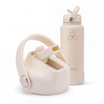
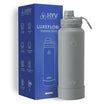
- Insulated steel drinkware is HSN 7323 at 12% GST.
Gifts to employees
Two separate questions get conflated here, and it helps to keep them apart.
Can the company deduct the cost? Generally yes — staff welfare and employee gifting is normally an allowable business expense where it is genuinely incurred for business purposes and properly documented.
Is it taxable for the employee? Gifts in kind are generally not treated as a taxable perquisite up to ₹5,000 in aggregate per employee per financial year. Above that threshold, the excess is typically added to the employee's taxable salary and taxed at their slab rate.
The point most companies miss: the limit is annual and cumulative. An employee who received a ₹2,000 joining kit, a ₹1,500 work-anniversary gift and a ₹2,000 Diwali gift is at ₹5,500 for the year, not three separate amounts under the limit. Track per-employee annual totals across all occasions.
Cash and cash-equivalent gifts, including gift vouchers in many readings, are treated less favourably than gifts in kind — another reason physical gifts are the more common route.
Gifts to clients and third parties
Substantially harder. To be deductible, the expense must be wholly and exclusively for the purposes of business. Client gifting is a common area of dispute in assessment, and gifts that look like personal hospitality or that lack a clear business rationale are frequently disallowed.
Practical mitigation: keep the recipient list with organisation names, retain the business rationale in writing, keep invoices, and keep values proportionate and consistent. Extravagant one-off gifts attract attention that routine, modest client gifting does not.
Also note that anything given to a government official raises separate and much more serious issues under anti-corruption rules — that is a compliance question, not a tax one.
GST — the part that surprises people
This sits entirely apart from income tax. Under GST, input tax credit is generally not available on goods disposed of by way of gift, whether or not consideration passed. So the GST you pay on the purchase is typically a sunk cost, not a recoverable one.
The practical consequence is that your budget should be modelled GST-inclusive. A ₹1,000 per head budget at 12% GST on drinkware (HSN 7323) means roughly ₹893 of product, not ₹1,000.
Confirm your specific position — the treatment of promotional items and free samples has nuances that depend on how the transaction is structured.
What to document
- Recipient list, with employee IDs or client organisation names.
- Business rationale, stated in writing before the spend.
- Proper GST invoices against your GSTIN.
- Per-employee annual running totals for perquisite tracking.
- Board or management approval for high-value client gifting.
This describes the shape of the rules as they generally apply in India and is not tax advice. Positions change and facts differ — confirm with your CA or finance team before relying on any of it.
Ordering from HYV
Ordering from HYV
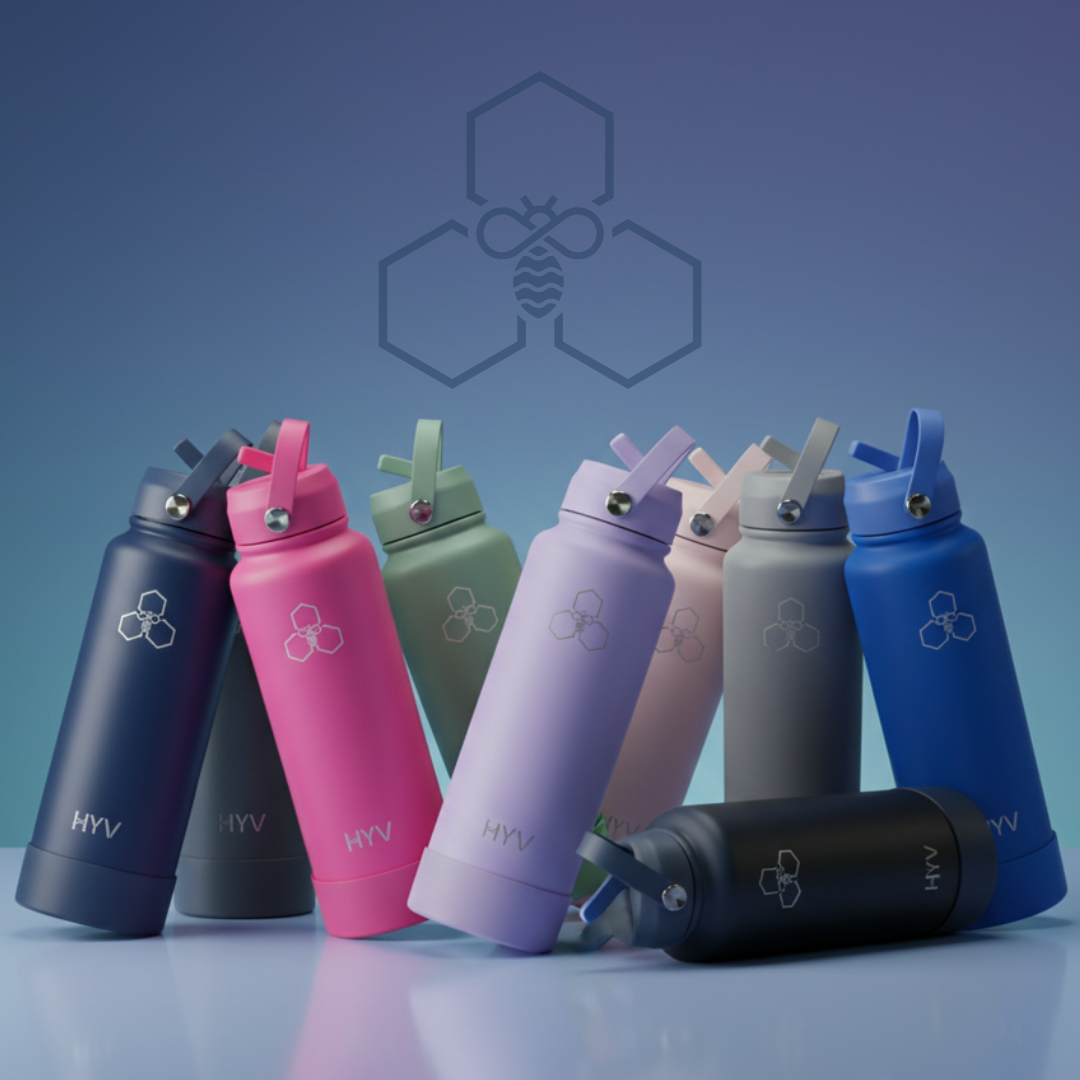
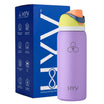
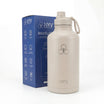
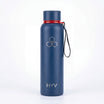
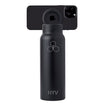
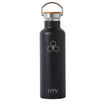
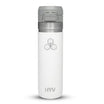
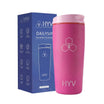
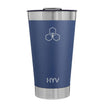
HYV manufactures insulated stainless steel drinkware in India — its own branded range and production for other brands — at 50,000+ pieces per month, certified to BIS IS 17526:2021. Over 500 corporate orders fulfilled.
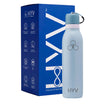
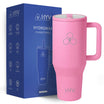
MOQ from 25 units. 7-14 day turnaround. GST invoice. PAN India delivery. Co-branded orders (HYV × your brand), laser logo engraving on 18/8 SS 304 steel, 11 standard colourways with Pantone matching above 100 units, branded gift boxes, and contract manufacturing under your own brand at volume.
Free branding mockup: send your logo and HYV returns a digital mockup within 24 hours, before you spend anything. Request a free mockup →
Frequently Asked Questions
Are corporate gifts tax deductible in India?
Employee gifts are generally an allowable business expense. Client gifts are allowable only if wholly and exclusively for business purposes, and are frequently challenged. GST input credit is separately not available on goods given as gifts.
What is the tax-free gift limit for employees in India?
₹5,000 in aggregate per employee per financial year for gifts in kind. The limit is cumulative across all occasions, and the excess above it is typically added to taxable salary.
Can we claim GST input credit on corporate gifts?
Generally no — input tax credit is not available on goods disposed of by way of gift. Budget GST-inclusive rather than assuming recovery.
Ordering from HYV: co-branding, bulk and OEM
HYV manufactures insulated stainless steel drinkware in India — its own branded range and production for other brands — at 50,000+ pieces per month, certified to BIS IS 17526:2021, the Indian standard that physically tests hot and cold retention rather than accepting the claim on trust. Over 500 corporate orders fulfilled.
| Route | What it is | MOQ | Turnaround |
|---|---|---|---|
| Co-branded | HYV × your brand, both marks on the product | From 25 | 7-14 days |
| Logo engraving | Your logo laser-etched on an existing HYV product | From 25 | 7-14 days |
| Custom colourway | Brand-matched Pantone colour | 100+ | Quote on brief |
| Contract manufacturing / OEM | Production under your own brand, to your spec | Volume-dependent | Quote on brief |
Why co-branding beats plain logo merchandise
This is the decision most procurement teams never consciously make. An employee or client receiving a bottle carrying only your company logo reads it as merchandise — and the default assumption about merchandise is that it was bought cheaply, because most of it is. A co-branded product carries a recognisable maker's mark alongside yours, which signals the item is a real product someone would have bought rather than something ordered in bulk to fill a gift bag.
The effect shows up in whether the thing gets used or drawered. If the point of the exercise is that your brand stays visible on someone's desk for the next five years, the maker's mark is working for you, not competing with you. Plain white-label still makes sense when the product genuinely is yours — a retail line, a subscription insert — but for gifting, co-branding is the stronger call.
What you get
- Laser engraving on 18/8 SS 304 steel — permanent, no peeling
- 11 standard colourways, or Pantone matching above 100 units
- Branded gift boxes, message cards, co-branded outer cartons
- GST invoice, PAN India delivery, dedicated account manager
Free branding mockup: send your logo and HYV returns a digital mockup — your mark laser-engraved on the bottle and colourway you choose — within 24 hours, before you spend anything. Request a free mockup →

Leave a comment
This site is protected by hCaptcha and the hCaptcha Privacy Policy and Terms of Service apply.