






Yes — leg compression massagers work by using sequential air pressure to push blood and lymphatic fluid up the legs, which speeds muscle recovery, reduces delayed-onset soreness (DOMS), eases tired and swollen legs, and improves circulation. The effect is well established in sports recovery and physiotherapy. They’re a recovery aid, not a cure, and work best alongside sleep, hydration and good training.
Key Facts
- Sequential air compression mimics the natural muscle pump that returns blood and lymph toward the heart.
- Benefits include faster recovery, reduced DOMS, less swelling, and improved circulation in the legs.
- They are widely used by athletes and in physiotherapy for post-exercise recovery.
- Compression is a recovery aid — it complements, not replaces, sleep, hydration and sensible training load.
- Recovery is a routine: hydrate, refuel, sleep, and use tools like compression or cold therapy consistently.
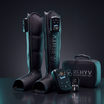
ReHYV Pulse Pro: full specification
Stated plainly, because most listings in this category will not:
| Compression zones | 4, sequential from the feet upwards |
|---|---|
| Maximum pressure | 240 mmHg |
| Pressure levels | 7 |
| Control | Wireless remote |
| Cordless runtime | Up to 120 minutes |
| Typical session | 20–30 minutes on medium pressure |
| Pre-workout use | 10–15 minutes at a lower pressure |
| After a race or heavy day | 45–60 minutes, split into two sessions if preferred |
| Warranty | 1 year, India, handled over WhatsApp |
| Price | ₹29,999 list — ₹23,999 after the 20% applied automatically at checkout |
ReHYV is a recovery and wellness device, not a medical device, and nothing here is medical advice. See the ReHYV Pulse Pro →


"Do these actually do anything, or is it just a nice squeeze?" Fair question. Here’s the honest answer, with the mechanism and the limits.
How compression therapy works
Your veins and lymphatic system rely on muscle movement to push fluid back up toward the heart — that’s the "muscle pump." When you’re resting after a hard session, that pump slows down and metabolic by-products linger. A compression massager recreates the pump mechanically: air chambers inflate in sequence from the foot upward, squeezing fluid in the right direction, then release so fresh blood flows in.
The real benefits
- Faster perceived recovery & less DOMS. Athletes consistently report legs feeling fresher the next day.
- Reduced swelling and fluid pooling. Useful after long flights, long shifts on your feet, or hard leg sessions.
- Improved circulation. The rhythmic pumping keeps blood moving when you’re otherwise still.
- It feels good and gets you to actually rest. Twenty minutes with legs up is recovery in itself.
The honest limits
Compression is an aid, not magic. It won’t fix overtraining, poor sleep or under-fuelling. Think of it as one tool in a recovery stack — the biggest levers are still sleep, nutrition, hydration and managing your training load. Used consistently alongside those, it’s a genuine edge.
Where it sits in a recovery routine
A simple, effective recovery routine after hard training: rehydrate, refuel within the hour, get your legs up under compression for 15–30 minutes, and prioritise sleep that night. Cold therapy (an ice bath or cold shower) is another lever for some. The point is consistency — recovery compounds.
The ReHYV Pulse Pro is built for exactly this: an easy, repeatable way to give your legs proper recovery at home, as part of the ReHYV recovery range from the team behind HYV hydration.
Separating what is established from what is marketed
Intermittent pneumatic compression is a long-standing technique in clinical and sports settings, so the mechanism is not in doubt. What is worth being careful about is the size of the claims made for consumer devices.
Reasonably well supported: compression cycles assist venous return, and most users report meaningful reduction in the heavy-legs feeling after hard training or a long day standing. Perceived recovery and comfort are the outcomes with the most consistent support, and they are genuine outcomes — feeling less beaten up the next morning has real value.
Weakly supported or overstated: claims about accelerating performance gains, "flushing lactic acid", or measurable next-day power improvements. Lactate clears within roughly an hour of exercise regardless of what you do, so anything built on flushing it is marketing rather than physiology.
Not claimed here at all: treatment or prevention of any medical condition. That is a different category of product with a different regulatory basis.
Where it sits against everything else you could do
Honest ordering, by effect per rupee:
- Sleep. Free, and larger in effect than anything else on this list by a wide margin.
- Adequate food and hydration. Also free, also larger than any device.
- An actual rest day. Still free.
- Easy movement — a walk, light spinning.
- Compression, massage and similar aids. Real, pleasant, and last on this list rather than first.
A compression massager is worth buying when the four items above are already in place and you want the fifth. It is a poor substitute for any of them, and a device bought to compensate for insufficient sleep is money badly spent.
Who tends to get the most from one
- People training hard and often — running volume, endurance blocks, heavy leg sessions — where sessions stack up faster than they clear.
- People on their feet all day. Retail, hospitality, surgery, teaching. The heavy-legs complaint here is as real as an athlete's.
- Long-haul travellers, for the same reason, though a device is not a substitute for getting up and walking.
Who gets least: occasional exercisers, and anyone hoping it substitutes for rest.
Not medical advice. Air compression massagers are a recovery aid, not a treatment. Anyone with deep vein thrombosis, a severe circulatory condition, a recent leg injury, or who is pregnant should get medical clearance before using one.
Related: how they compare.
If that is the question you actually came with, see how to compare the alternatives without guessing.
Related: a single answer to which one is best.
Related: what pressure to actually set.
Related: the ranked picks for India.
Frequently Asked Questions
Do leg compression massagers really work?
Yes — they use sequential air pressure to move blood and lymph up the legs, which aids recovery, reduces soreness and swelling, and improves circulation. The mechanism is well established in sports recovery and physiotherapy.
Are compression massagers better than a normal massage?
They do different jobs. Air compression is excellent for circulation, fluid movement and whole-leg recovery; manual or percussion massage targets specific knots. Many people use both.
How often should I use a recovery massager?
Daily is fine at a comfortable pressure; after hard training, a longer or higher-intensity session helps most.
What are the best recovery devices?
The most useful at-home recovery tools are air compression massagers (for legs and circulation), percussion massagers (for targeted muscle work) and cold therapy. The best one is the one you’ll actually use consistently.
Related guides
More on recovery
On cost and comparison
Full specification, zone-by-zone pressure range and the current price are on the ReHYV Pulse Pro page.


Leave a comment
This site is protected by hCaptcha and the hCaptcha Privacy Policy and Terms of Service apply.